Winter in Northeast China cannot be described with just the word “cold.” When temperatures plunge below -40℃, pipe network monitoring equipment faces a real and unforgiving survival test. Rapid battery failure, unresponsive displays, and communication module outages — conditions that barely appear in laboratories — become routine challenges for pipe network monitoring in Northeast China’s winter.
“Equipment Killers” in Extreme Cold
What does -40℃ mean for electronic devices? First, battery performance plummets drastically. The internal resistance of lithium-ion batteries increases sharply at low temperatures, leaving only 30% to 40% of their room-temperature usable capacity. Second, LCD screens respond sluggishly or even freeze entirely. More critically, communication module signal sensitivity degrades at low temperatures, potentially causing already weak underground signals to drop out completely.
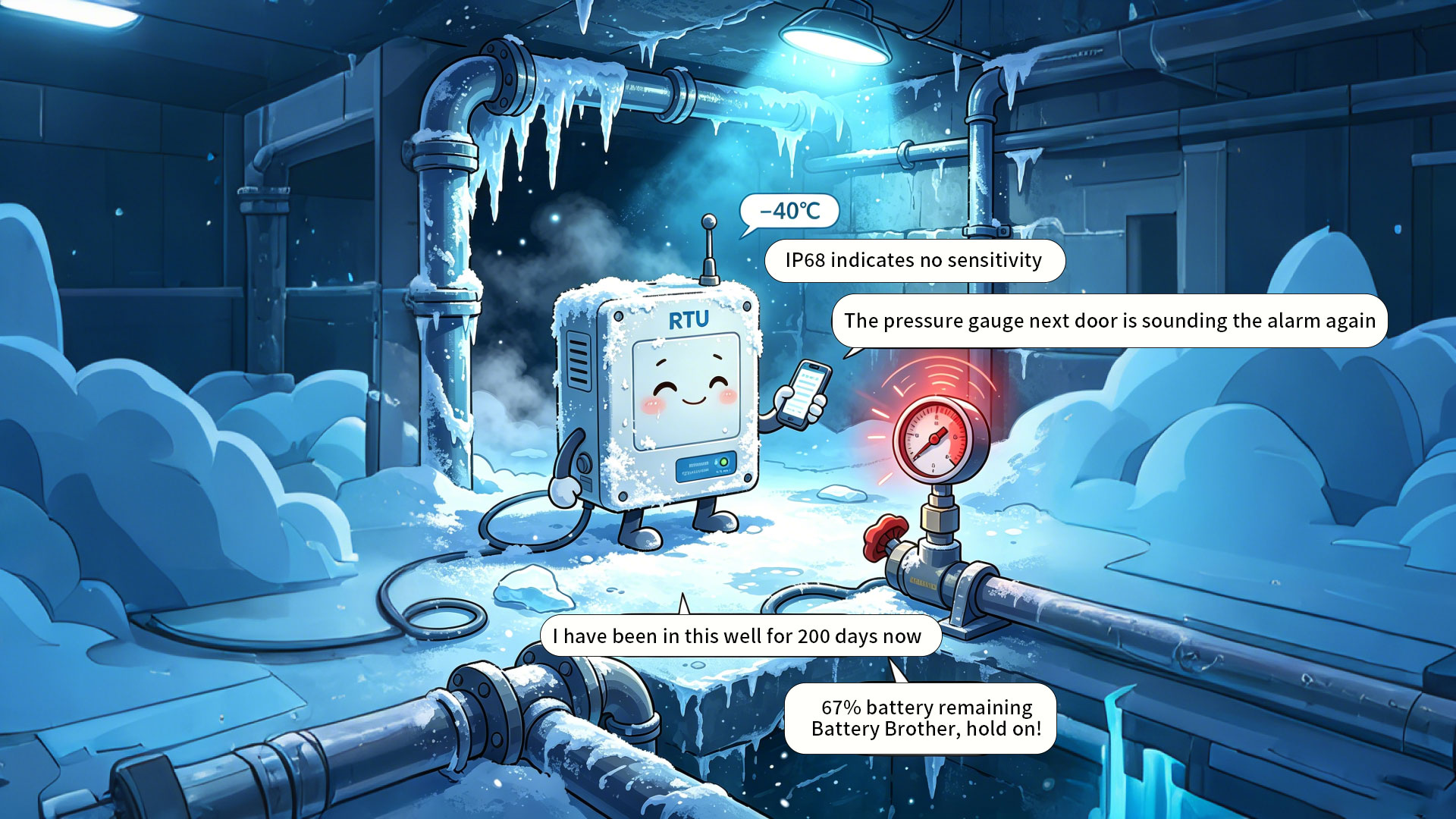
Pipe network RTUs are often deployed in unmanned locations such as manholes, pumping stations, and heat exchange stations, where the cost of on-site maintenance is extremely high. If equipment fails in extreme cold, not only is monitoring data interrupted, but pipe network safety is also compromised. This makes “low-temperature reliability” a core metric in pipe network RTU selection.
Technical Confidence for Extreme Cold
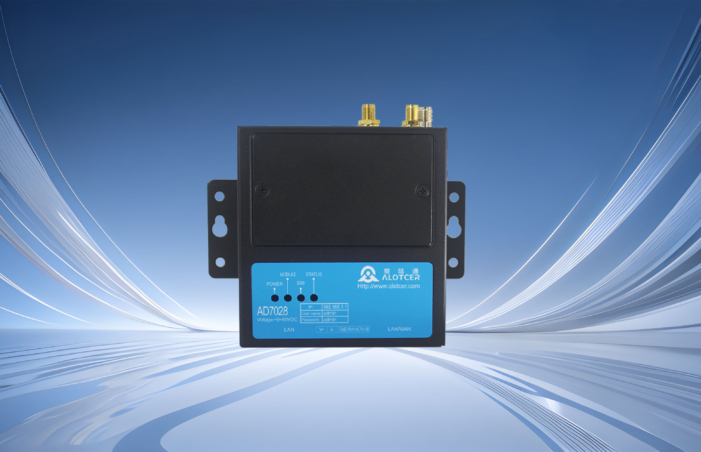
Alotcer’s pipe network RTU products are built with solid technical reserves for extreme cold environments. The AltRTU600 series adopts an industrial-grade wide-temperature design, with an operating temperature range covering -35℃ to 75℃, ensuring stable operation in the extreme low-temperature conditions typical of Northeast China winters. The products have passed rigorous high/low-temperature operation tests to guarantee reliable data acquisition and monitoring even in severe snowy weather.
In terms of low-power design, the AltRTU600 supports multiple operating modes (self-reporting, polling, hybrid, etc.), minimizing power consumption and reducing dependency on battery capacity. This is particularly critical in extreme cold regions with limited power supply — the less power the device consumes, the less strain on battery endurance at low temperatures.
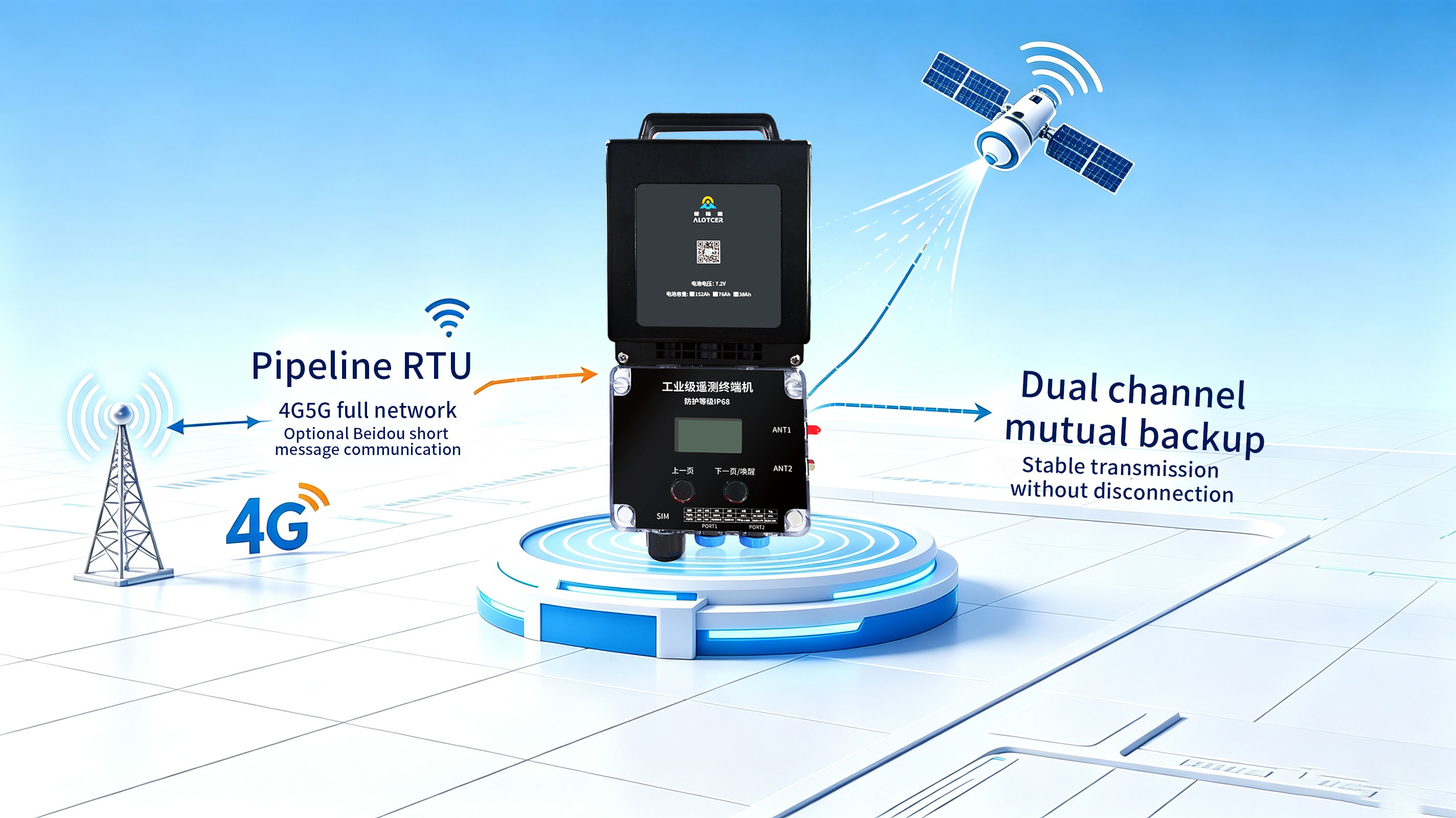
For communication capabilities, the product supports 5G/4G full-netcom and optionally features BeiDou short-message communication, enabling dual-channel concurrency and backup between 5G and BeiDou. For pipe network nodes in mountainous or forested areas of Northeast China with weak public network coverage, the BeiDou communication backup ensures uninterrupted data transmission even in extreme weather.
The “Night Watchman” in Action
In a heating network monitoring project in a city in Northeast China, dozens of Alotcer pipe network RTUs were deployed at key nodes including heat exchange stations, primary networks, and secondary networks. They collected real-time data on pipeline temperature, pressure, and flow, uploading it via 4G to the smart heating management platform. Field operators no longer needed to brave the biting wind and travel to remote sites — they could monitor the entire network’s status from the control center.
That winter, a continuous cold wave pushed outdoor temperatures close to -38℃. Under such extreme conditions, these pipe network RTUs remained online 24/7, with not a single device experiencing data interruption due to low temperatures — they became the “night watchmen” for the city’s entire heating pipeline network.
FAQ
Q1: Can a pipe network RTU operate normally at -40℃?
Alotcer pipe network RTUs use industrial-grade wide-temperature components with an operating range of -35℃ to 75℃, suitable for Northeast China’s cold climate. However, for conditions below -35℃, it is recommended to use thermal insulation enclosures or heating elements in conjunction with low-temperature-resistant batteries to ensure endurance.
Q2: Will communication be interrupted in extreme cold?
Alotcer pipe network RTUs support 4G/5G full-netcom and optionally feature BeiDou short-message communication for dual-channel backup. When public network signals become unstable due to weather or terrain, the device can automatically switch to the BeiDou channel, ensuring uninterrupted data transmission.
Q3: How do RTUs deployed in manholes address both waterproofing and low-temperature challenges?
Alotcer pipe network RTUs feature industrial-grade protection design, with certain models certified to IP54 for dustproof and splash-proof capability. For long-term damp conditions in manholes, models with higher protection ratings are recommended, combined with insulation measures to address low-temperature challenges.
Q4: How long can the battery of a pipe network RTU last in extreme cold regions?
This depends on device power consumption and battery capacity configuration. The Alotcer AltRTU600 supports low-power operating modes, with standby power consumption reduced to extremely low levels. In extreme cold, actual available battery capacity decreases, so low-temperature-resistant batteries and larger capacity configurations are recommended.
Final Thoughts
-40℃ is not just a lab test parameter — it is a reality that pipe network monitoring equipment in Northeast China must face every winter. A truly reliable pipe network RTU requires not only robust hardware design but also thorough preparation in communication redundancy, power consumption control, and protection ratings. After all, when temperatures drop to the point where water freezes instantly, every extra day a device stays online means one less day that field operators have to brave the cold to open a manhole cover.