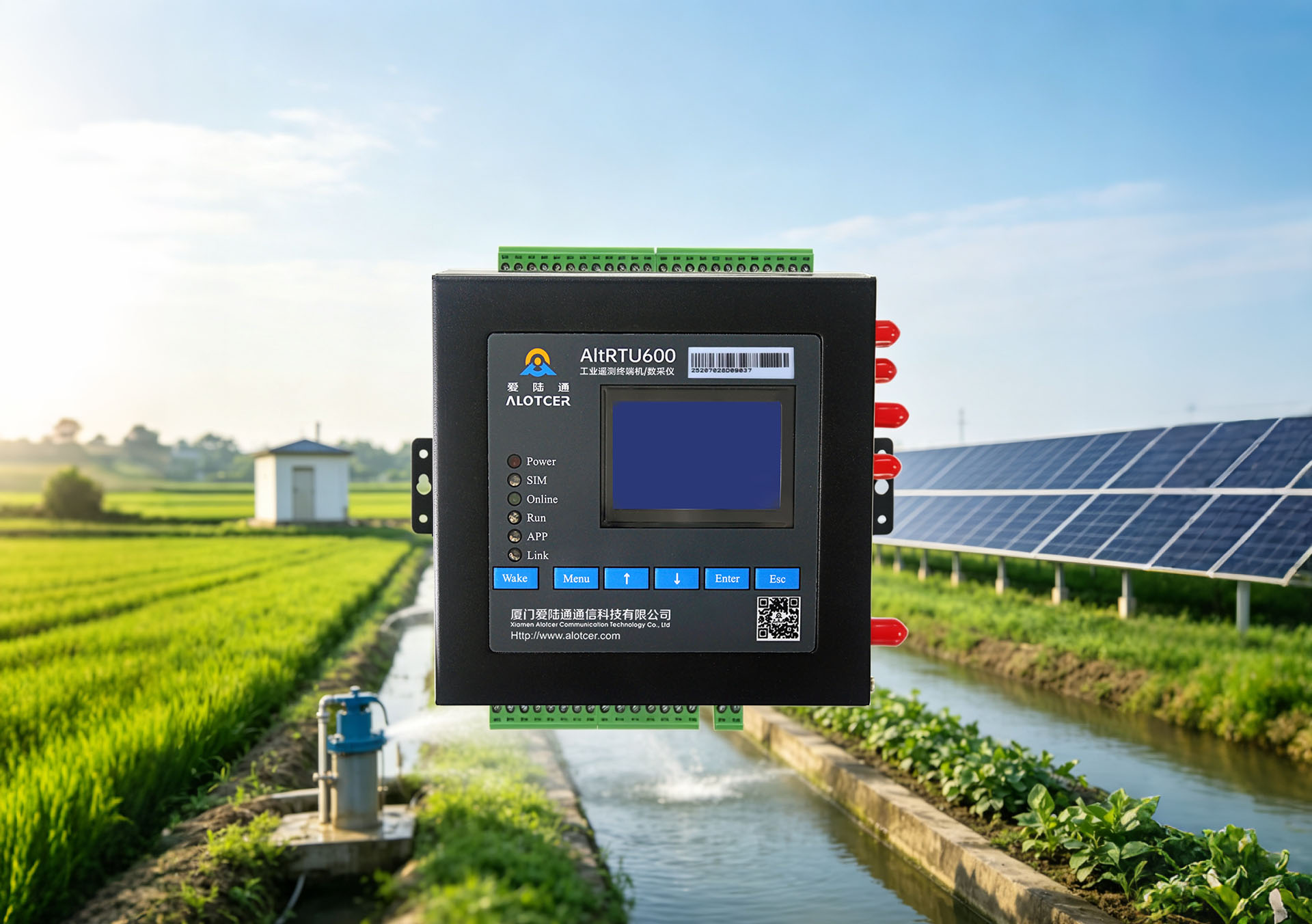
In the digital upgrading of groundwater over-exploitation management, high-standard farmland construction, and urban-rural water supply integration, traditional water management is plagued by the separate supervision of well water intake and pipe network water delivery. Multiple pain points including inaccurate measurement of water intake, untraceable pipe network water loss, and disconnected well-network data lead to extensive water resource supervision, distorted account data and difficult implementation of water-saving governance. The electricity-to-water integrated well-network supervision mode built on Alotcer AltRTU600S dedicated water conservancy RTU enables intelligent measurement and supervision of water intake at well sources and real-time monitoring of water supply pipe networks. It constructs a full-chain closed-loop supervision system of “water intake – water delivery – management and supervision”, serving as a preferred solution for the digital construction of county-level smart water conservancy.
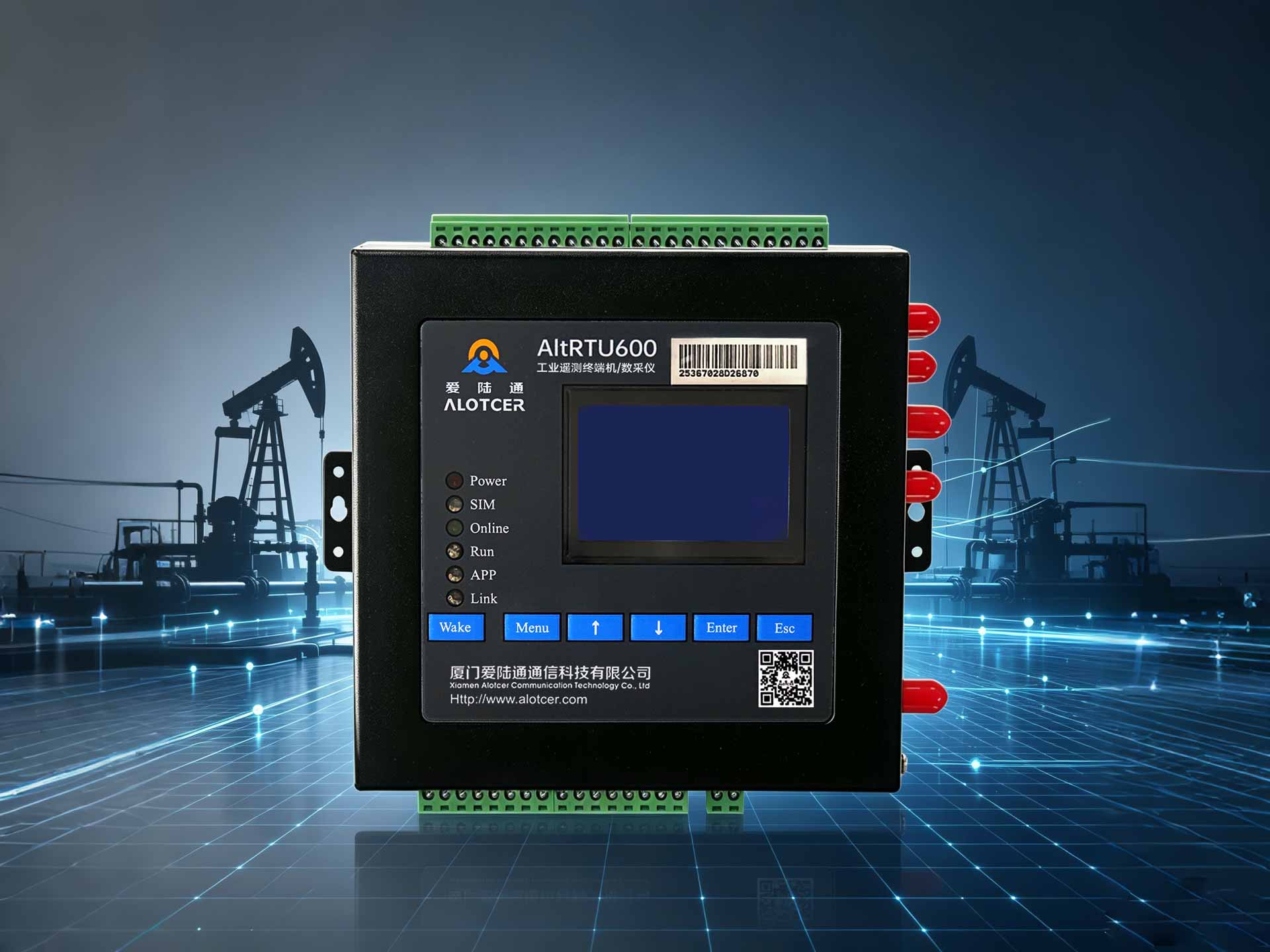
1. Core Definition of Integrated Well-Network Supervision
Integrated well-network supervision aims to break the information isolated island of traditional water affairs. With unified intelligent terminals, it connects the two core supervision scenarios of groundwater intake at the source and water delivery via pipe networks to realize data interconnection, collaborative management and joint analysis. Leveraging the multi-functional advantages of the Alotcer AltRTU600S, the system supports large-scale low-cost deployment and refined supervision. It covers three core capabilities: electricity-to-water intelligent measurement for pump wells, real-time working condition monitoring of pipe networks, and joint data reconciliation of wells and pipe networks on the platform, completely solving the fragmentation problem of traditional supervision modes.
2. Core Application Logic of Alotcer AltRTU600S
Alotcer AltRTU600S is an integrated telemetry terminal customized for integrated well-network water affairs scenarios. It adapts to dual scenarios of electricity-to-water measurement and pipe network monitoring without replacing equipment models, greatly simplifying project deployment and operation and maintenance.
In pump well monitoring scenarios, the terminal accurately collects three-phase power consumption data and automatically calculates real-time water intake through built-in exclusive water-electricity conversion algorithms and regionally calibrated conversion coefficients. It supports water quota management, automatic pump shutdown upon over-limit, equipment fault alarms, and IC card water intake control, effectively restraining disorderly water intake and groundwater over-exploitation. For key water source wells, external flow meters can be connected to enable the water-electricity dual-measurement calibration mode, dynamically correcting conversion coefficients to ensure long-term measurement accuracy in line with water conservancy specifications.
In water supply pipe network scenarios, the AltRTU600S flexibly connects sensors for pressure, flow and liquid level via abundant serial ports and IO expansion interfaces to collect real-time pipe network operating data. It realizes zonal water loss analysis, pipe burst early warning and visualized monitoring of water delivery conditions. Compatible with mainstream water conservancy protocols including SL/T427-2021, SL651 and MQTT, the terminal supports 4G full-network communication, breakpoint resume transmission, local data storage and multi-station simultaneous reporting. It can stably connect to provincial, municipal and county-level water resource supervision platforms, fully meeting project acceptance and daily supervision requirements.
3. Core Implementation Value of the Solution
Targeting industrial pain points, the AltRTU600S integrated well-network solution solves multiple industry problems. Firstly, it replaces traditional field water meters which are prone to blockage and high maintenance costs. The electricity-to-water mode adapts to complex farmland working conditions and realizes low-cost full-coverage measurement of large-scale pump wells. Secondly, unified terminals and standardized data eliminate well-network data barriers, enabling joint reconciliation of water intake and delivery data with traceable water resource accounts. Thirdly, it verifies pipe network water delivery volume through source water intake data to accurately locate high water loss areas, providing data support for pipe network renovation and water-saving efficiency improvement. Fourthly, the universal equipment design adapts to both well and pipe network scenarios, reducing costs in project procurement, construction, stock preparation and after-sales operation and maintenance.
The solution truly achieves measurable water intake, monitorable operation, controllable over-extraction and quantifiable water loss. It not only complies with the mandatory policy requirements for groundwater governance and water intake permit management, but also helps water authorities improve refined management and realize efficient utilization and conservation of water resources.
4. FAQ
Q1: Can AltRTU600S adapt to both electricity-to-water measurement and pipe network monitoring scenarios?
A1: Yes. The hardware is universal with no model replacement required. It can realize well water intake measurement & control and pipe network pressure & flow monitoring simply through background parameter configuration, achieving standardized and unified project equipment management.
Q2: Can AltRTU600S connect to official water conservancy supervision platforms?
A2: Fully compatible. The terminal is pre-embedded with professional water conservancy protocols SL/T427-2021 and SL651, supporting multi-station simultaneous reporting, data encryption and breakpoint resume transmission. It can seamlessly connect to all levels of water resource supervision platforms and meet project acceptance standards.
Q3: How to guarantee the measurement accuracy of the electricity-to-water mode?
A3: Adopt the hybrid mode of “large-scale popularization + accurate calibration”. Ordinary irrigation wells apply the pure electricity-to-water mode for batch deployment, while key sample wells enable water-electricity dual-measurement functions to dynamically correct conversion coefficients. It balances project cost and measurement accuracy and fully complies with water conservancy project construction specifications.
Q4: Can the equipment adapt to complex field operating environments?
A4: It has strong environmental adaptability. AltRTU600S features wide-temperature operation, lightning protection and anti-interference capabilities, supporting dual power supply modes of municipal electricity and solar energy. It can operate stably in complex field scenarios such as farmland pump wells and outdoor pipe network monitoring wells.
Conclusion
Integrated well-network supervision based on electricity-to-water RTU is a core trend of digital upgrading for county-level smart water conservancy. Relying on the Alotcer AltRTU600S integrated water affairs terminal, enterprises can complete the full integration of pump well water intake management and pipe network monitoring in a low-cost and standardized manner. It builds a full-process, visualized and traceable modern water resource supervision system, providing solid technical support for groundwater over-exploitation control, urban-rural water supply upgrading and agricultural water-saving efficiency improvement.