Many friends working on industrial IoT projects struggle when choosing a gateway: should they go with 4G or 5G? Some say 5G is faster, others say 4G is more stable, and some simply believe the more expensive option must be better. The result? Either they waste their budget, or the device fails to perform on-site, leading to even more troublesome rework later.
The truth is, there is no absolute better or worse between 4G and 5G—only what fits your specific site. Choose wrong, and even the highest speed is useless; choose right, and a low-cost solution can run stably for years.

First, look at the most critical point: does your site actually have 5G signal?
For remote monitoring in the wilderness, mountain water conservancy, mining operations, and remote construction sites, many locations only have 4G or even 2G coverage. Forcing a 5G gateway in these environments will only result in frequent disconnections, network search failures, and data transmission interruptions. In such environments, 4G is actually more stable, offers broader coverage, and has lower disconnection rates.
If your project is in urban areas, industrial parks, or inside factory premises—where base stations are nearby and signal strength is full—5G can then deliver its advantages. However, most industrial site data doesn’t actually require 5G’s high speeds. Sensors, PLCs, environmental monitoring, and RTU data collection all involve small data packets with low-frequency reporting. 4G bandwidth is completely sufficient for these needs; 5G’s high-speed advantage simply doesn’t manifest.
Next, consider the cost gap.
5G modules cost more, data plans are more expensive, and the gateway unit price is also significantly higher than 4G. If the project only involves ordinary data reporting, remote control, and status monitoring, using 5G is pure budget waste. Only special requirements such as high-definition video backhaul, high-traffic edge computing, and low-latency control truly necessitate 5G.
Then there’s device stability and compatibility.
4G technology is mature, with years of base station optimization. Its disconnection rates, reconnection speed, and weak-network performance have all been extensively validated in the field. In high-speed mobility, wall penetration, and obstructed scenarios, 5G signal attenuation is more pronounced than 4G, making it less stable in wilderness environments. For industrial projects, stable connectivity without dropouts is always more important than speed.
Also consider power supply and power consumption.
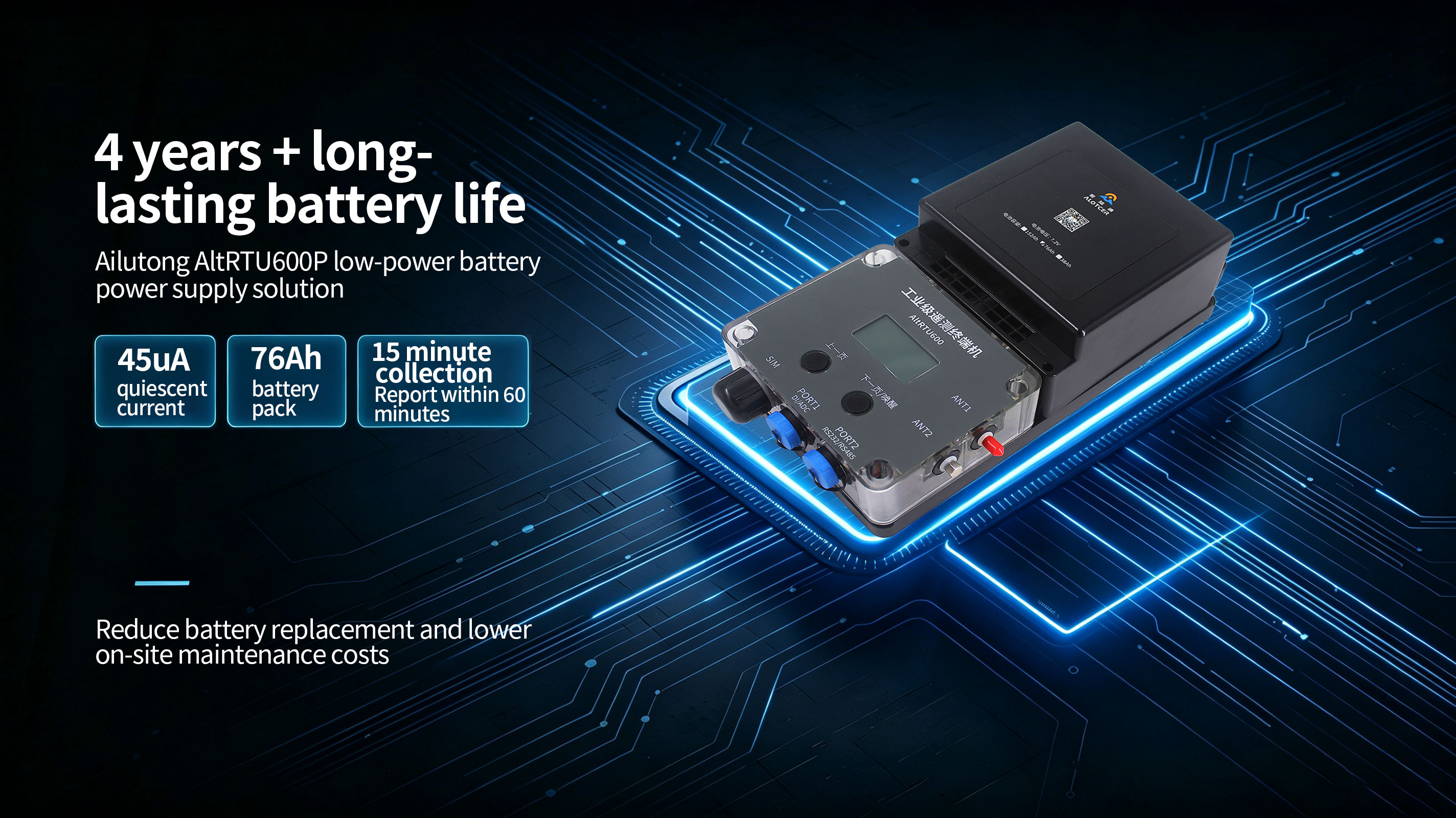
5G modules consume more power. For outdoor projects powered by solar or battery, 5G will drain more electricity, requiring larger solar panels and batteries—further increasing overall costs. 4G has lower power consumption, offering massive advantages in scenarios without grid power and relying purely on solar energy. This is why water conservancy, environmental protection, and geological monitoring projects still predominantly use 4G gateways.
Here is a practical selection criteria you can use directly on-site:
-
Remote wilderness, no 5G signal, solar-powered → Choose 4G directly
-
Small data reporting, sensor collection, environmental/water/monitoring applications → 4G is sufficiently stable and cost-saving
-
Urban short-distance, video backhaul required, high-traffic low-latency needs → Then consider 5G
-
Limited budget, multiple projects, batch deployment → Prioritize 4G for highest cost-effectiveness
Alotcer’s industrial gateways employ the same industrial-grade design for both 4G and 5G models. Wide temperature operation, lightning protection, anti-interference, automatic reconnection after disconnection, and cache retransmission are all standard features. You don’t need to worry about functional differences on-site—simply choose based on three factors: signal availability, data traffic requirements, and budget.