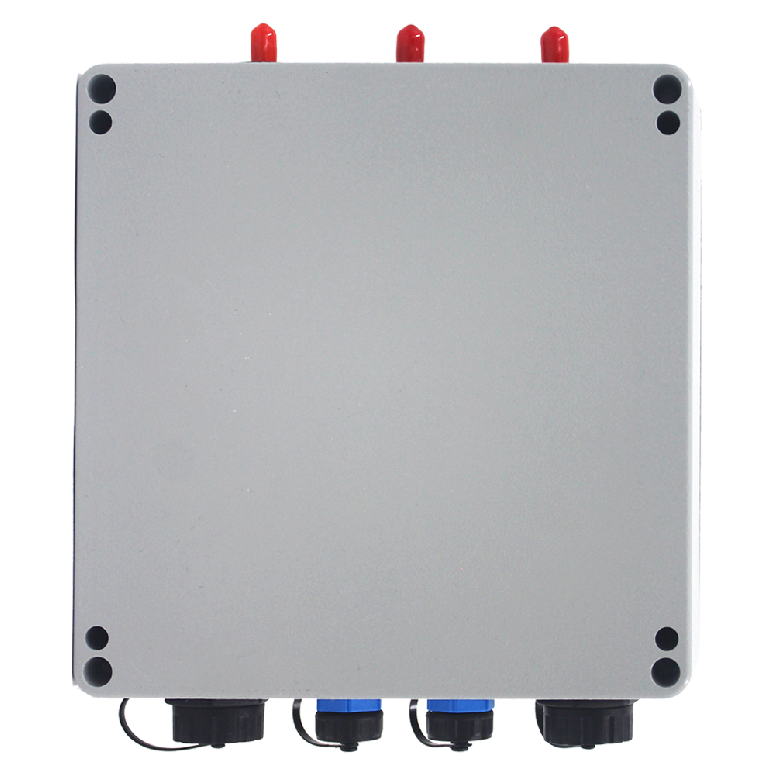
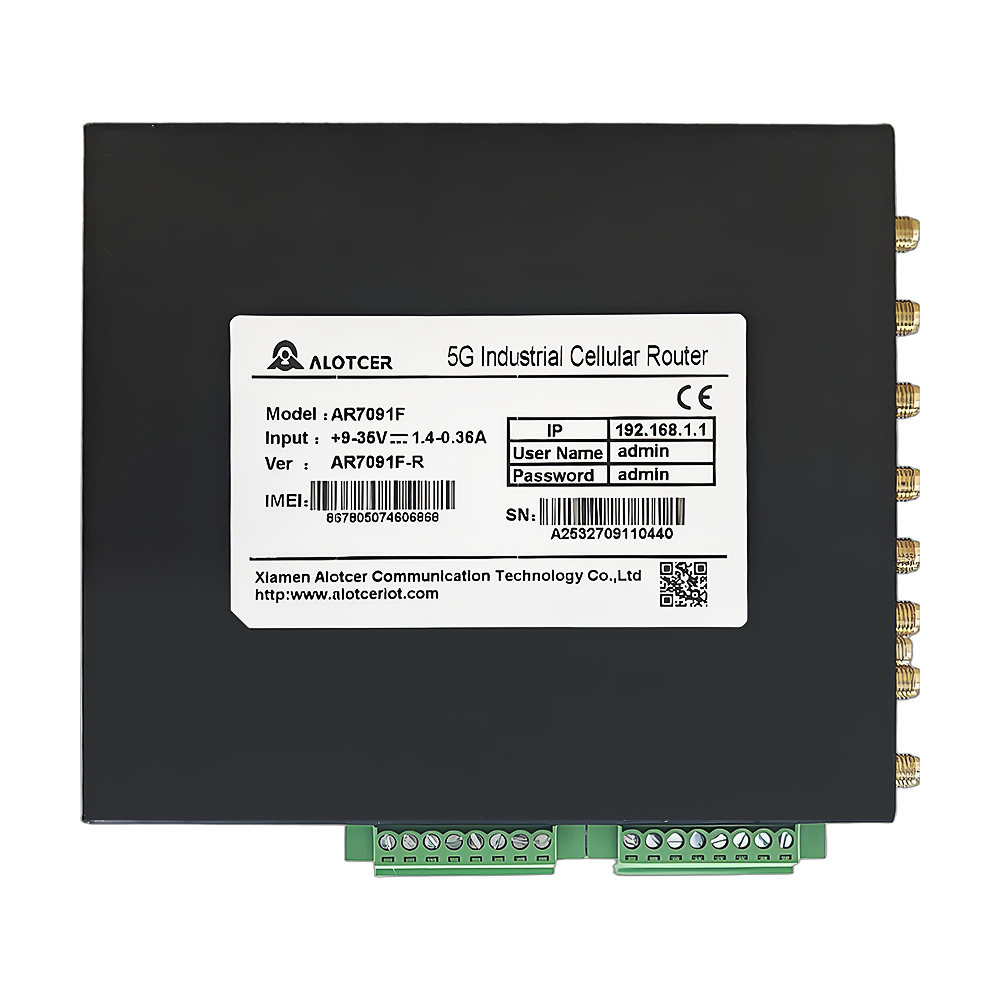
In the vast ecosystem of the Industrial Internet of Things (IIoT), industrial gateways are a class of devices of paramount importance. They are not confined to a single, fixed form but encompass a variety of specialized devices tailored for industrial settings. Their core function lies in creating a connection bridge between different network environments, enabling seamless data interaction across networks.
Take a common industrial scenario as an example: RS485 and Ethernet network environments are widely used in the industrial sector, yet they differ in protocols and characteristics. Industrial gateways can adeptly connect these two distinct network environments, allowing data to flow freely between them. This is akin to an experienced “translator” who understands the “languages” of different network environments and accurately conveys data, laying the foundation for subsequent data processing and application. This connectivity enables various devices on the industrial floor to break through network limitations, achieving broader information sharing and collaborative work.
Functions of Industrial Gateways

From a functional perspective, industrial gateways exhibit a clear evolutionary path based on their capabilities, which can be categorized into three types: basic, data – acquisition, and comprehensive intelligent.
Basic industrial gateways primarily shoulder the responsibility of bridging different network environments. They focus on the stability and reliability of data transmission, acting like a loyal “messenger” that establishes secure and unobstructed communication channels between various network environments. They ensure that data is accurately transmitted from the source network to the target network, providing foundational support for subsequent data processing stages. In industrial scenarios where real – time data transmission is not a critical requirement but stable connections are essential, basic industrial gateways play an irreplaceable role.
Data – acquisition – type industrial gateways, building on network bridging capabilities, possess more powerful functions. They can not only connect networks but also actively sense real – time conditions on the industrial floor, collect various types of data from the external environment, and perform input/output control operations. In industrial production, a wide array of sensors continuously generates data such as temperature, pressure, and flow rate. Data – acquisition – type industrial gateways can collect this data in real – time and transmit it to the cloud or local control systems. Additionally, they can precisely control on – site devices based on received instructions, achieving two – way data interaction and intelligent regulation of equipment.
Comprehensive intelligent – type industrial gateways represent the most fully – featured category. They integrate multiple functions, including data acquisition, control, storage, and edge – computing routing. These gateways can not only perform the tasks of the first two types but also conduct preliminary data processing and computation locally. Through edge – computing technology, they can rapidly analyze data at its source, alleviating the data processing burden on the cloud and enhancing the system’s response speed and efficiency. In the era of Industry 4.0, comprehensive intelligent – type industrial gateways act like an intelligent “brain.” They can swiftly analyze data, make decisions, and accurately convey instructions to relevant devices, realizing intelligent management and control of the industrial floor.
What is an Industrial Gateway?
The importance of industrial gateways in the Industrial Internet of Things is akin to the nervous system in the human body. In industrial production, various sensors and devices function like sensory organs of the human body, constantly perceiving information from the surrounding environment, such as temperature, pressure, and flow rate. Industrial gateways collect this information and transmit it through the network to the backend control system or the cloud, much like how the nervous system conveys perceived visual and tactile information to the brain.
The brain analyzes and calculates based on this information, determines the corresponding response strategy, and then conveys instructions to the execution devices through the industrial gateway, driving the devices to perform the appropriate actions. For example, on an automated production line, a temperature sensor detects that the equipment temperature is too high and transmits the data through the industrial gateway to the control system. After analysis and judgment, the control system sends a start – up command to the cooling device through the industrial gateway to cool down the equipment. Without industrial gateways, the devices on the industrial floor would be like a body without neural connections, unable to perceive changes in the external environment or act according to instructions. The entire industrial production system would be paralyzed, akin to a person in a vegetative state or with uncoordinated limbs, losing the ability to function normally.
Application Scenarios of Industrial Gateways
Leveraging their powerful capabilities, industrial gateways have found extensive applications across numerous industrial scenarios.
In industrial settings, for remote maintenance of devices such as PLCs, frequency converters, and robots, industrial gateways play a crucial role. They can collect real – time operation data from these devices and transmit it to a remote monitoring center. Technicians do not need to be physically present at the site; instead, they can monitor the device status in real – time through a remote monitoring platform, promptly identify potential issues, and conduct diagnostics and maintenance. For instance, when a PLC malfunctions, the industrial gateway can swiftly transmit the fault information to the monitoring center. Technicians can then quickly pinpoint the cause of the fault by analyzing the data and remotely guide on – site personnel in performing repairs, significantly enhancing maintenance efficiency and reducing costs.
Remote maintenance and management of construction machinery also rely heavily on industrial gateways. By installing industrial gateways on construction machinery, managers can remotely access the machinery’s operating parameters and location information, enabling remote scheduling and management. On large – scale construction sites where construction machinery is widely distributed, industrial gateways allow managers to keep track of the machinery’s status in real – time, efficiently arrange construction tasks, and improve construction efficiency and safety.
In terms of remote maintenance and management of workshop equipment and process systems, industrial gateways can achieve real – time data collection and analysis of equipment operation, predict equipment failures, and plan maintenance in advance to ensure the stable operation of production lines. In an automotive manufacturing workshop, industrial gateways can continuously monitor the operating parameters of production equipment. When abnormal trends are detected, timely warnings are issued to prevent equipment failures from affecting production.
Remote monitoring of secondary water – supply pumps in residential communities is also made possible through industrial gateways. By monitoring the operating status, pressure, and flow rate of the water – supply pumps in real – time, any water – supply anomalies can be promptly detected to ensure normal water usage for residents. In high – rise residential complexes, industrial gateways can monitor the operation of water – supply pumps in real – time and notify maintenance personnel immediately in case of a fault.
In the on – site monitoring of oil fields and oil wells, industrial gateways can adapt to harsh field conditions and collect real – time production data from oil wells, such as oil pressure, casing pressure, and output, providing accurate data support for the development and management of oil fields. In oil fields located in harsh environments like deserts and oceans, industrial gateways can operate stably and transmit oil well data to the management center in a timely manner.
Remote monitoring of steam and heating pipelines is achieved through industrial gateways, which monitor the temperature and pressure of the pipelines in real – time to prevent pipeline accidents and ensure the safety of industrial production. In industries such as chemical and power, the safe operation of steam and heating pipelines is crucial. Industrial gateways can monitor the pipeline status in real – time to ensure production safety.
Furthermore, in smart building and smart factory applications of Industry 4.0, industrial gateways are indispensable. They can connect and integrate various devices and systems within a building to achieve intelligent building management. In smart factories, they enable the interconnection of production equipment, optimize production processes, and enhance production efficiency and product quality.
As a core device in the Industrial Internet of Things, industrial gateways, with their diverse functions and wide range of application scenarios, are driving the development of industrial production towards intelligence and automation. In future industrial development, industrial gateways will continue to be upgraded and improved, providing stronger support for the prosperity of the Industrial Internet of Things.