Introduction

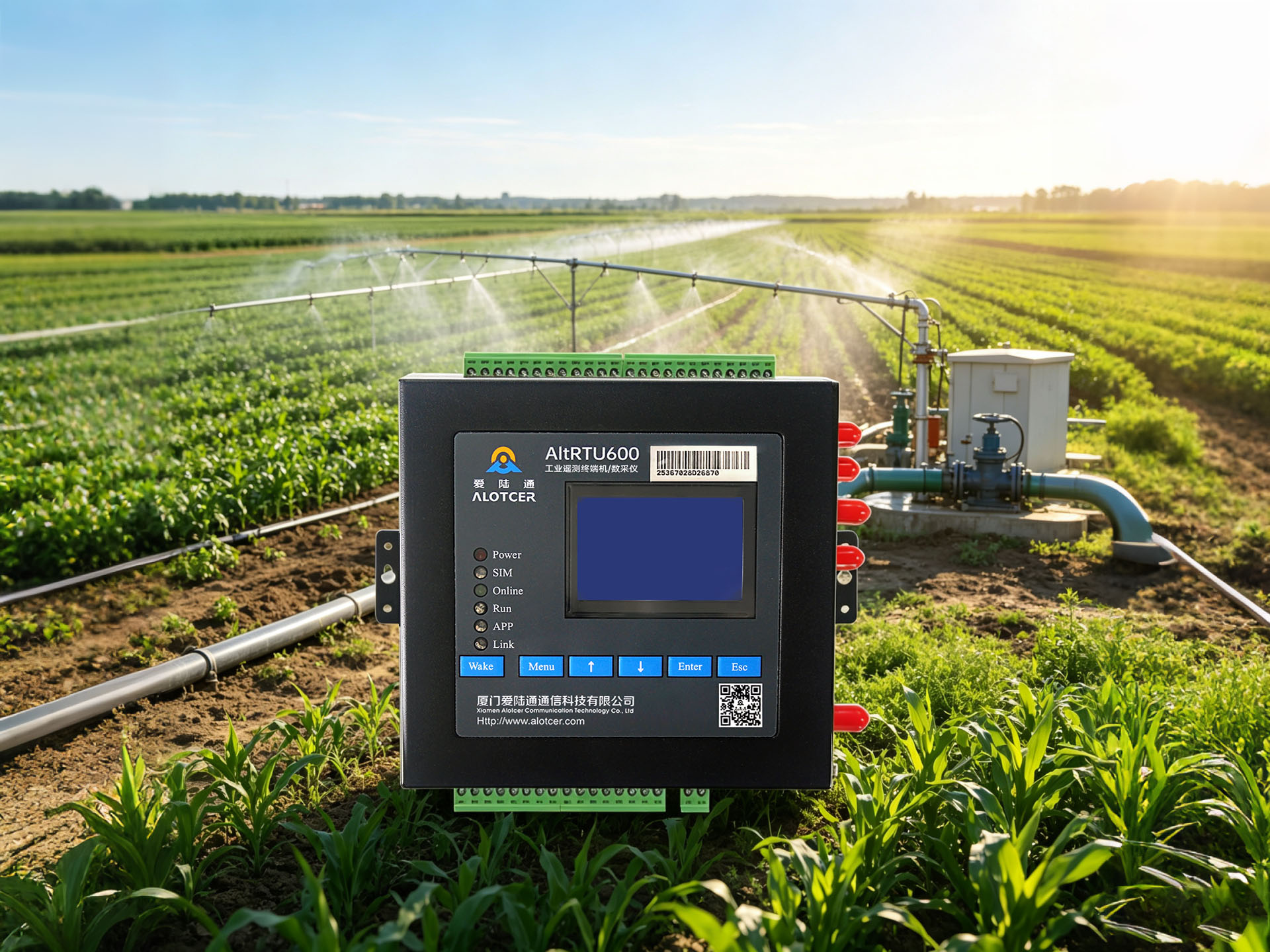
Precision agriculture begins with multi-dimensional, low-cost data. Alotcer’s field-proven IoT gateway stitches together weather stations, pest-monitoring lamps and multi-depth soil-moisture sensors to create a real-time digital twin of field conditions. The result is a closed-loop system that automates alert generation, standardises rice-growing protocols, enables remote PLC control and feeds trusted data to the entire agri-supply chain through open APIs.
1. Multi-Source Data Acquisition
– Weather Station: Air temperature, RH, wind vector and rainfall are logged every 60 s. Rainfall directly recharges soil moisture; temperature & RH drive evapotranspiration rates.
– Pest-Monitoring Lamp: UV-led array attracts insects; an on-board AI camera counts and classifies species. Pest pressure indirectly influences soil moisture by damaging crop canopy and transpiration.
– Moisture & EC Probes: Capacitive and TDR sensors at 10 cm, 20 cm and 40 cm return volumetric water content (VWC %), temperature and electrical conductivity (dS m⁻¹). Vertical moisture gradients guide variable-rate irrigation.
All devices connect to Alotcer AR7000 gateway via RS-485 or LoRa. The gateway normalises heterogeneous data frames into JSON/MQTT and forwards them over 4G/5G to the cloud SCADA.
2. Automatic Alert Engine

When rainfall > 25 mm h⁻¹, VWC < 15 % or pest count exceeds the economic threshold, the gateway triggers tiered alarms:
– L1: WeChat push & SMS to farm manager
– L2: Email report with 24 h trend chart
– L3: API call to township emergency platform
Historical alarm statistics are auto-compiled into PDF shift-books for audit and insurance claims.
3. Standardised Rice-Growing Protocol
The SCADA platform slices the rice season into key nodes: land preparation, transplanting, tillering, panicle initiation, booting, maturity.
– Irrigation: If 48 h cumulative ET₀ − rainfall > 18 mm, the system schedules 22 mm micro-spray at 06:00–08:00.
– Fertiliser: Pest density and canopy NDVI adjust N top-dressing rate (±15 % vs standard).
– Density: Last-year moisture-holding capacity determines seeding density recommendation (20–25 plants m⁻²).
Following the digital playbook increases head-rice yield by 8 % and reduces water use by 12 % (2023 Heilongjiang pilot).
4. Remote Device Control
The gateway’s built-in PLC modbus-master talks to fertigation machines, roll-up vents and side-wall fans.
Scenario 1: VWC at 20 cm < 18 % → gateway closes 24 V relay to start fertigation pump; stops at 28 %. Scenario 2: Wind speed > 12 m s⁻1 → roll-up vents close within 30 s, preventing mechanical damage.
All actions are logged with GPS time-stamp for traceability.
5. Data Sharing & Supply-Chain Interop
RESTful HTTPS/JSON APIs push field data to:
– Farm ERP: sowing and harvest forecasts
– Fertiliser supplier: variable-rate prescription files
– Processor plant: protein content prediction for drying schedule
– Logistics: truck routing based on soil trafficability
Consumers scan a QR code to view origin, irrigation diary, pest-control record and carbon footprint—building brand trust and premium pricing.
Conclusion
From soil sensor to supply-chain dashboard, Alotcer’s IoT gateway turns fragmented field data into actionable insight, higher yield and a traceable, sustainable rice value chain—today, and ready for the carbon-neutral agriculture of tomorrow.