Many peers engaged in county‑level agricultural water projects have shared the same headache: installing smart water meters for ageing village motor‑pumped wells. Civil engineering costs for road excavation and pipeline laying alone account for 60% of the total budget. Even after laborious installation, half of the meters get clogged by sediment or crack in freezing winter within two months. Operation and maintenance teams commute to rural sites constantly. Despite heavy spending, very few data points can be uploaded normally.
To address this common industry pain point, Alotcer has launched the AltRTU600S Power‑to‑Water Conversion RTU. Breaking away from the retrofitting logic of conventional water meters, it requires no modification to existing pipelines and supports remote meter‑reading immediately after installation. Field tests show it cuts long‑term O&M costs for project owners by more than half.
Zero Civil Works & Rapid Deployment; Single Well Goes Online in Half a Day
Retrofitting an ageing motor‑pumped well used to involve ground excavation for water delivery branch pipes and water‑meter interface connection. For mountain farmland with complex terrain, civil construction alone would take two to three days. Mass roll‑outs often suffered months‑long delays.
The Alotcer AltRTU600S Power‑to‑Water Conversion RTU completely bypasses such cumbersome procedures. No metering components need to be fitted onto water pipelines. Simply perform basic wiring on the motor‑pumped well’s power control cabinet, then input well depth and pump rated power via a WeChat mini‑program. A dedicated power‑water conversion coefficient will be automatically generated.
Field technicians do not need heavy‑duty tools. Even local electricians without professional metering experience can complete independent installation after one‑hour training. From unboxing and wiring to device registration on the supervision platform, full‑cycle deployment for one well takes only half a day. Construction efficiency is quadrupled compared with traditional water‑meter retrofits. Batch projects covering one hundred county‑level motor‑pumped wells can be fully implemented within half a month.
Industrial‑Grade Robustness; Field Failure Rate Below 5% Over Three‑Year Operation
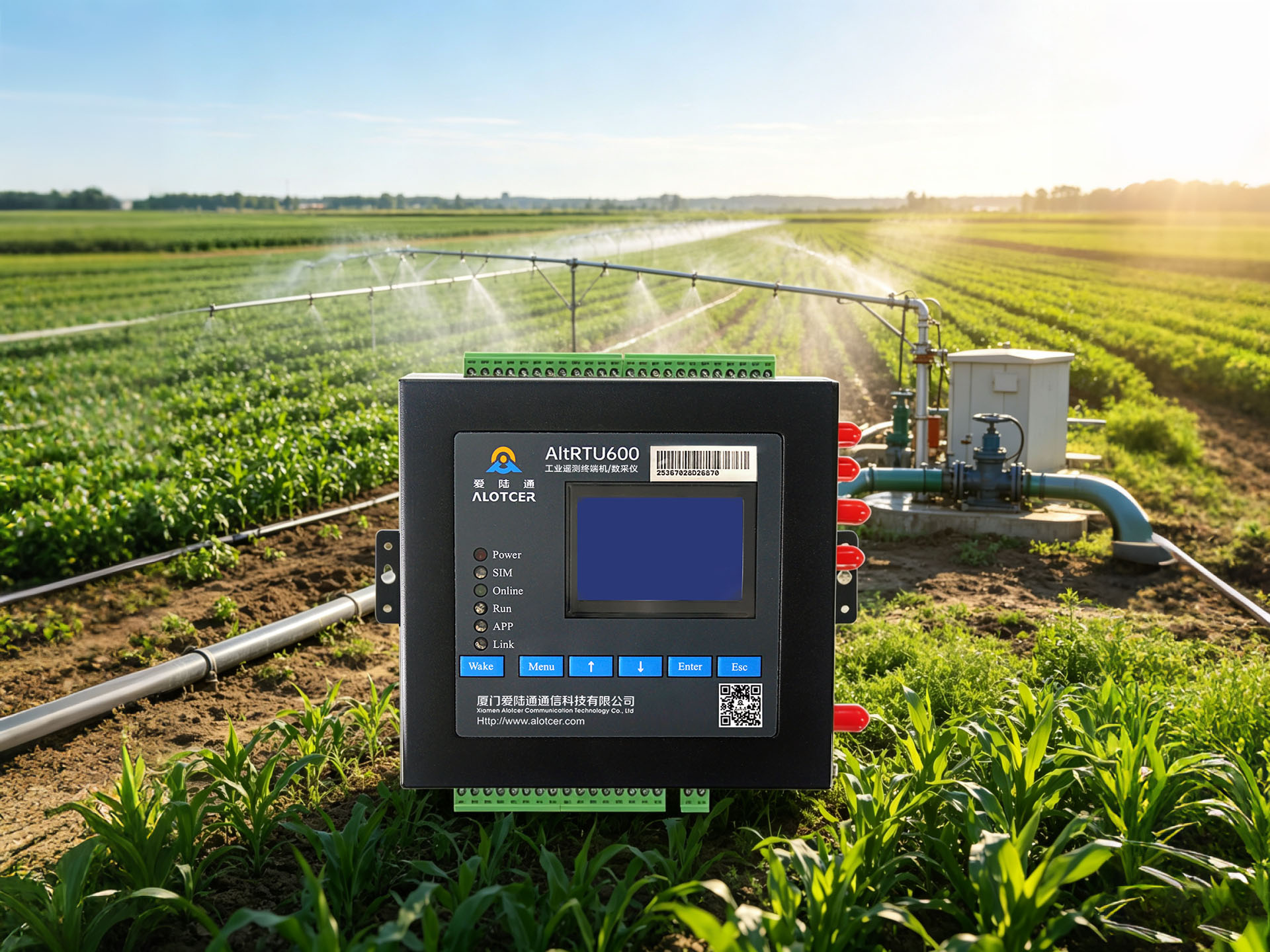
Open‑field farm conditions represent a harsh operating environment for metering equipment: high humidity and heavy rain in spring and summer, low‑temperature frost in autumn and winter, plus blowing sand in northern irrigation zones. Conventional smart water meter movements are prone to sediment jamming. Meter bodies corrode rapidly under prolonged water immersion, and glass dials crack directly under winter low temperatures, triggering large‑scale meter replacement every spring.
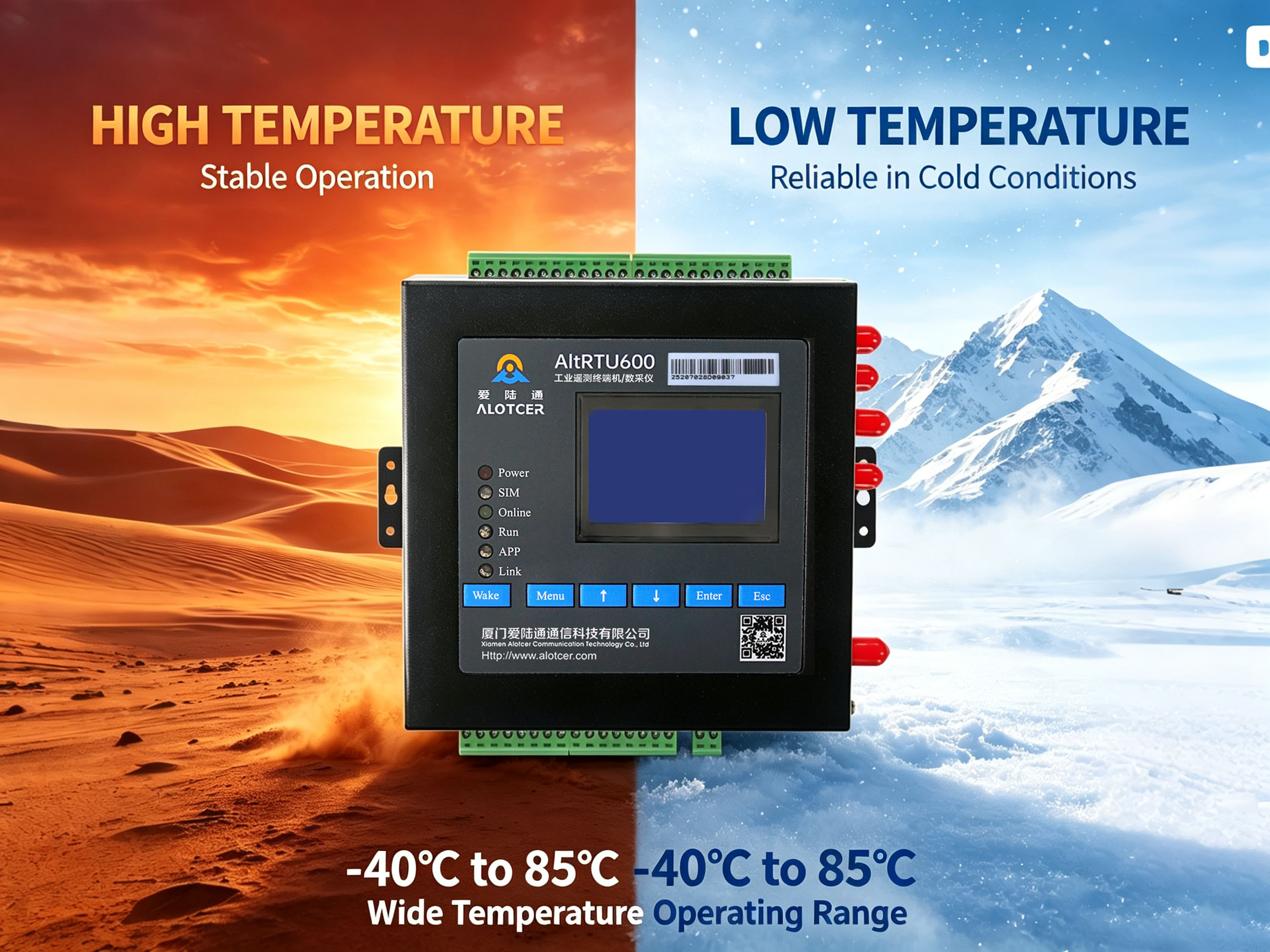
The Alotcer AltRTU600S Power‑to‑Water Conversion RTU features an IP68 industrial‑grade waterproof and dust‑proof enclosure, with full‑unit anti‑corrosion and anti‑electromagnetic‑interference treatment. It operates stably under extreme temperatures ranging from ‑35 °C to 75 °C. Even installed outdoors beside well houses, it resists rain immersion and sand intrusion.
Project data from multiple deployment sites including Fujian and Shandong show its three‑year continuous‑operation failure rate stays below 5%. Frequent rural site inspections are largely eliminated, slashing most O&M labour and material costs.
Automatic Remote Meter‑Reading; Real‑time Data Synchronization to Supervision Platform
In the past, water‑consumption data for village motor‑pumped wells relied on water‑management staff travelling site‑to‑site by electric bicycle for monthly manual readings. During farming seasons, farmers were often away from home, requiring three to five repeated visits just to obtain readings. Collected data contained numerous errors and omissions, making it unreliable for agricultural water‑consumption accounting.
Equipped with a high‑precision electricity‑acquisition module, the Alotcer AltRTU600S Power‑to‑Water Conversion RTU synchronizes real‑time pump power consumption data. Accurate water abstraction volume is automatically calculated via pre‑calibrated conversion coefficients, and transmitted to the backend system over 4G/5G networks. Administrators can export meter‑reading data for all wells with one click from the office, eliminating field trips across villages and farmland.
Moreover, the device fully complies with the Ministry of Water Resources standard HJ212 protocol. Data can be directly interfaced with provincial water‑resource supervision platforms without extra system adaptation, enabling one‑pass project acceptance and truly worry‑free post‑commissioning operation.
Alotcer AltRTU600S Power‑to‑Water Conversion RTU: Fast deployment without pipeline modification, substantial cost savings via remote meter‑reading.