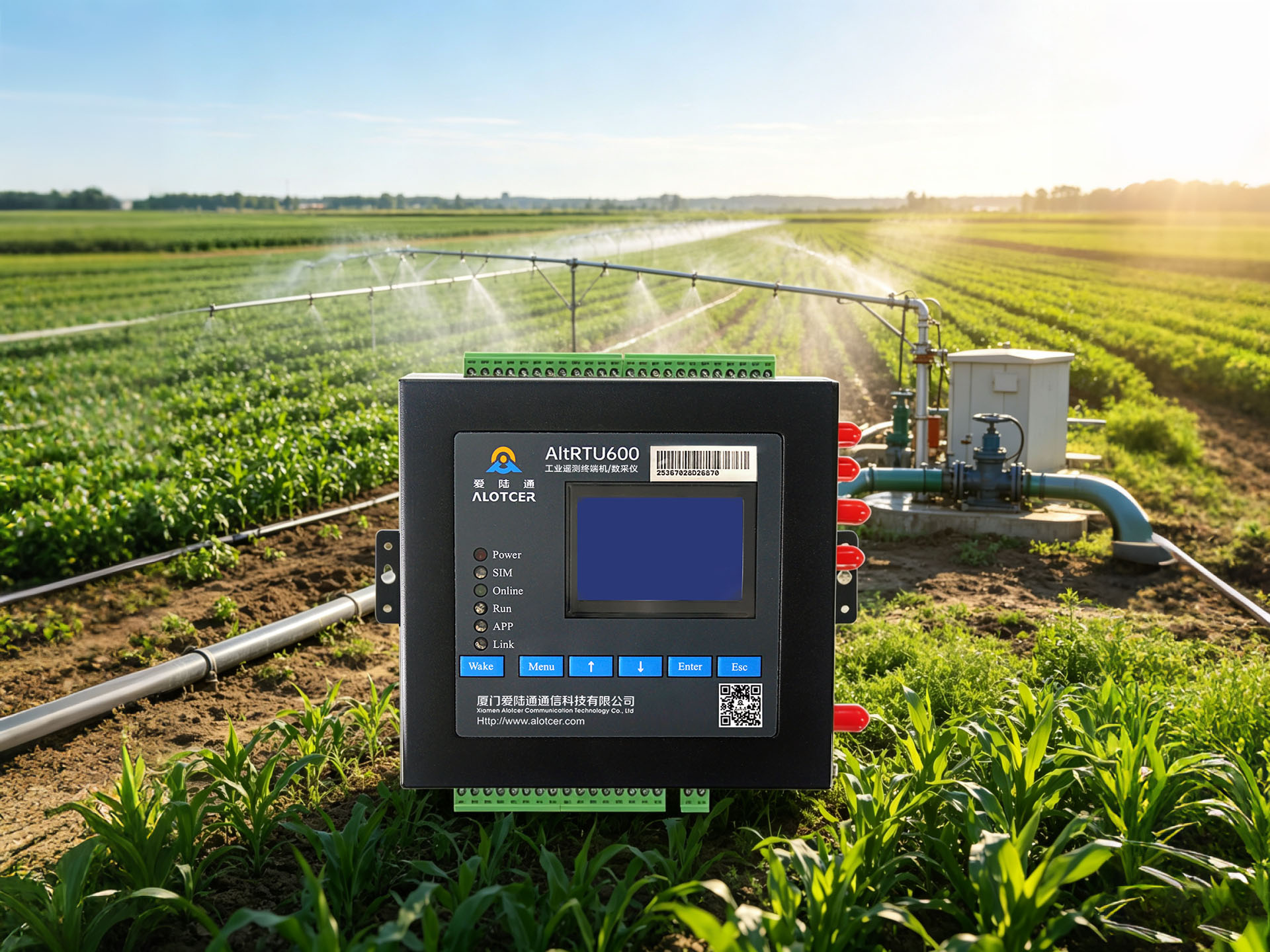
There are over ten million existing agricultural irrigation wells across rural China, nearly 70% of which are ageing wells built more than 10 years ago without standardized water conveyance and metering pipe networks. Previously adopted solutions such as remote‑reading water meters and ultrasonic flowmeters fell into a vicious cycle of high retrofit costs, difficult operation‑and‑maintenance and poor data accuracy when deployed on a large‑scale basis. The mature application of power‑to‑water conversion technology has delivered a practical retrofit approach suitable for massive scattered wells. The Alotcer AltRTU600S Power‑to‑Water Conversion RTU serves as the benchmark product for this approach, resolving all pain points of conventional solutions from the fundamental logic.
Three Inherent Drawbacks of Conventional Metering Solutions for Agricultural Irrigation Scenarios
Before the popularization of power‑to‑water conversion technology, mainstream well metering solutions were plagued by three intractable core conflicts.
First, cost conflict. Conventional contact flow‑metering devices must be installed on standardized pipe networks. Ageing wells have no pre‑reserved mounting positions. Meter installation requires civil engineering work including road breaking, pipe laying and well‑house construction. The comprehensive retrofit cost per well generally exceeds RMB 1 200. For a county‑level project covering one thousand wells, civil‑engineering investment alone tops one million RMB, imposing heavy pressure on local fiscal budgets.
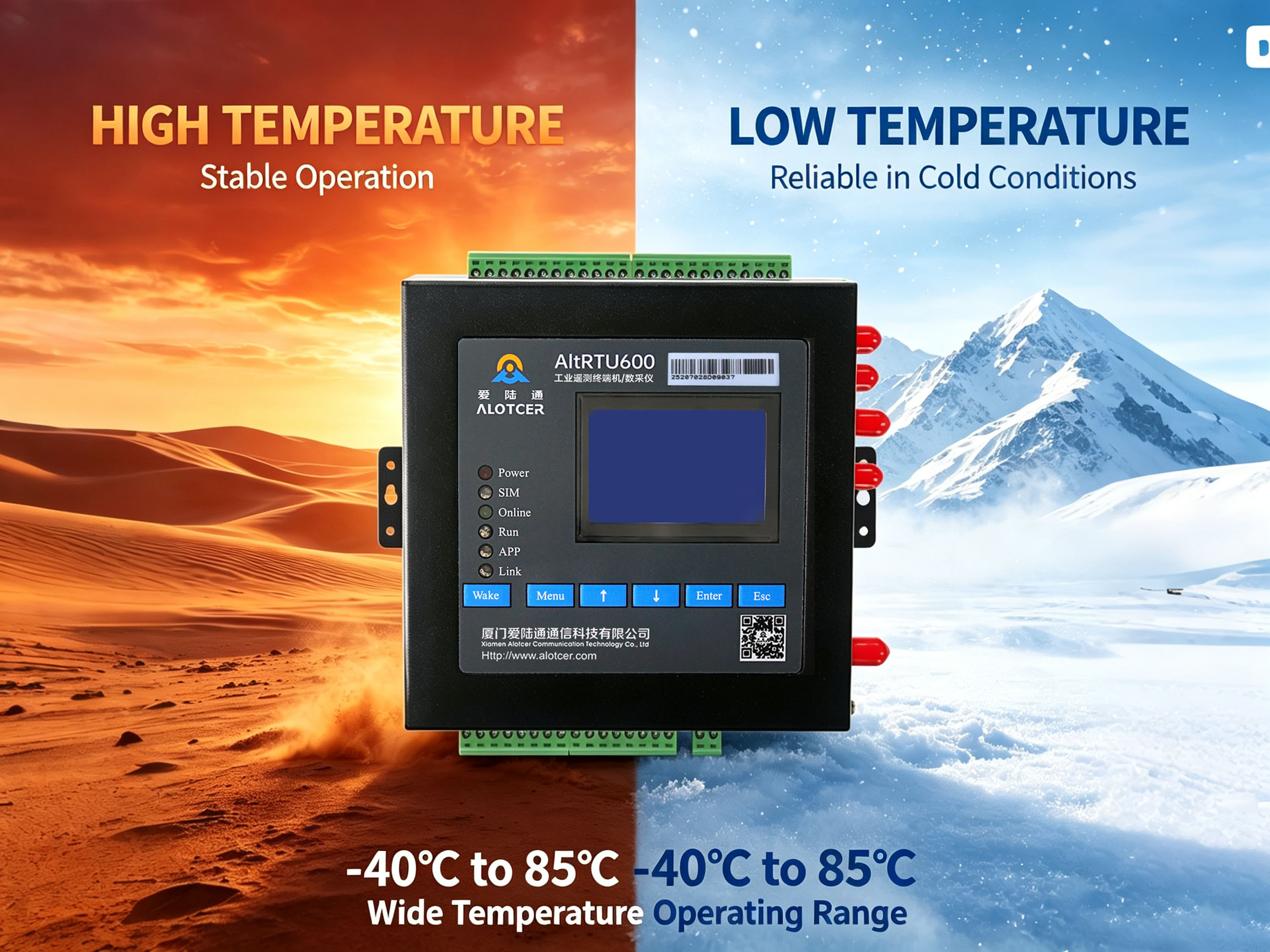
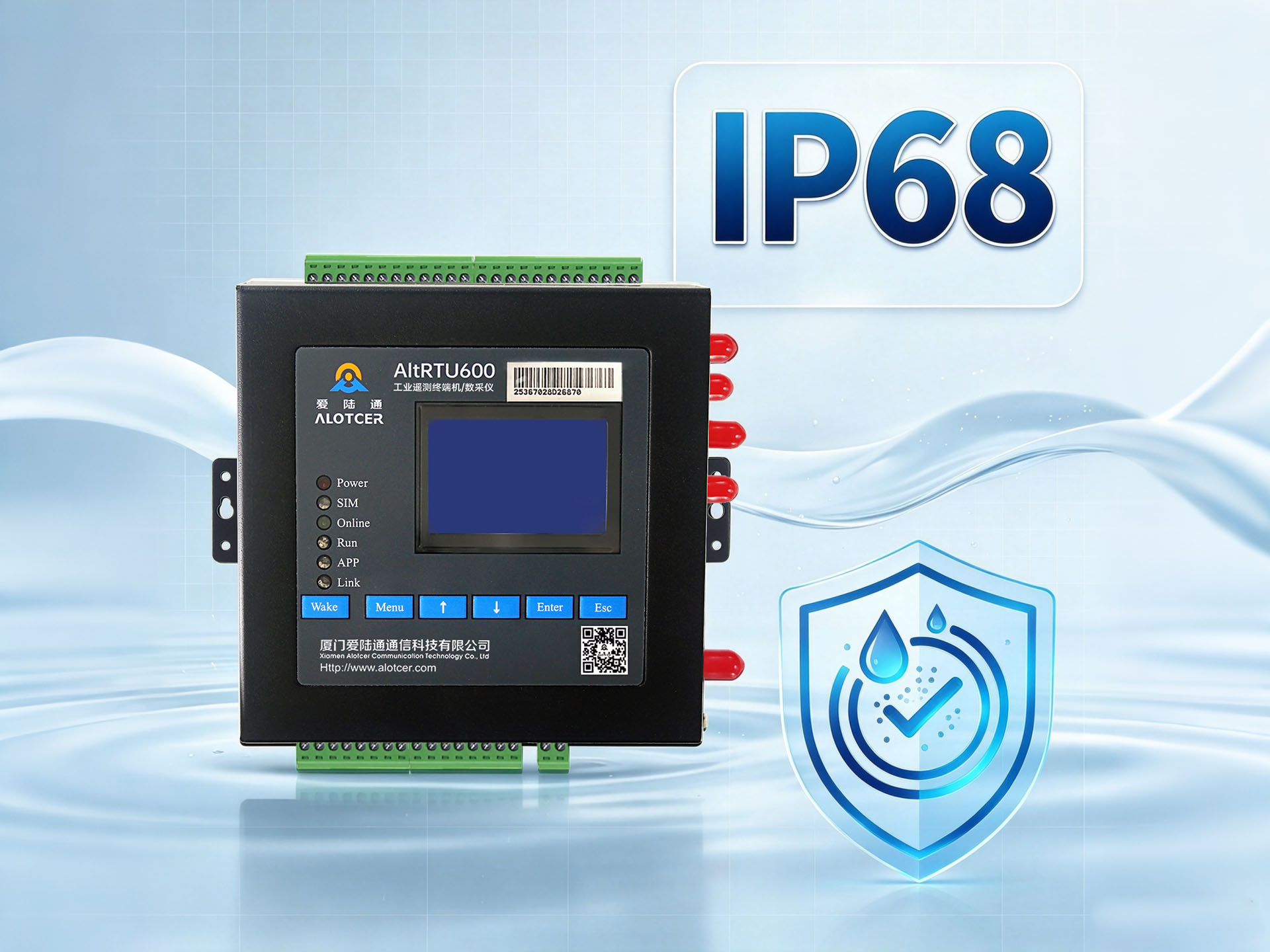
Second, service‑life conflict. Water consumption for agricultural irrigation wells is highly seasonal. Pipes remain idle for long periods outside irrigation seasons, so sediment and limescale easily build up inside water‑meter movements. Exposed to alternating high‑low field temperatures and rain immersion, traditional smart water meters have an average real‑world service life of less than two years. Recurring later‑stage costs for meter replacement and troubleshooting far exceed initial equipment procurement expenses.
Third, data conflict. Conventional solutions rely on periodic on‑site manual calibration, leading to significant data latency, together with risks of human tampering and missing records. Water‑authority departments cannot obtain real‑time total regional water‑abstraction data, failing to support refined management requirements such as groundwater over‑exploitation control and agricultural water‑price reform.
These issues cannot be solved merely by improving water‑meter manufacturing precision. Fundamentally, the “direct flow measurement” technical route is inherently mismatched with rural wells characterised by scattered distribution, ageing facilities and harsh working conditions.
Power‑to‑Water Conversion Re‑engineers Metering Logic and Breaks Path Dependence
The core principle of power‑to‑water conversion leverages the physical law that pump power consumption has a strong linear correlation with actual water output in agricultural irrigation scenarios. Instead of directly monitoring flow on the water‑delivery side, it calculates actual abstracted water volume through accurate collection of pump power consumption.
The Alotcer AltRTU600S Power‑to‑Water Conversion RTU delivers practical implementation of this principle. Equipped with an on‑board 0.5‑second high‑precision acquisition module, it captures real‑time key parameters including pump start‑up duration, operating power and cumulative power consumption. Combined with well depth, pump model and local water‑level variation for each individual well, it generates dynamically calibrated dedicated power‑water conversion coefficients. The final water‑abstraction measurement accuracy reaches above 95%, fully complying with Technical Specification for Agricultural Water‑Abstraction Metering.
This model eliminates all core disadvantages of conventional approaches at source: no modification to original water‑conveyance pipelines and no large‑scale civil construction are required. Deployment is completed directly on the power supply side. The combined hardware‑plus‑installation cost per well is less than half that of traditional water‑meter solutions, fundamentally easing capital pressure for large‑scale retrofits.
Full‑dimensional Adaptability of AltRTU600S Supports Large‑scale Promotion
As a benchmark industrial‑grade Power‑to‑Water Conversion RTU, the Alotcer AltRTU600S features abundant customised optimisations for rural well scenarios.
On hardware, it supports dual mains‑power and solar‑power supply modes with sleep current as low as 25 μA. For remote wells without external power supply, stable year‑round operation is achievable with low‑power solar panels.
On protocol, it natively supports the SL/T 427‑2021 water‑resource monitoring and transmission protocol. Seamless connection to provincial and municipal water‑regulation platforms nationwide is realised without secondary development, greatly cutting project integration costs.
More importantly, it functions beyond a simple metering terminal. Advanced capabilities include automatic early‑warning for excessive water abstraction, remote intelligent pump control, and water‑usage statistics and analysis. It provides complete data support for agricultural water quota management, tiered water‑price billing and precise distribution of water‑saving subsidies.
Facing retrofit demands for millions of existing rural wells nationwide, the low‑cost, highly‑reliable and easy‑to‑deploy Alotcer AltRTU600S Power‑to‑Water Conversion RTU undoubtedly represents the retrofit scheme with the highest technical maturity and return‑on‑investment at the current stage.
Alotcer AltRTU600S: Precise Power-to-Water Metering, Empowering Efficient Smart Agricultural Water Management.