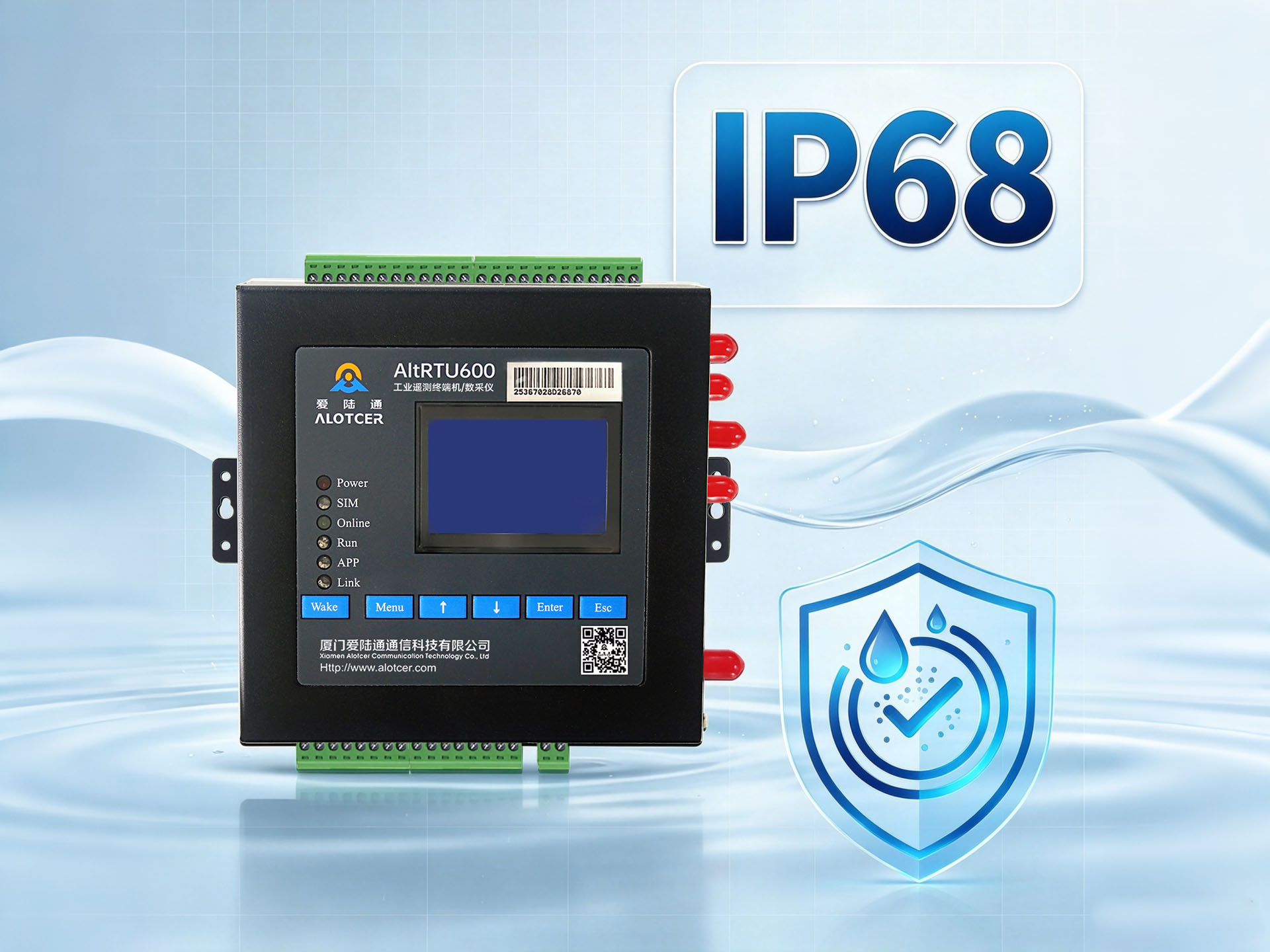
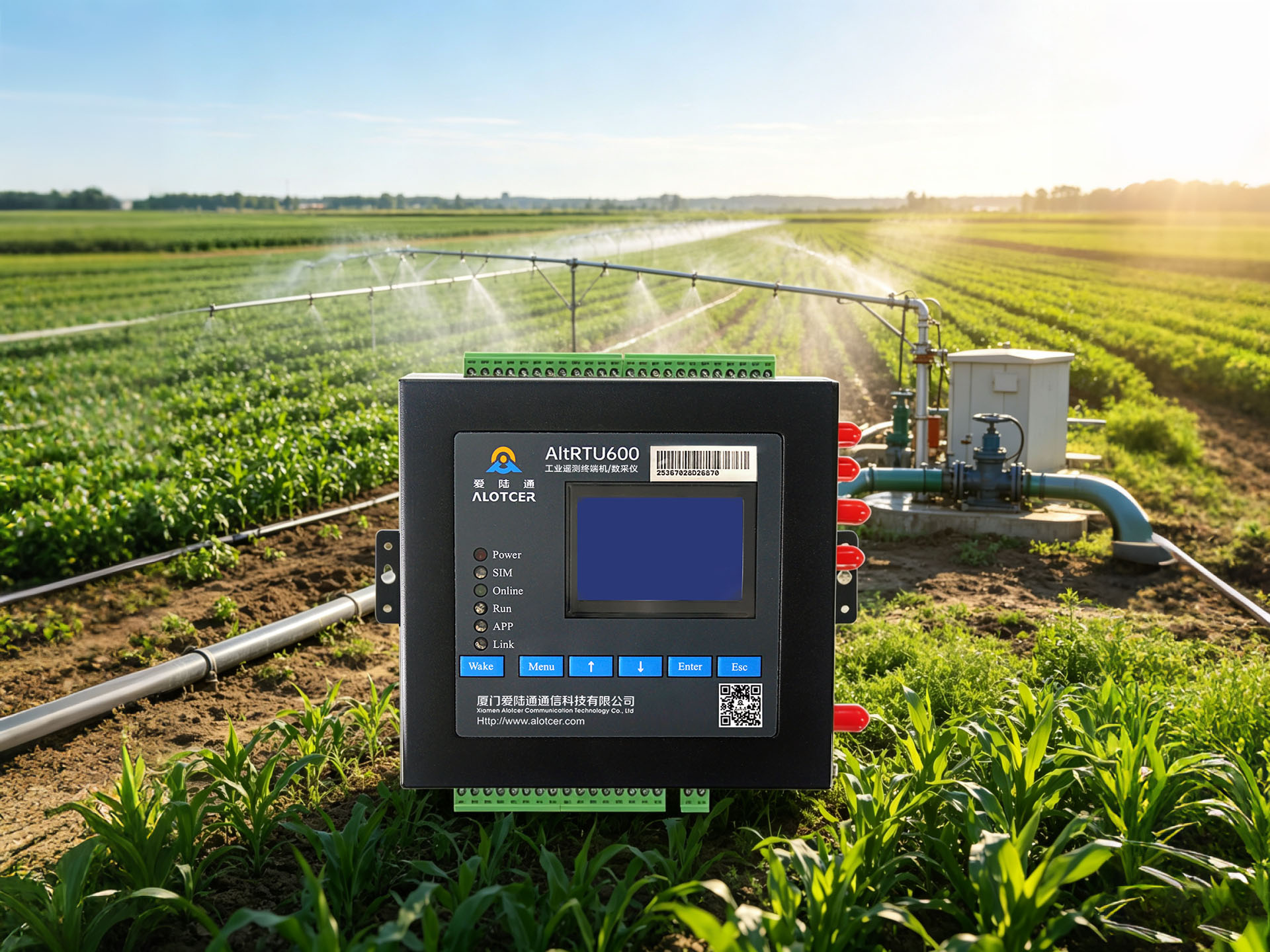
In cold and high‑altitude areas of Northwest and Northeast China, winter temperatures frequently drop below ‑30℃, and diurnal temperature swings in some high‑elevation zones exceed 40℃. Conventional water‑supply pipeline RTUs commonly suffer from depleted frozen batteries, mainboard crashes and cracked displays under such conditions, rendering winter pipeline monitoring nearly semi‑paralyzed. Tailored for these extreme scenarios, the Alotcer AltRTU600S wide‑temperature water‑supply RTU has undergone dedicated low‑temperature optimization. Deployed in multiple extreme‑environment projects including the Qinghai‑Tibet Plateau and Mohe in Heilongjiang, it delivers year‑round stable online operation at ‑40℃, filling the technical gap for pipeline monitoring in frigid high‑cold regions.
Industrial‑grade Wide‑temperature Components for Stable -40℃ Operation
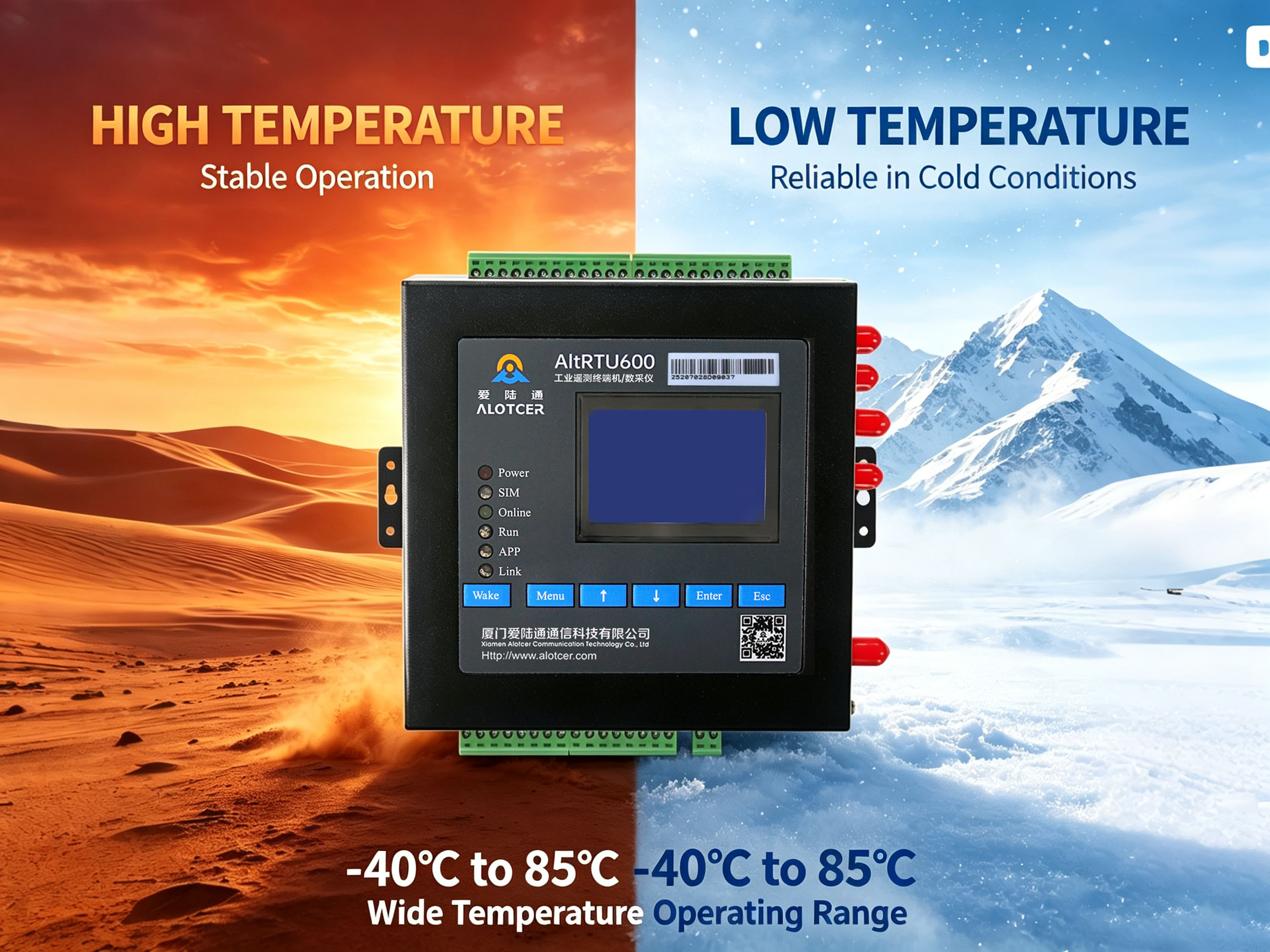
Most consumer‑grade RTUs operate within ‑10℃ to 60℃. Once ambient temperature falls below ‑20℃, internal components such as capacitors and crystal oscillators suffer sharp performance degradation, resulting in device startup failures and frequent crashes.
The entire Alotcer AltRTU600S water‑supply RTU adopts industrial‑grade wide‑temperature components. From core main control chips to peripheral capacitors and crystal oscillators, all parts support an ultra‑wide operating temperature range of ‑40℃ to 85℃. Every unit undergoes 72‑hour high‑low temperature cycling burn‑in testing before delivery. Even under extreme cold of ‑40℃, it completes full workflows of data acquisition and network transmission without cold‑induced crashes.
Low-temperature Battery Activation Technology Avoids Power Drain
Frigid conditions in cold regions drastically reduce the activity of ordinary lithium‑ion batteries, whose actual capacity often falls below 30 % of the rated value. Many field‑mounted pipeline monitoring devices shut down automatically in winter due to frozen battery depletion, making continuous pipeline‑data monitoring impossible.
Equipped with self‑developed intelligent low‑temperature battery‑activation technology, the Alotcer AltRTU600S water‑supply RTU integrates an onboard temperature sensor. When ambient temperature drops below 0℃, it automatically triggers a low‑power pre‑heating module to moderately raise battery temperature without extra power consumption, keeping the battery at high‑activity status. Field tests at outdoor pipeline monitoring stations in the Greater Khingan Range, Heilongjiang, verified stable battery output at ‑38℃ with zero shutdown incidents caused by cold‑related power loss.
Temperature-resistant Structure Adapts to High-altitude Extreme Temperature Difference
Pipeline monitoring devices at high altitudes are mostly installed in exposed pipe wells and valve chambers, where diurnal temperature differences often surpass 40℃. Severe thermal expansion and contraction may crack enclosures and cause component solder joint detachment; ordinary devices frequently sustain hardware failure within less than six months.
The Alotcer AltRTU600S water‑supply RTU features an integrated temperature‑tolerant metal structure. Its high‑strength aluminium‑alloy housing together with anti‑stress buffer structures effectively counteracts structural deformation from drastic temperature fluctuations. Reinforced soldering is applied to internal circuit boards, and all connectors are anti‑loosening treated. Even under long‑term exposure to diurnal temperature swings over 40℃, solder‑joint detachment and housing cracking are avoided, making it fully suitable for complex high‑altitude operating conditions.
Alotcer AltRTU600S: Wide‑temperature, cold‑resilient and always‑on. Rock‑solid pipeline monitoring for cold regions.
Q: Will data transmission speed slow down at ‑40℃ extreme cold?
A: The communication module also employs industrial‑grade wide‑temperature components. Network speed remains consistent with room‑temperature performance, with no data‑transmission delay or throughput reduction.
Q: At low atmospheric pressure on high‑altitude sites, can internal condensation damage the mainboard?
A: The unit adopts a fully‑sealed construction filled with dry nitrogen during manufacturing. External moisture cannot ingress under high‑altitude low‑pressure conditions, preventing condensation and mainboard corrosion.
Q: Without mains power in cold zones, can the device survive winter on solar power?
A: The RTU features ultra‑low power draw. Paired with low‑temperature‑compatible small‑size solar panels and wide‑temperature energy‑storage batteries, it sustains normal operation through up to seven consecutive overcast days, perfectly satisfying off‑grid deployment requirements for remote cold‑region field monitoring points.