No Road Excavation or Pipe Laying Needed for Digital Upgrade of Aged Pumping Wells
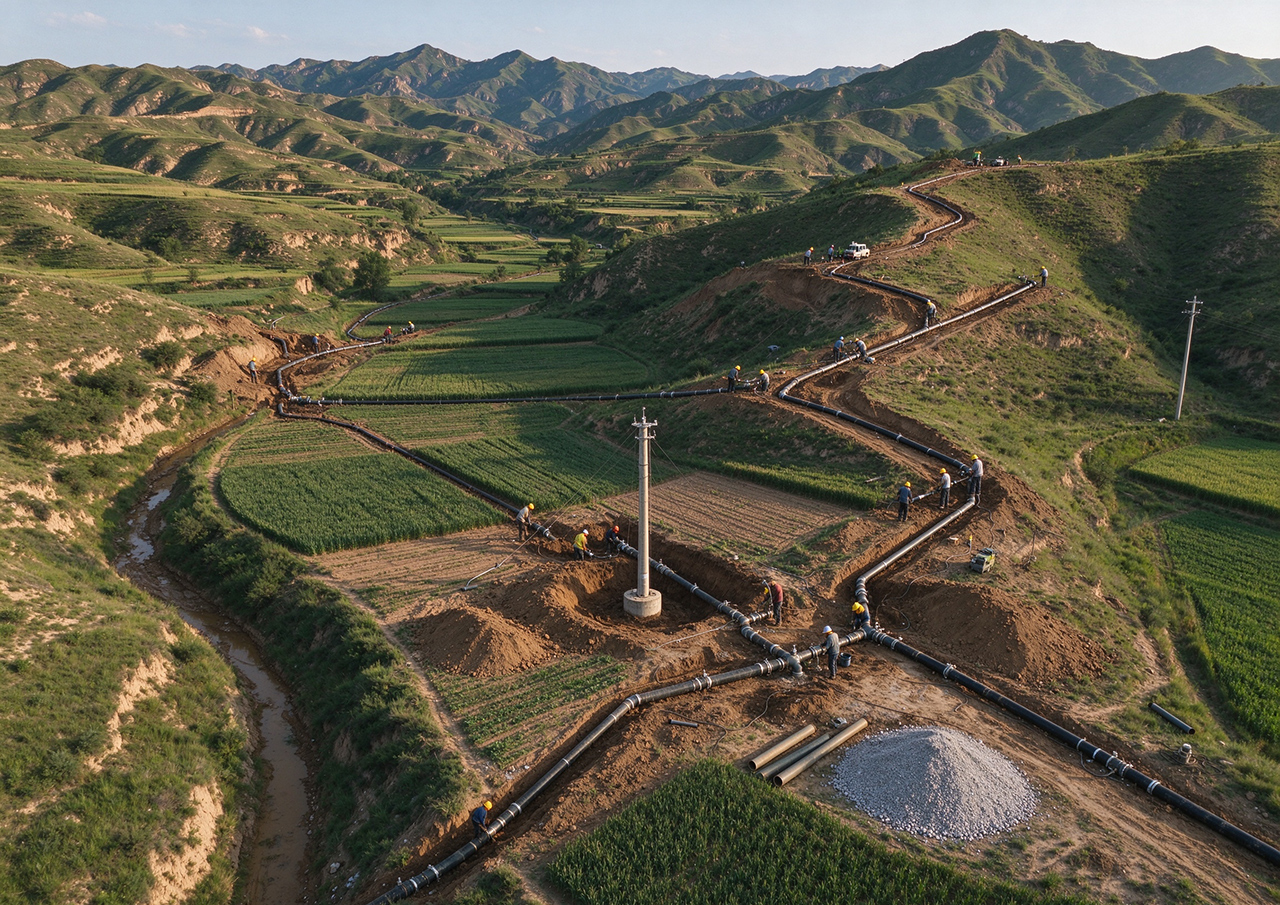
In the advancement of agricultural water projects across many counties, the digital retrofitting of aged irrigation pumping wells has long been a major headache. Most farm irrigation wells built in earlier years were only equipped with basic water pumps and power supply lines, with no reserved interfaces for smart water meters, nor established water delivery branch pipeline networks. Previously, to upgrade water intake metering, the first step was to break roads and dig trenches to re-lay water pipelines. Civil engineering work alone often accounted for over 60% of the total project budget.
For irrigation districts with complex terrain such as mountains and hills, heavy machinery cannot access the sites, and all excavation relies on manual labour. Pipeline retrofitting for a single well takes two to three days. Mass projects suffer months of delays. Many planned agricultural water digitalisation projects have been stalled by pipeline reconstruction barriers.
To make matters worse, even after pipeline renovation and smart water meter installation, heavy maintenance burdens persist. Field operating conditions are harsh. Sediment carried in irrigation water easily jams meter movements, leading to inaccurate metering shortly after commissioning. In cold winter months, exposed buried water meters are prone to frost cracking. Every year once irrigation resumes, maintenance crews have to travel village by village to replace damaged equipment in batches. Substantial funds are spent, yet less than half of the collected data can be reliably uploaded. Grassroots water authorities lack dependable data support for routine supervision.
Targeting these widespread industry implementation pain points, Alotcer breaks away from the conventional mindset of “renovate pipelines first, then install water meters”. Accurate remote collection of water intake data can be realised without modifying the original water delivery pipelines of pumping wells. The core working principle relies on the linear correlation between the power consumption of well pumps and actual water output. High-precision acquisition units capture real-time pump operating duration, working power and cumulative electricity consumption. Combined with site parameters including well depth and rated pump power entered on-site, the system automatically generates a well-specific electricity-water conversion coefficient to calculate accurate farmland water withdrawal volumes.
This lightweight deployment greatly simplifies on-site installation. Construction crews do not need heavy excavation equipment or complicated pre-work for pipeline connection. They only perform simple wiring on the existing power control cabinet of the pumping well, then input basic parameters via the supporting mobile mini-program to complete full deployment. Even local electricians without professional metering equipment installation experience can independently finish installation and commissioning for one well after roughly one hour of basic training. From unboxing and wiring to connecting the device to the regional water resources supervision platform, the whole process for a single well can be completed within half a day. Compared with the traditional pipeline-first, meter-later method, construction efficiency is quadrupled. Batch retrofits for one hundred wells, which used to take months, can now be fully delivered in half a month.
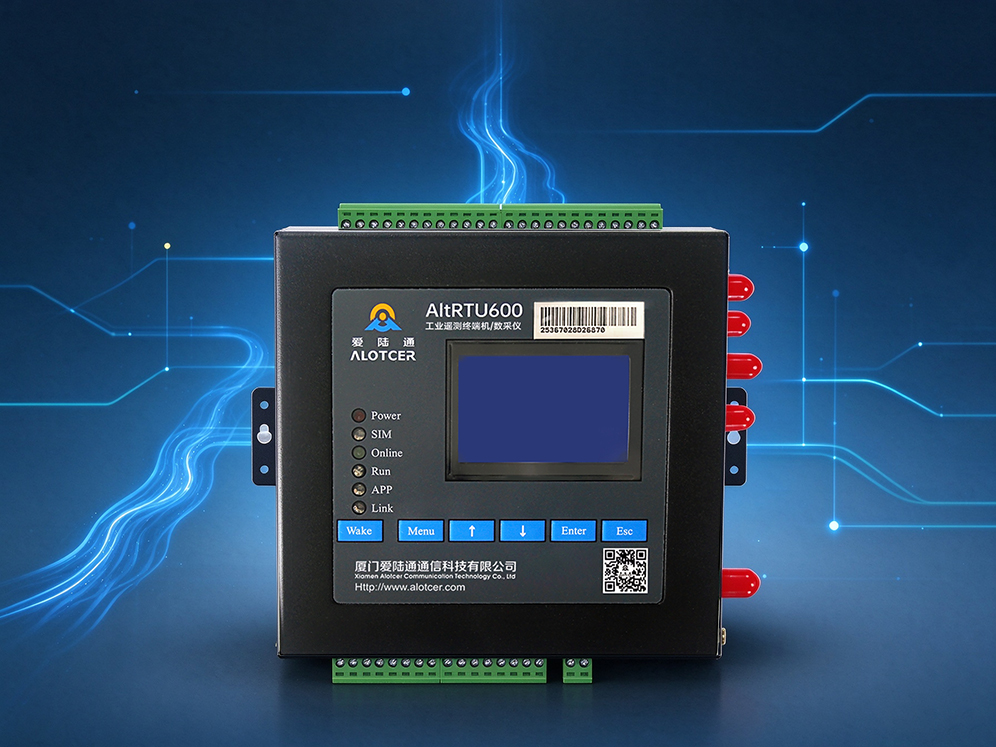
Alotcer AltRTU600S features targeted hardware optimisations for harsh rural field environments. The unit adopts an IP68 waterproof and dustproof industrial enclosure. All circuit boards receive three layers of anti-corrosion coating, enabling stable operation within an extreme temperature range of -35℃ to 75℃. Even when mounted outdoors beside pump houses, it withstands rainwater submersion, sand erosion and winter frost. Field data from deployed projects across multiple Chinese provinces shows the device boasts a failure rate below 5% over three consecutive years of operation. Frequent on-site maintenance visits are nearly eliminated, cutting most labour and material costs.
After device commissioning, all data including electricity consumption, converted water withdrawal volumes and pump operating status is automatically synchronised to the backend supervision system via wireless networks. Grassroots water administrators can export complete meter reading records of all wells directly from the office, instead of travelling across farmlands and villages by electric scooter. The device natively supports the Ministry of Water Resources standard HJ212 protocol. Collected data can connect directly to provincial water resources supervision platforms without complicated additional system adaptation, streamlining project acceptance.
Massive digital upgrades of aged pumping wells can be realised without large-scale reconstruction of original pipelines or damage to existing farmland infrastructure. This lightweight retrofitting approach is offering a practical implementation pathway for numerous agricultural water digitalisation projects that were previously difficult to roll out.