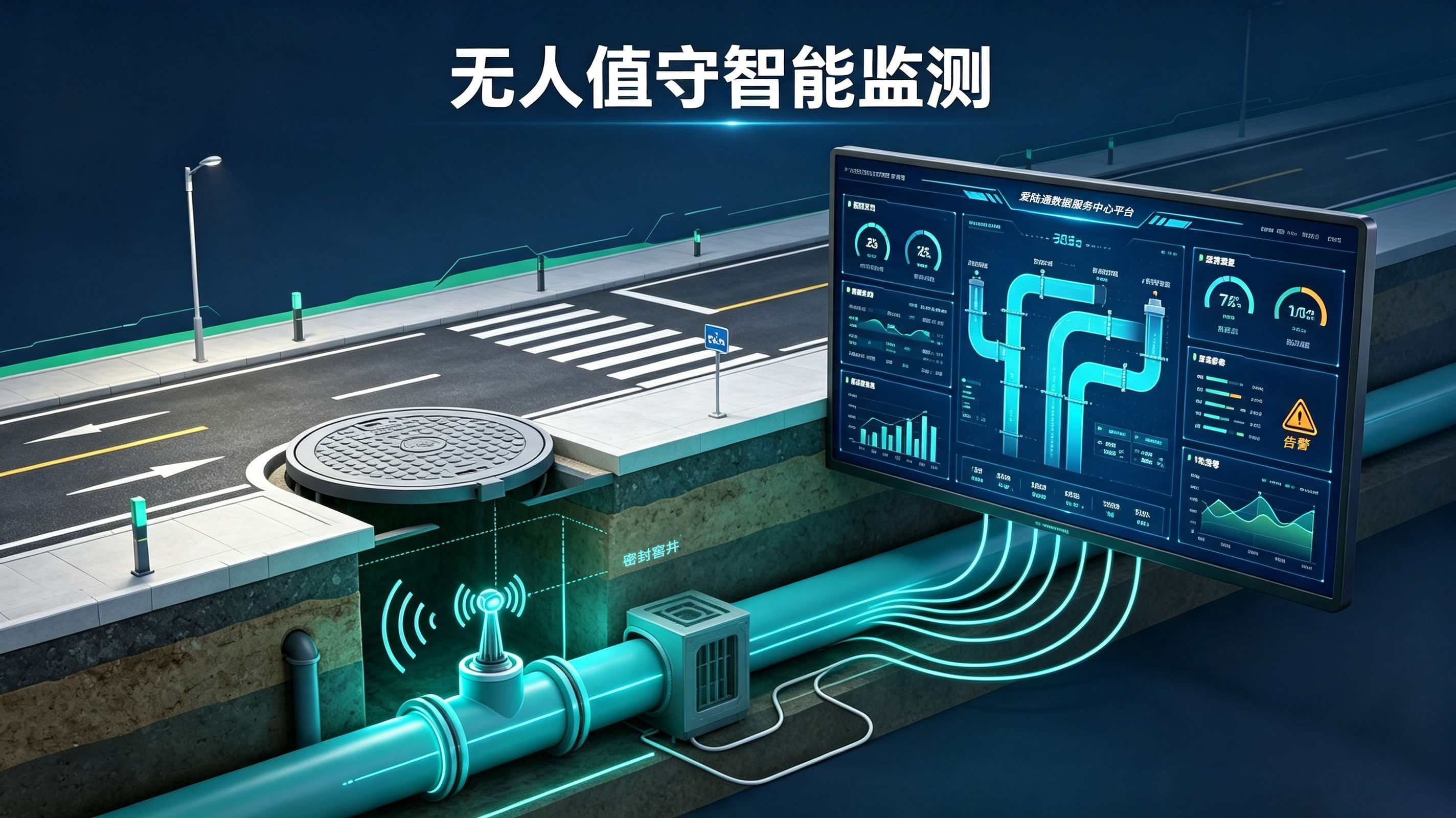
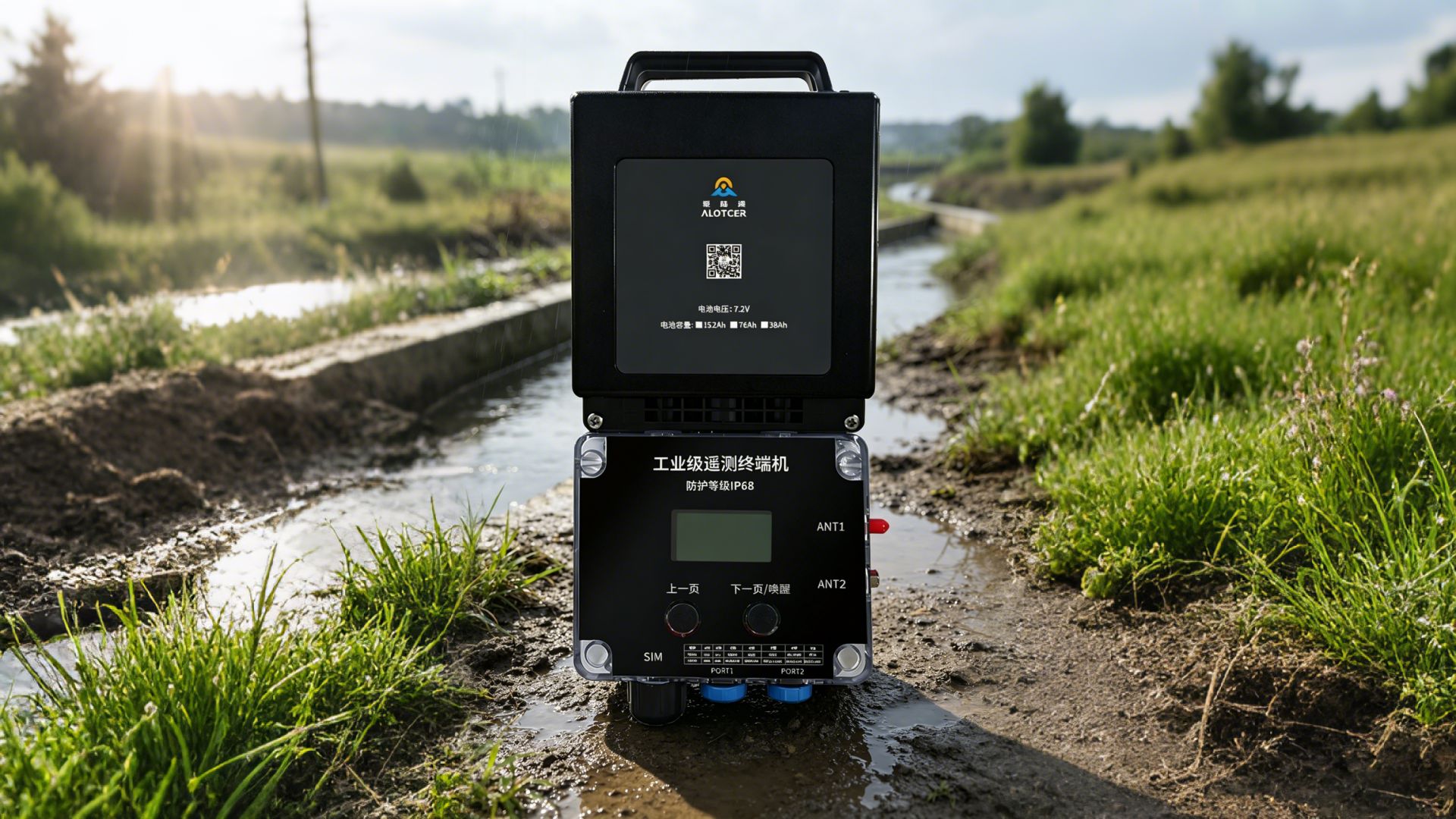
In midsummer, intense sunlight, persistent surface heat buildup and accumulated heat within sealed underground pipe chambers constitute common operating conditions for municipal pipe network monitoring equipment. Many monitoring points of urban water supply and drainage networks, long-distance water conveyance pipelines and urban rainwater & sewage pipe networks are laid on uncovered road surfaces or installed in poorly ventilated sealed underground pipe chambers. In summer, surface temperatures can exceed 60°C, and temperatures inside enclosed pipe chambers rise even higher. Ordinary monitoring terminals are prone to overheating shutdowns, communication disconnections, data chaos and hardware burnout. These faults paralyze pipe network monitoring and hinder timely early warning of hidden risks. To tackle equipment operational challenges under high-temperature conditions, Alotcer has optimized hardware heat dissipation and high-temperature resistance design, developing pipe network monitoring terminals capable of stable operation across a wide temperature range. The solution addresses maintenance difficulties in high-temperature environments and ensures year-round stable monitoring of smart pipe networks.
1. Core Operational Pain Points of Municipal Pipe Network Equipment in High-temperature Environments
Unlike constant-temperature indoor equipment, municipal pipe network monitoring terminals operate continuously under extreme high temperatures, with overlapping hazards threatening system stability. First, rapid temperature rise under surface exposure. Without shelters on urban road surfaces, equipment casings constantly absorb heat, pushing internal temperatures far beyond the tolerance range of ordinary industrial equipment. Second, serious heat accumulation inside sealed pipe chambers. Underground pipe chambers feature confined space and poor ventilation. In summer, high temperature coupled with water vapor creates a high-temperature and high-humidity sealed environment, which easily accelerates circuit board aging and triggers short circuits. In addition, high temperatures induce cascading failures: communication modules suffer reduced sensitivity, battery life drops sharply, and data collection becomes disordered. Frequent offline events, false alarms and missed alarms greatly raise operational risks for pipe networks.
Most ordinary IoT terminals available on the market are only suitable for normal ambient temperatures. When facing sustained high temperature and heat accumulation on municipal pipe networks, their failure rates surge. This not only increases on-site maintenance costs, but also creates blind spots for pipe network monitoring, bringing potential risks such as pipe bursts, water leakage and urban waterlogging.
2. Core Advantages of Alotcer High-temperature Resistant Pipe Network Monitoring Terminals
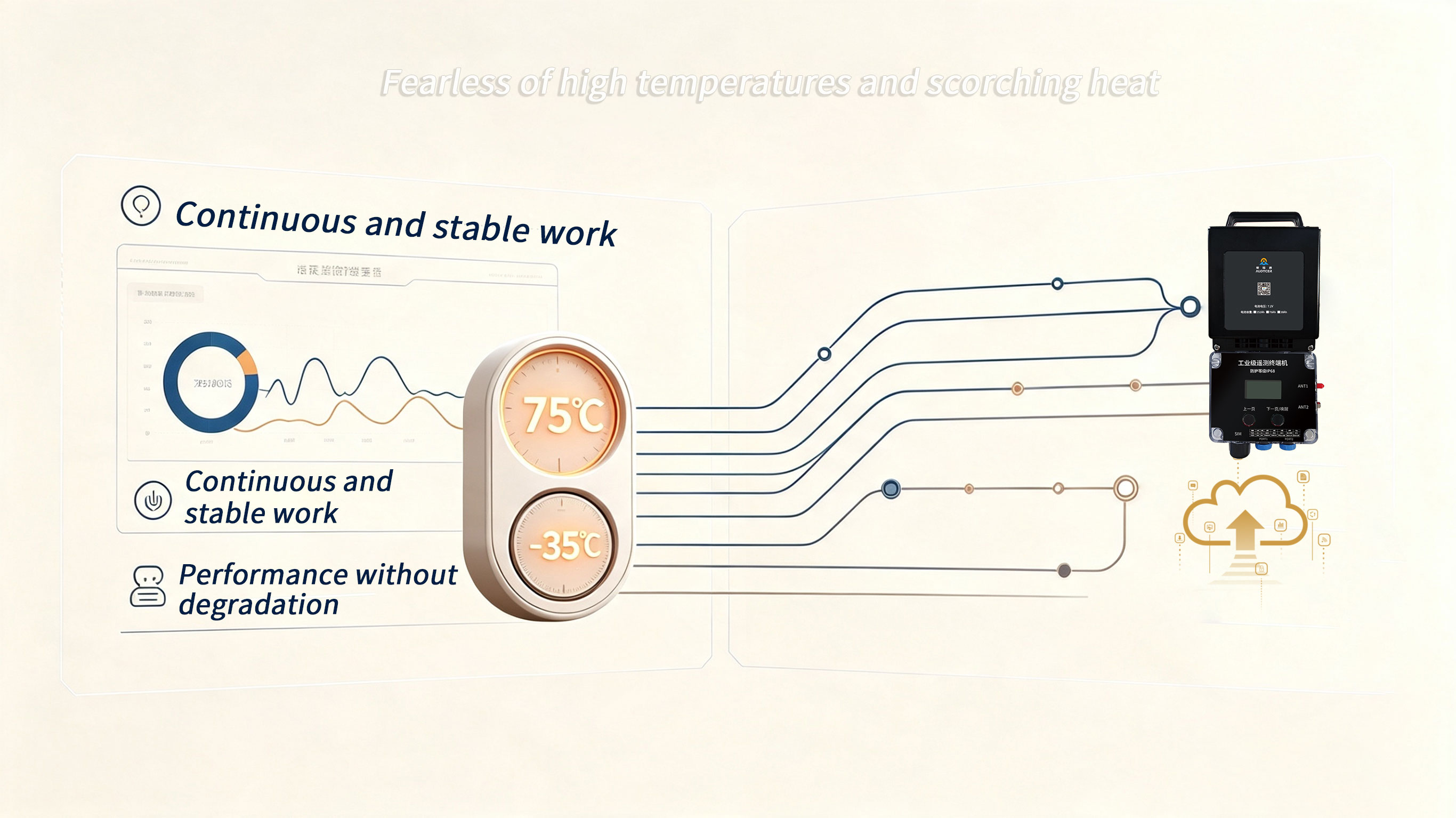
Targeting harsh high-temperature working conditions of municipal pipe networks, Alotcer AltRTU600 series pipe network monitoring terminals break the conventional design of general equipment. Upgrades cover hardware material selection, heat dissipation structure and operating algorithms, supporting stable operation from -35°C to 75°C, fully adapting municipal pipe networks under scorching summer heat.
2.1 Industrial Wide-temperature Hardware Materials Ensuring Undegraded Performance at High Temperatures
Core components adopt military-grade high-temperature resistant materials instead of low-end civilian accessories. All chips, communication modules, capacitors and resistors pass high-temperature aging tests. The terminals can operate continuously and stably under the extreme limit of 75°C with no performance degradation, lagging or shutdown. It fundamentally eliminates component failure, circuit drift and abnormal data frequently found on ordinary equipment under high temperatures.
2.2 Optimized Heat Dissipation Structure Avoiding Overheating Caused by Heat Accumulation in Confined Spaces
Developed for sealed installation scenarios including municipal pipe chambers and outdoor cabinets, the equipment adopts an integrated passive heat conduction structure without cooling fans, avoiding malfunctions caused by dust accumulation on fans. Uniform heat conduction quickly dissipates internal heat and effectively solves heat accumulation inside confined spaces. Meanwhile, the fully sealed body maintains dustproof and waterproof performance without compromising heat dissipation capability, achieving both high-temperature resistance and environmental adaptability.
2.3 Adaptive High-temperature Operating Algorithms Guarantee Stable Communication and Data
Alotcer self-developed intelligent temperature control operating algorithms automatically adjust equipment power consumption and computing allocation under high temperatures to prevent overheating shutdown caused by heavy load. The terminal retains core functions including automatic reconnection after disconnection, breakpoint resume transmission and local data caching. Even under prolonged high-temperature conditions, it can steadily collect pipe network data such as pressure, flow and liquid level, maintain persistent communication links and ensure accurate data uploads.
2.4 High-temperature Optimized Low Power Consumption Eases Maintenance Pressure
Extreme summer heat accelerates battery aging, which may cause power outages for pipe network monitoring equipment. Equipped with an intelligent power management system, Alotcer high-temperature resistant monitoring terminals automatically switch to energy-saving modes under high temperatures to reduce power consumption and slow lithium battery aging. For pipe chamber sites without mains power supply, continuous operation can be maintained throughout summer, cutting the frequency of on-site inspections and battery replacement.
3. Practical Application Value
At present, Alotcer wide-temperature high-temperature resistant pipe network monitoring terminals have been widely applied in urban municipal water supply pipe networks, urban rainwater and sewage pipe networks, exposed surface pipe networks and sealed underground pipe chambers and other high-temperature scenarios. After years of field verification under extreme summer heat, the equipment operates stably without shutdowns, disconnections or data anomalies. The equipment online rate remains above 99.8%, completely solving the “monitoring failure” problem of municipal pipe networks in hot seasons and providing reliable support for stable operation of smart water services in high-temperature periods.
Frequently Asked Questions
Q1: Will the equipment shut down or go offline under direct summer sunlight and accumulated heat in pipe chambers? A1: It will not. Alotcer pipe network RTUs support continuous operation at the maximum temperature of 75°C. Adopting wide-temperature hardware and passive heat dissipation design, it can withstand direct sunlight and heat accumulation inside sealed pipe chambers, maintaining stable operation without shutdown or disconnection.
Q2: Will high temperature and humidity lead to data disorder and false alarms? A2: It will not. The equipment passes dual aging tests under high temperature and high humidity. Supported by adaptive operating algorithms, data collection precision remains stable under high-temperature conditions. No data drift, false alarms or missed alarms occur to guarantee authentic and reliable monitoring data.
Q3: Will high temperatures affect battery life and equipment service time? A3: The impact is minimal. The built-in intelligent temperature-sensitive power management reduces energy consumption loss under high temperatures and slows battery aging, significantly extending battery runtime and overall service life of equipment in hot seasons.
Q4: Do high-temperature resistant devices require regular cleaning of heat dissipation components? A4: Frequent maintenance is unnecessary. The equipment adopts fanless passive heat dissipation without vulnerable cooling components. With dustproof, waterproof and high-temperature resistant features, stable operation can be achieved in complex municipal environments to support long-term unattended monitoring.
In the future, Alotcer will continuously optimize the wide-temperature adaptability of industrial terminals, deepen research on extreme working conditions of municipal pipe networks, and launch more IoT monitoring and communication equipment featuring high-temperature resistance, low-temperature resistance and high stability. We will facilitate round-the-clock, all-season and full-scenario stable operation of smart pipe networks across regions.