Have you ever wondered: those robotic arms, conveyor belts, and temperature sensors in factories generate massive amounts of data every second—so why not just throw it all into the cloud for processing? Why put a device on-site instead? The answer is simple—some things simply cannot wait.
First, Understand the Underlying Logic: The Cloud Is Not Omnipotent
We’ve grown accustomed to taking photos on our phones and uploading them, storing videos in the cloud—”sending data to a server for processing” feels like common sense. But a factory is not your smartphone.
An automotive welding line generates process parameters every millisecond. If a robotic arm’s movement deviates by more than 0.1 millimeters, an entire batch of parts is scrapped. At that moment, if you send the data hundreds of kilometers away to a data center, wait for the server to compute, and then send the command back? The network latency alone would cost you an entire production line.
So the core value of an industrial edge computing gateway can be summarized in one sentence: move computing power as close to the equipment as possible, so decisions are made on-site without waiting for cloud approval.
It does not replace the cloud—it lightens the cloud’s load. Only data that truly requires long-term analysis or cross-factory comparison goes to the cloud; everything else is digested locally.
Scenario 1: Those “One Second Too Late Means Disaster” Moments on the Production Line
This is the most critical battlefield for edge gateways.
Take a semiconductor wafer fabrication plant’s etching machine: temperature, air pressure, and gas flow must all meet conditions simultaneously before processing can begin. If any parameter exceeds limits, the machine must shut down automatically within milliseconds—otherwise a single wafer worth tens of thousands of yuan is destroyed instantly.
Or consider a food and beverage plant’s filling line: if a liquid level sensor detects a bottle is not in position, the filling valve must close immediately. This kind of event simply cannot follow a “upload first, judge later” workflow—it must be detected, decided, and acted upon locally, in real-time, with zero latency.
The edge gateway’s job here is: monitor sensor data, act immediately upon detecting anomalies, without waiting for anyone’s approval.
Scenario 2: Remote Sites That “Must Keep Running Without Network”
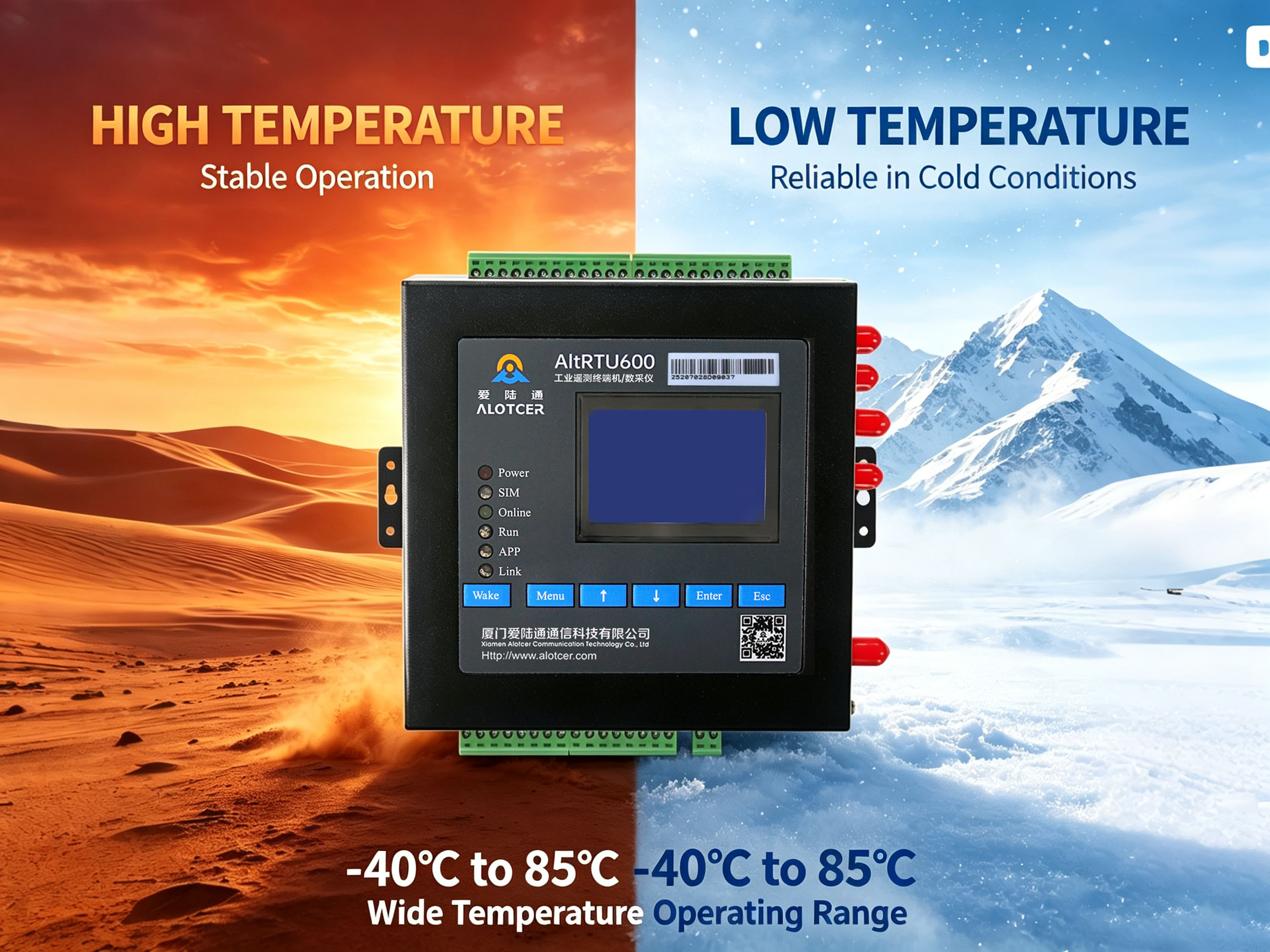
Intermediate booster stations along oil pipelines, offshore drilling platforms, remote mountain hydropower stations—these places either have no fiber optic connection at all, or signals come and go. Talking to them about “uploading to the cloud” is simply nonsense.
Yet equipment must keep running, data must keep being recorded, and alarms must keep being triggered.
In these scenarios, the edge gateway becomes the site’s sole “brain.” It collects data on its own, makes judgments on its own, stores records on its own, and synchronizes summaries to headquarters only when the network is available. Even if the network is down for three months, on-site monitoring and control never stops for a second.
Scenario 3: Old Factories Where Dozens of Devices Speak “Different Languages”
Many factories are not newly built—their equipment comes from different eras and different manufacturers. A Siemens PLC speaks one protocol, a Mitsubishi servo speaks another, temperature controllers use yet another, and legacy instruments may only support serial communication.
These devices cannot understand each other, let alone interface with upper-level systems.
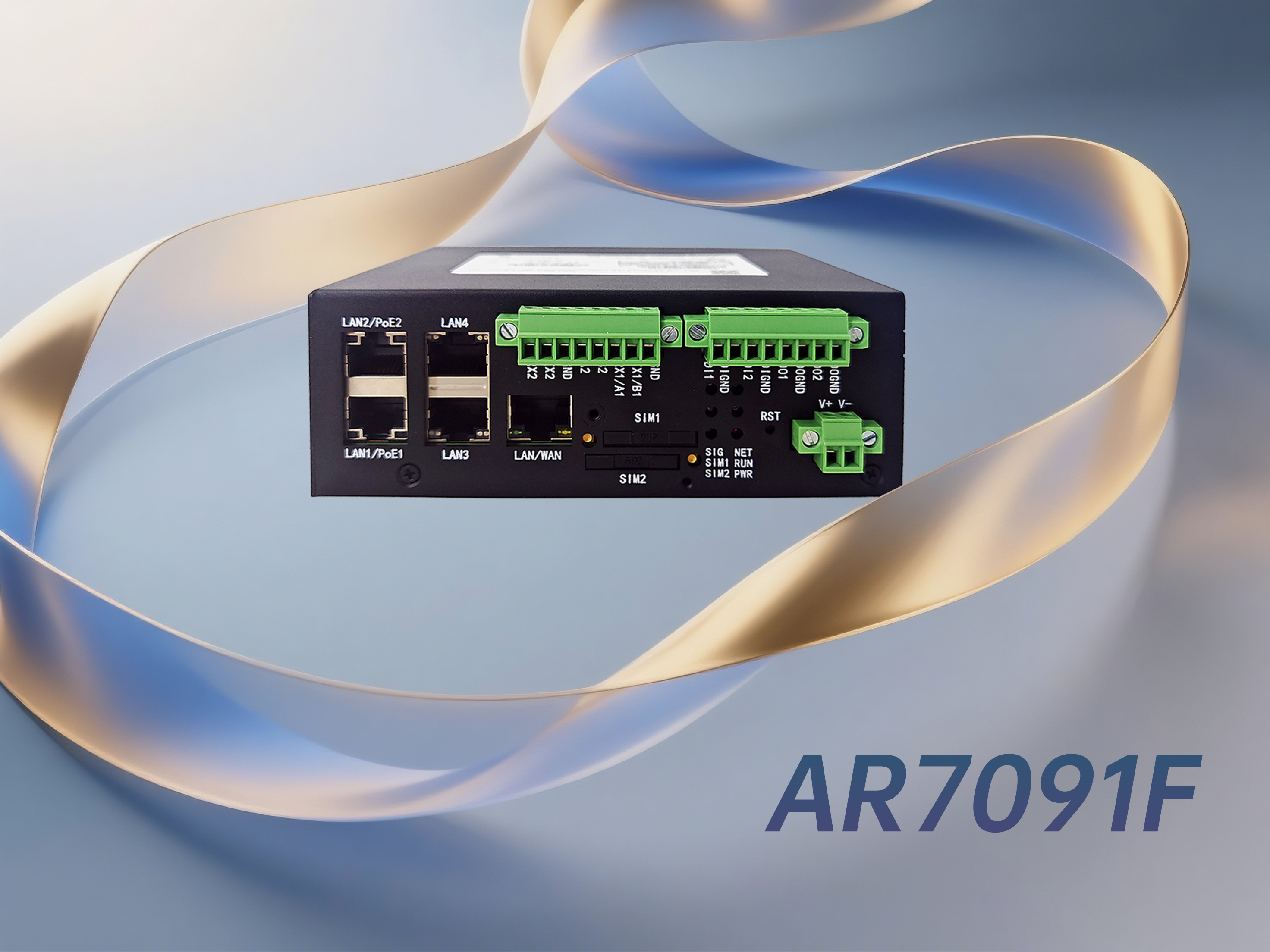
The edge gateway plays the role of interpreter here. It carries more than a dozen communication interfaces and protocol drivers, converting all device data into a unified standard format before passing it upward. The factory doesn’t need to spend a fortune replacing all old equipment—adding one gateway can “string them all together.”
Scenario 4: Places Where Data Is Too Sensitive for the Boss to Let It Leave
Military factories, pharmaceutical workshops, core process segments—these scenarios involve data such as formulas, process parameters, and production capacity information. Companies are fundamentally unwilling to let this data leave the factory premises.
No matter how secure the cloud is, it’s still someone else’s server. Who can guarantee it won’t leak?
The edge gateway can lock all sensitive data locally, uploading only anonymized statistical results. This satisfies headquarters’ need for reports while keeping core secrets firmly in hand. Data never leaves the factory; analysis never goes offline—this is the primary motivation for many enterprises choosing edge solutions.
Scenario 5: Places Where Bandwidth Is Too Expensive to Afford
A single production line may have thousands of sensors. If every data point is sent to the cloud, bandwidth costs alone could bankrupt the enterprise.
The edge gateway’s approach: filter, compress, and aggregate locally first. For example, a temperature sensor samples 100 times per second—the gateway won’t send all 100 data points. Instead, it calculates the average and fluctuation range for that second, sending only two numbers.
Bandwidth that originally required 100Mbps might now need only 1Mbps. The savings in bandwidth costs alone can pay back the gateway’s cost within a year.
Scenario 6: Multiple Factories Needing “Unified Command” Yet “Independent Operations”
Chain factories, group manufacturing enterprises—each facility has its own production lines and equipment. Headquarters wants to see global data for unified scheduling, yet each plant’s network conditions and operational rhythms differ.
Edge gateways operate independently at each facility, responsible for local real-time control and data processing. Simultaneously, they maintain communication with headquarters’ cloud platform, aggregating key metrics upward.
In short: small decisions are made locally; major events are reported upward. This prevents headquarters from being overwhelmed by trivial data, while ensuring branch plants don’t become information silos.
So, Do You Actually Need One?
Not every factory needs an edge gateway. If your scenario matches any of the following, it’s time to seriously consider it:
-
Equipment control requires millisecond-level response, unable to wait for cloud round-trips
-
On-site network conditions are poor, making data upload impractical
-
Equipment brands are mixed, protocols are incompatible and require conversion
-
Data has confidentiality requirements and cannot leave the factory premises
-
Sensor quantities are massive, bandwidth cannot sustain the load
-
Multiple sites require unified management yet need local autonomy
Conversely, if your factory has only a few devices, smooth network connectivity, and no real-time control requirements—then stick with a cloud solution honestly. Don’t waste money.