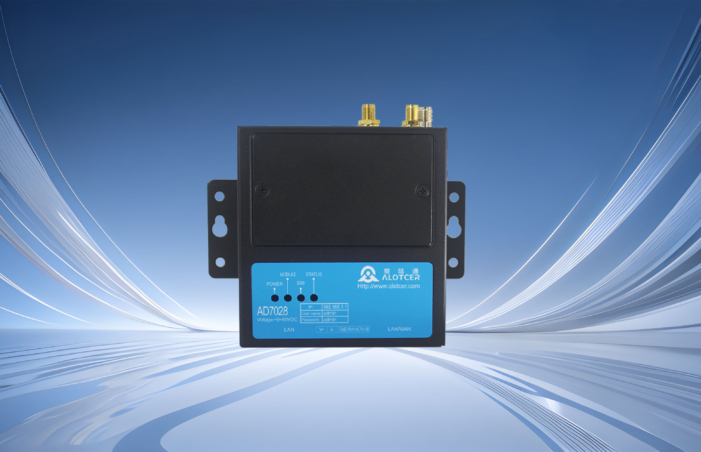
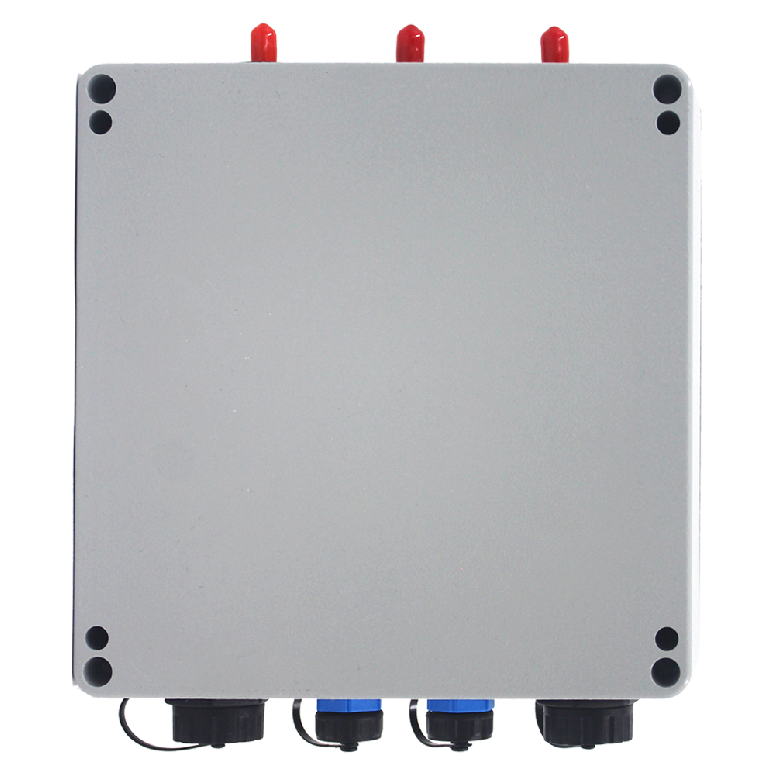
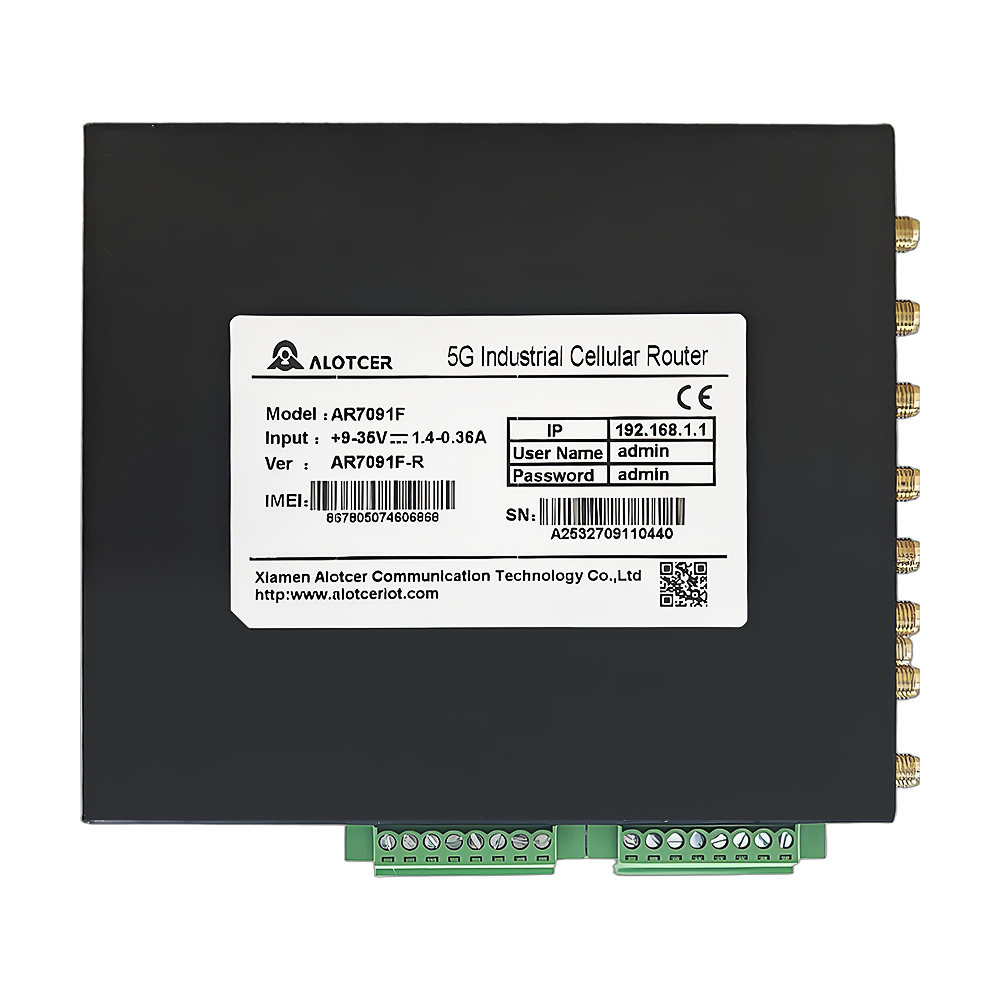
I. Basic Functions of Antennas
The antenna of a 4G industrial router is essentially a transducer between electromagnetic waves and electrical signals, undertaking the dual tasks of signal reception and transmission. When the router needs to receive data, the antenna captures the electromagnetic waves emitted by the base station through polarization matching and converts them into electrical signals to be transmitted to the modem. When sending data, the process is reversed, modulating digital signals into electromagnetic waves and radiating them into space. This process needs to meet two core indicators:
Frequency matching: The 4G LTE standard stipulates that FDD bands (such as B1/B3) require corresponding band antennas, and the antenna VSWR (Voltage Standing Wave Ratio) needs to be ≤2.0 to ensure impedance matching.
Polarization method: Vertical polarization antennas are commonly used in industrial scenarios, which can effectively reduce polarization mismatch losses caused by metal reflective surfaces.
II. In – Depth Analysis of Antenna Technology
MIMO Technology: The Revolution of Spatial Multiplexing
Multiple – Input Multiple – Output (MIMO) technology breaks through the Shannon limit through spatial diversity techniques. A typical 4×4 MIMO router can establish four data streams simultaneously, achieving a theoretical peak rate of 300Mbps under an 80MHz bandwidth. In practical applications, this technology can increase throughput in edge coverage areas by 30% – 50%. Key implementation elements include:
Antenna array design: Cross – polarized antenna elements are used to achieve spatial multiplexing through orthogonal polarization.
Channel estimation algorithm: Channel State Information (CSI) feedback based on pilot symbols.
Precoding technology: Beamforming optimization using Singular Value Decomposition (SVD).
Diversity Techniques: A Powerful Tool Against Signal Fading
Diversity antennas combat multipath fading through spatial diversity, frequency diversity, and other methods. Typical implementations include:
Maximum Ratio Combining (MRC): Weighted summation of signals from multiple antennas.
Selection Combining (SC): Selecting the branch with the highest signal – to – noise ratio.
Equalization Diversity: Combining with OFDM technology to eliminate inter – symbol interference.
Directional Antennas: A Solution for Precise Coverage
Directional antennas achieve gain in specific directions through beamforming technology. Directional antennas using microstrip patch arrays can achieve a gain of 6 – 18dBi, with a horizontal beamwidth of 30° – 90° and a vertical beamwidth of 7° – 15°. They are suitable for point – to – point communication or directional coverage scenarios.
III. Scenario – Based Antenna Configuration Applications
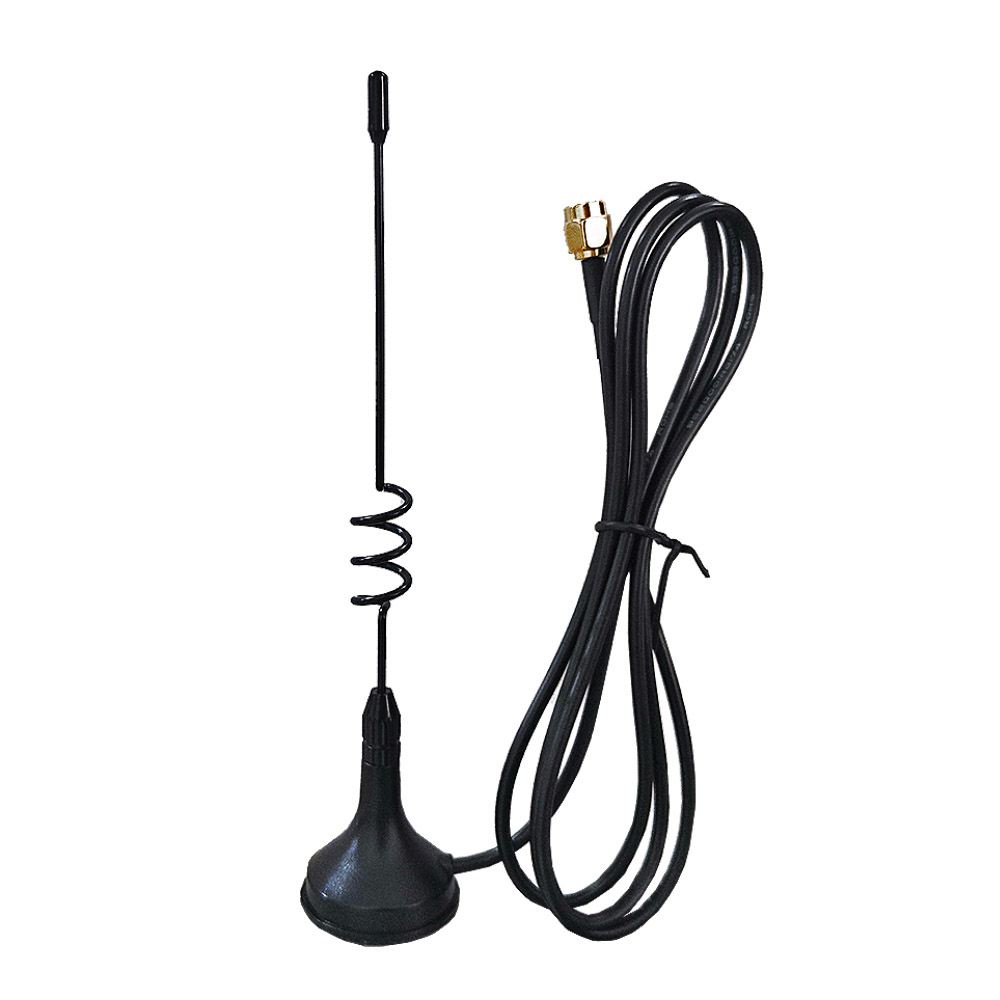
Coverage Enhancement in Weak Coverage Areas
In scenarios such as underground parking lots and tunnels, it is recommended to:
Use external high – gain directional antennas (above 12dBi).
Deploy relay nodes to extend coverage.
Enable MIMO 2×2 to enhance receive diversity.
High – Speed Mobile Scenarios
In scenarios such as high – speed rail and drones, the following need to be considered:
Antenna switching performance (Handover).
Doppler frequency shift compensation.
Dynamic beam tracking technology.
Industrial Internet of Things Deployment
For factory automation scenarios, it is recommended to:
Use omnidirectional antennas for 360° coverage.
Configure redundant antennas to improve reliability.
Implement antenna cascading (Cascade) to extend coverage range.
IV. Technology Evolution Directions
Millimeter – Wave Antenna Integration
As 5G Sub – 6G transitions to millimeter – wave, phased – array antenna technology will be introduced into 4G industrial routers. A 128 – element phased – array can achieve a scanning range of ±60°, with beam switching time < 1μs.
Intelligent Antenna Systems
Combined with AI algorithms to achieve:
Real – time channel state prediction.
Adaptive beamforming.
Interference alignment and cancellation.
Metasurface Antennas
Utilizing the characteristics of metasurfaces to achieve:
Ultra – thin flexible antennas (thickness < 1mm).
Broadband multi – band coverage.
Invisible antenna design.
V. Practical Suggestions
Antenna Selection Principles
Frequency band matching: Choose antennas that support the target operator’s frequency band.
Gain selection: Choose 6 – 18dBi gain according to the coverage range.
Polarization method: Vertical polarization is suitable for most scenarios.
Installation Standards
Height requirement: It is recommended to install the antenna at a height > 3m.
Isolation distance: Multi – antenna systems need to maintain a spacing of > λ/2.
Waterproof and dust – proof: IP67 protection rating to cope with harsh environments.
Performance Testing
VSWR testing: Ensure VSWR < 2.0.
Field strength testing: Verify that the edge coverage field strength is > – 100dBm.
Throughput testing: Use the Iperf3 tool to test the actual rate.