In the intelligent upgrading of smart water supply pipe networks, the selection of communication methods for RTU remote measurement and control terminals directly determines the real-time performance, stability, power consumption cost and operation & maintenance difficulty of pipe network monitoring. At present, three wireless communication solutions, namely 4G, 5G and NB-IoT, are widely adopted in engineering sites. Many water operation and engineering personnel tend to confuse applicable scenarios during selection. Drawing on Alotcer’s years of practical experience in water supply pipe network RTU projects, this document sorts out core selection questions in the form of FAQs for quick on-site reference.
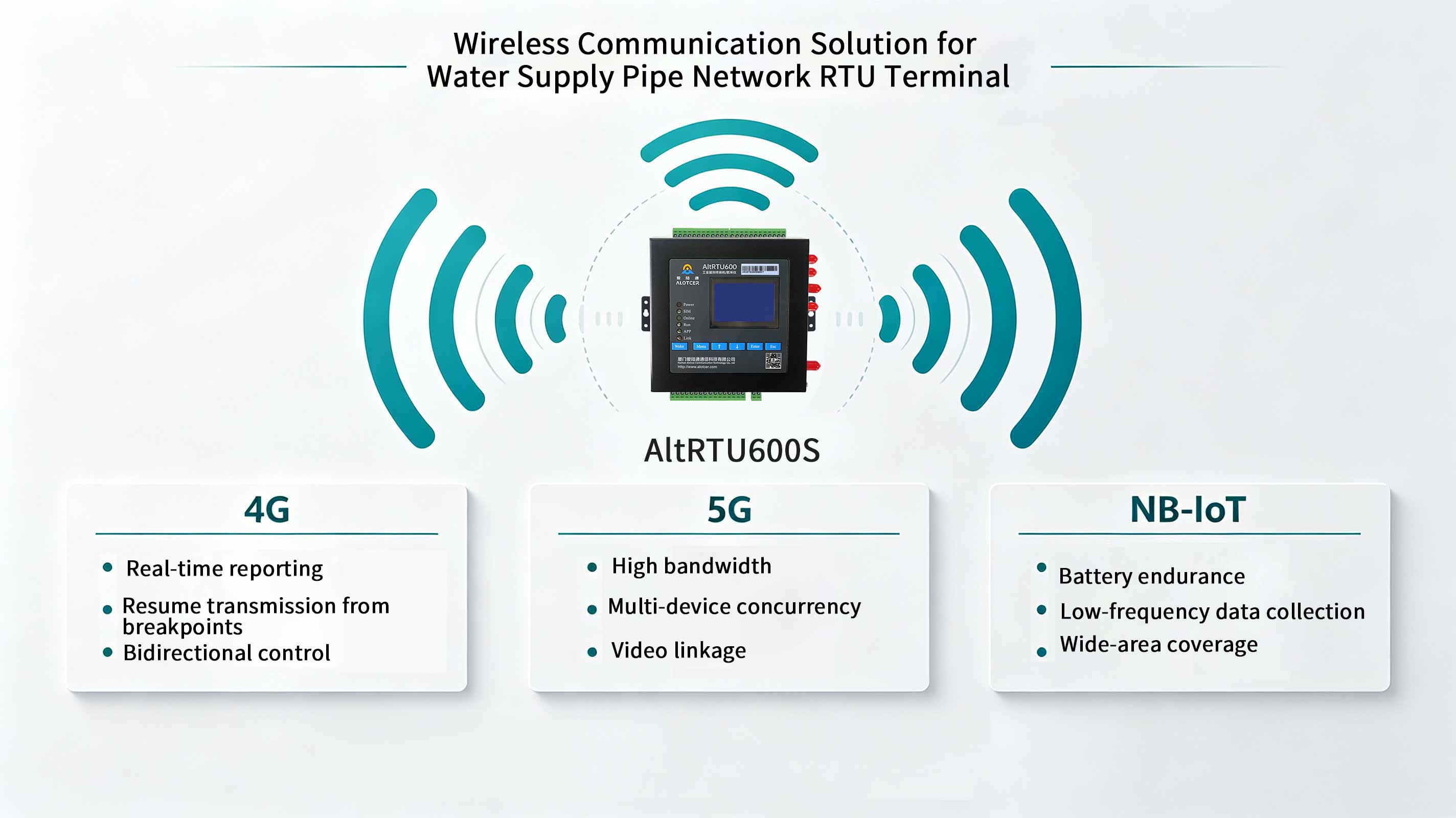
Q1: What are the core characteristics of the three mainstream communication modes for water supply pipe network RTUs?
NB-IoT is a low-power wide-area network technology. Its core strengths lie in ultra-low power consumption, low service fees and extensive network coverage, making it suitable for battery-powered scenarios. Nevertheless, it features limited transmission bandwidth, low data rate and relatively high latency. It only supports reporting of simple low-frequency data such as pressure and flow, and cannot realize remote parameter modification or mass data retransmission.
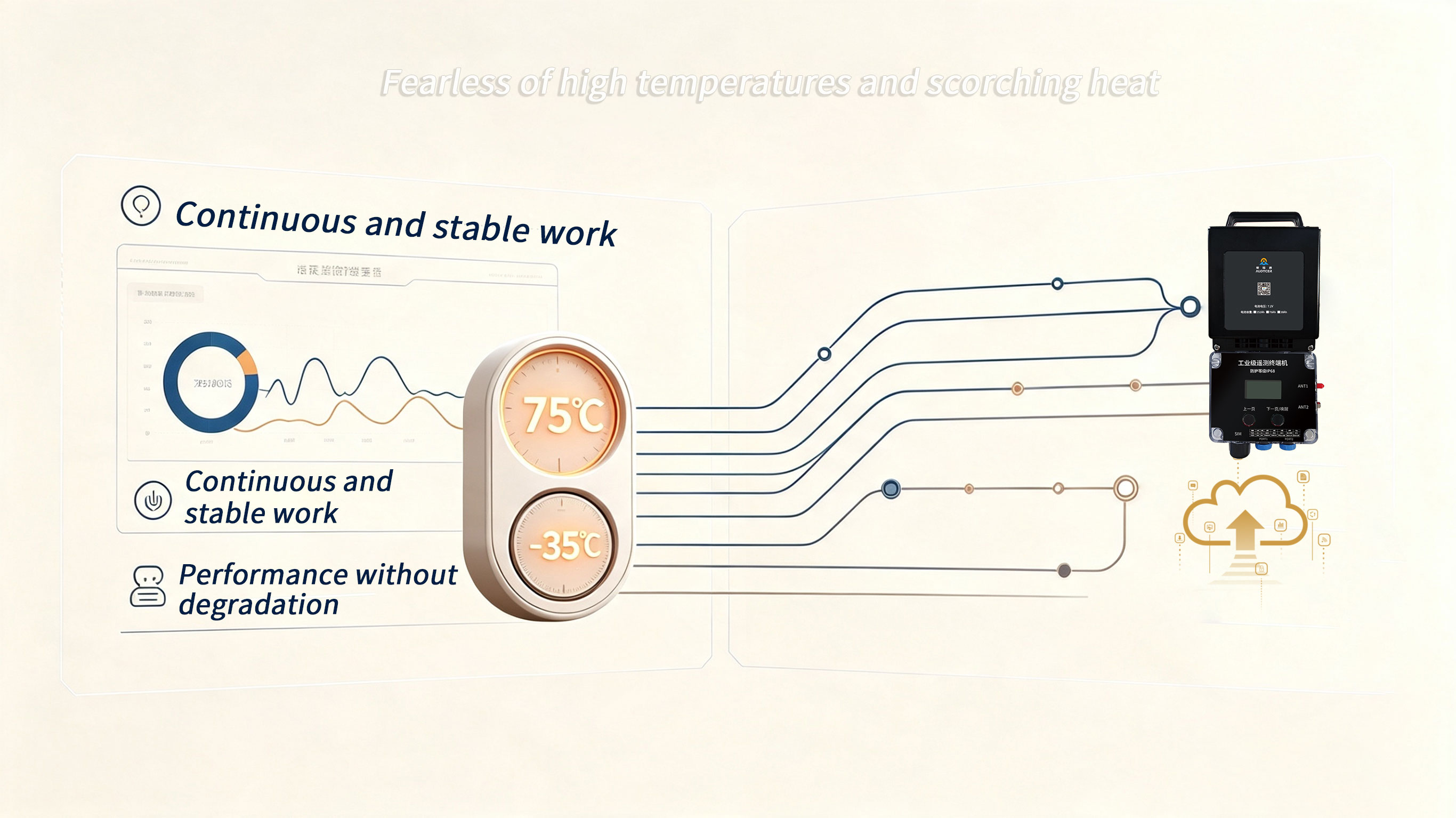
4G communication technology is mature, stable, with sufficient bandwidth and strong real-time performance, supporting bidirectional data transmission. It can not only collect pipe network data at regular intervals, but also realize pipe burst alarms, remote equipment commissioning and breakpoint resume transmission. It is currently the most balanced communication solution for water supply pipe network applications. Alotcer 4G RTUs for water supply pipe networks support automatic reconnection after disconnection and local data caching, effectively solving data loss caused by unstable network conditions in field environments.
5G boasts advantages of low latency, large bandwidth and high concurrency with top-tier performance. However, the module cost and data traffic fees are relatively high. Deploying 5G merely for basic pipe network data monitoring results in excessive performance, and it is more suitable for composite smart water scenarios such as pump station video surveillance, multi-device linkage and edge computing.
Q2: Which communication-type RTU is preferred for deeply buried pipe wells and field sites without mains power supply?
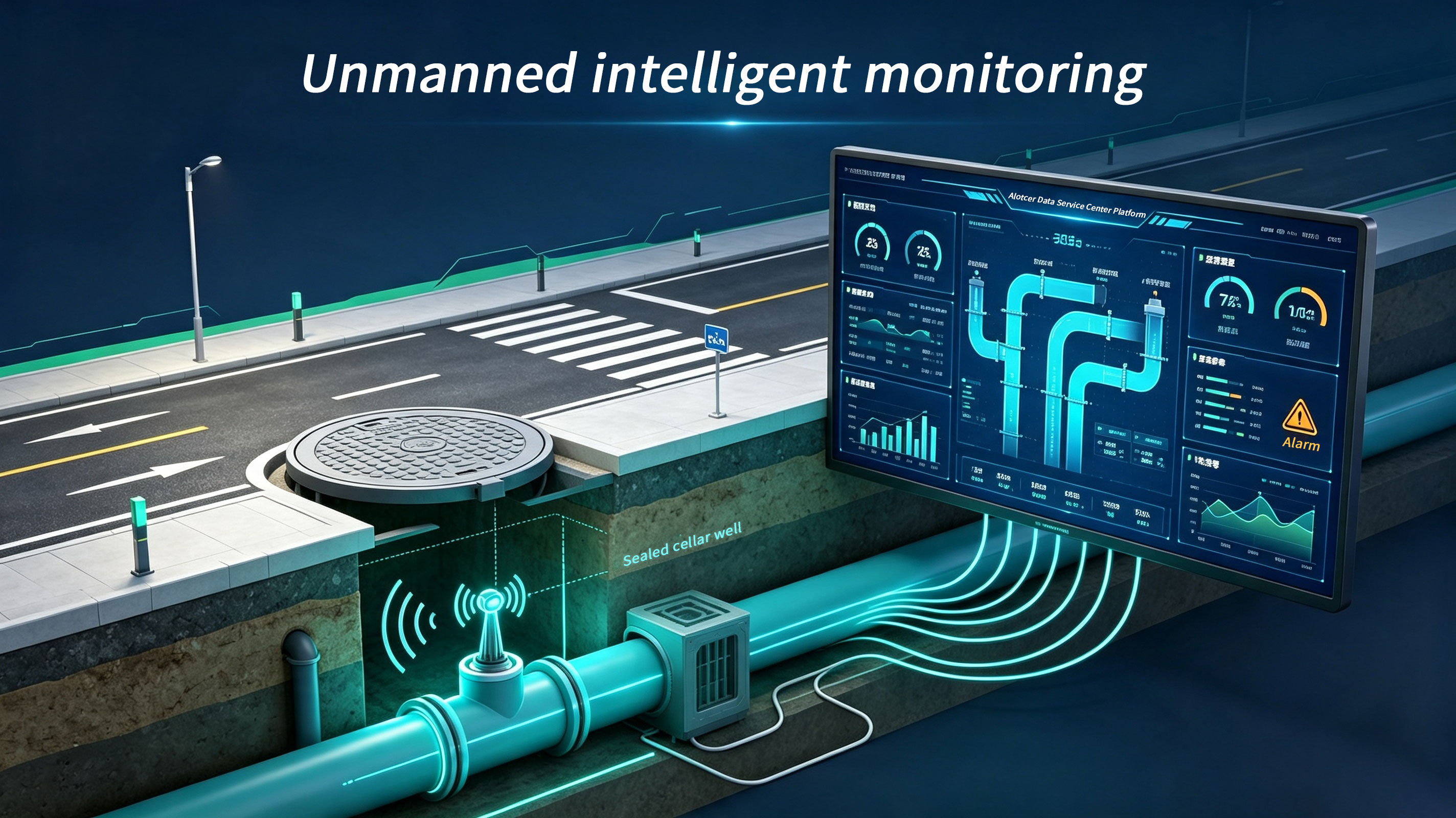
The biggest pain points of such scenarios are power supply difficulties and long-term standby requirements for equipment. NB-IoT RTUs for water supply pipe networks are the preferred choice. This mode consumes extremely low power and can operate stably for a long time with small-capacity solar batteries. It perfectly meets the low-frequency data collection demands of rural water supply pipe networks, suburban deeply buried pipe wells and scattered monitoring points, greatly cutting costs for power supply renovation and operation & maintenance.
Q3: For municipal main roads and DMA district metering points, should 4G or NB-IoT be adopted?
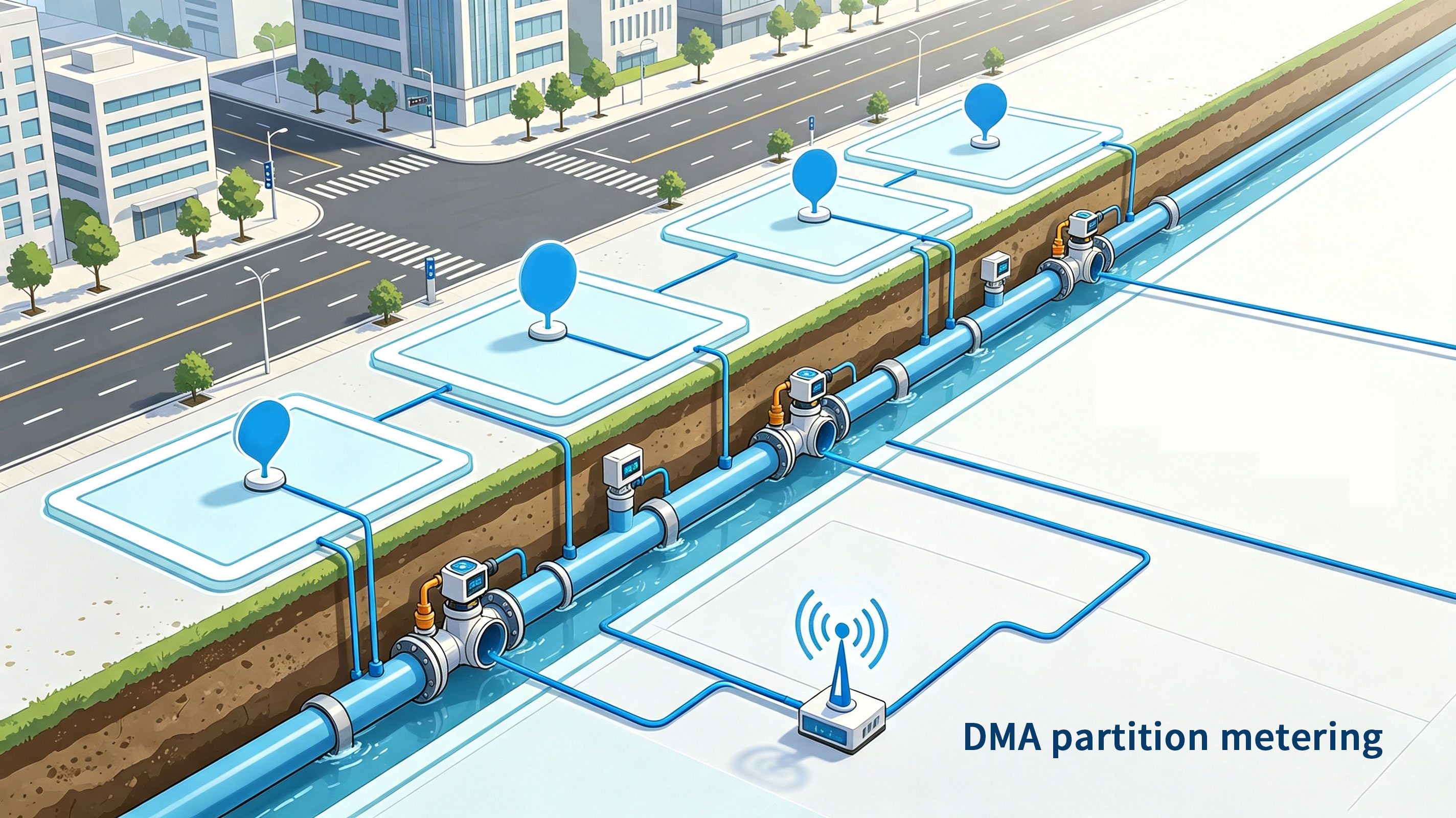
Municipal DMA districts and main road pipe network monitoring points impose high requirements on data real-time performance and reliability, which need to accurately capture sudden operating conditions such as pipe bursts and abnormal pressure. Therefore, 4G RTUs for water supply pipe networks are recommended. 4G supports high-frequency data reporting, second-level alarms and remote parameter configuration, satisfying core requirements including water leakage analysis, production-sales difference statistics and dynamic pipe network dispatching. Alotcer industrial 4G RTUs feature strong anti-interference capability, adapting to complex electromagnetic environments in cities and ensuring zero data packet loss during transmission.
Q4: What water service scenarios are suitable for 5G water supply pipe network RTUs? Is full-scale popularization necessary?
5G RTUs are not suitable for single-point monitoring of ordinary pipe networks, so full-scale rollout is unnecessary. They are mainly applied in large pressure pump stations, water dispatching centers and comprehensive smart water stations, adapting to multi-service scenarios integrating “measurement & control + video + data linkage”. Using 5G equipment for conventional pressure and flow monitoring of water supply pipe networks will significantly raise project costs with extremely low cost performance.
Q5: What are the core criteria for communication selection of water supply pipe network RTUs?
First, check power supply conditions: select NB-IoT for isolated field sites without mains power; choose 4G for sites with mains power or large-capacity solar power supply; 5G is optional for high-end comprehensive stations. Second, clarify business requirements: NB-IoT for low-frequency simple data reporting; 4G for real-time alarms, remote commissioning and refined leakage control. Third, evaluate on-site signal: for underground sites with severe shielding and weak signals, Alotcer high-gain antennas can be equipped to improve communication stability. Fourth, consider project costs: select equipment according to actual demands to avoid resource waste caused by excessive performance.
Q6: How to reduce equipment adaptation and renovation costs for complex multi-scenario pipe network projects?
For projects featuring diversified operating conditions of pipe network points and complex communication environments, Alotcer multi-mode compatible RTUs for water supply pipe networks are available. The devices can flexibly support multiple communication modes including 4G and NB-IoT. There is no need to purchase different types of equipment for various scenarios. Featuring strong universality and high compatibility, they substantially reduce costs for equipment procurement, construction commissioning and subsequent operation & maintenance renovation, and are applicable to most urban and rural smart water supply upgrading projects.
Conclusion
Each of the three communication solutions has its matched scenarios. NB-IoT focuses on low power consumption and low cost for simple monitoring at field sites without mains power. 4G balances real-time performance and stability, serving as the mainstream preferred option for municipal water supply pipe networks. 5G targets high-end composite water service scenarios. Rational selection based on on-site operating conditions, business demands and costs, together with high-performance Alotcer RTUs, can effectively improve the overall stability and intelligence level of water supply pipe network monitoring systems.