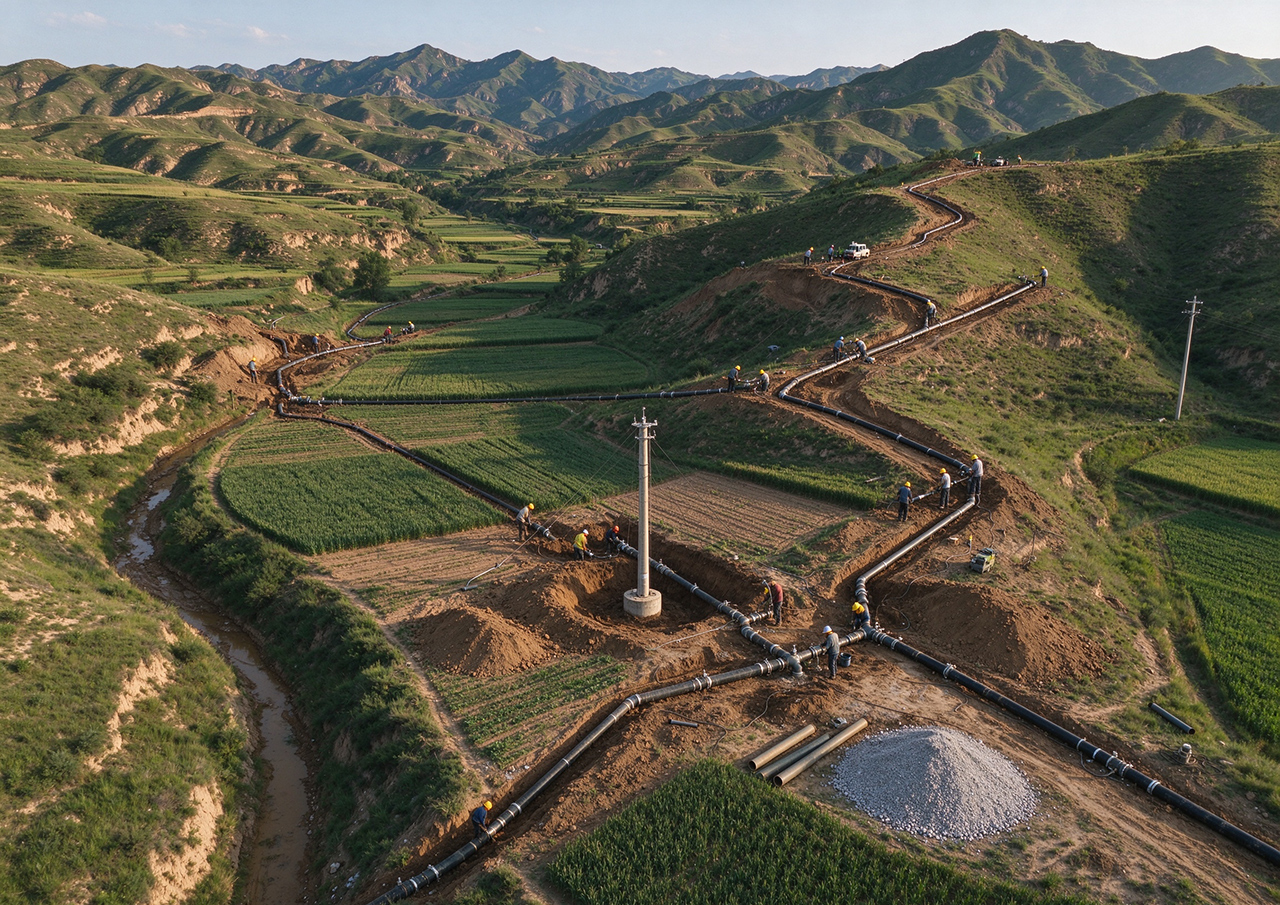
During the digital transformation of smart water services, water‑supply pipelines spread across urban and rural areas with widely‑dispersed monitoring points and complex operating environments. Conventional manual inspection and on‑site control are low‑efficiency approaches, and struggle to support leakage control, burst‑pipe early‑warning and precise dispatching. As core equipment within the pipe‑network perception layer, the RTU telemetry terminal acts as a critical hub for data transmission between field devices and cloud platforms. Reliable and efficient cloud‑platform integration lays the foundation for intelligent management of water‑supply networks.
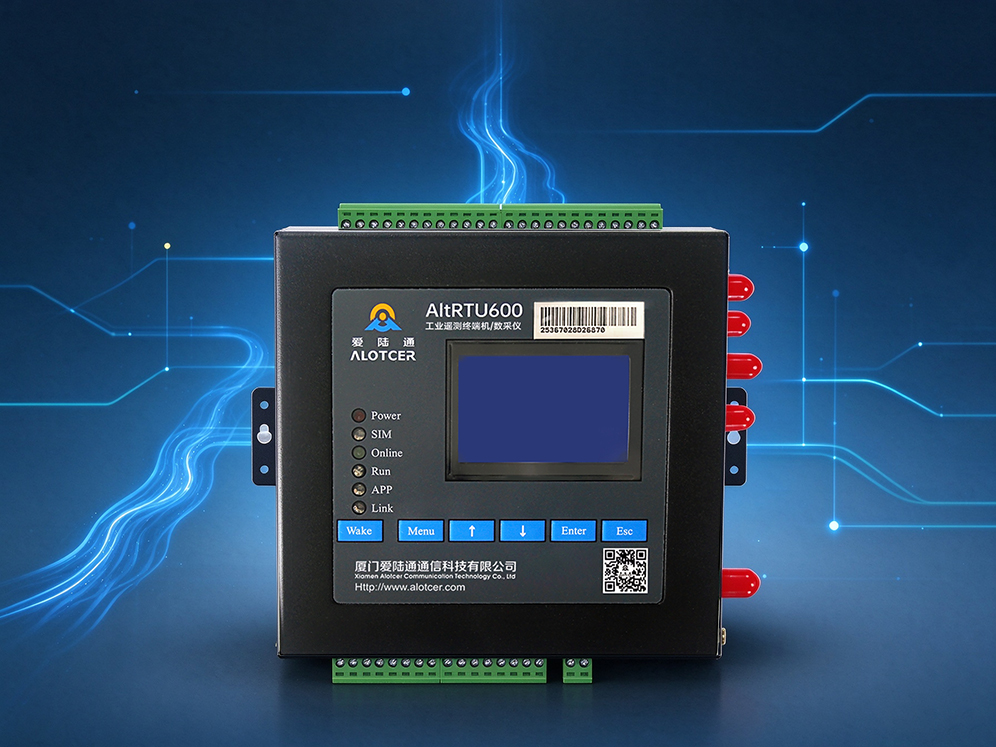
Alotcer AltRTU600S, an industrial‑grade RTU dedicated to water pipe networks, features multi‑protocol compatibility, high stability and seamless integration capability. It can quickly connect to diverse water‑monitoring cloud platforms and build an integrated system for pipe‑network data acquisition and remote management.
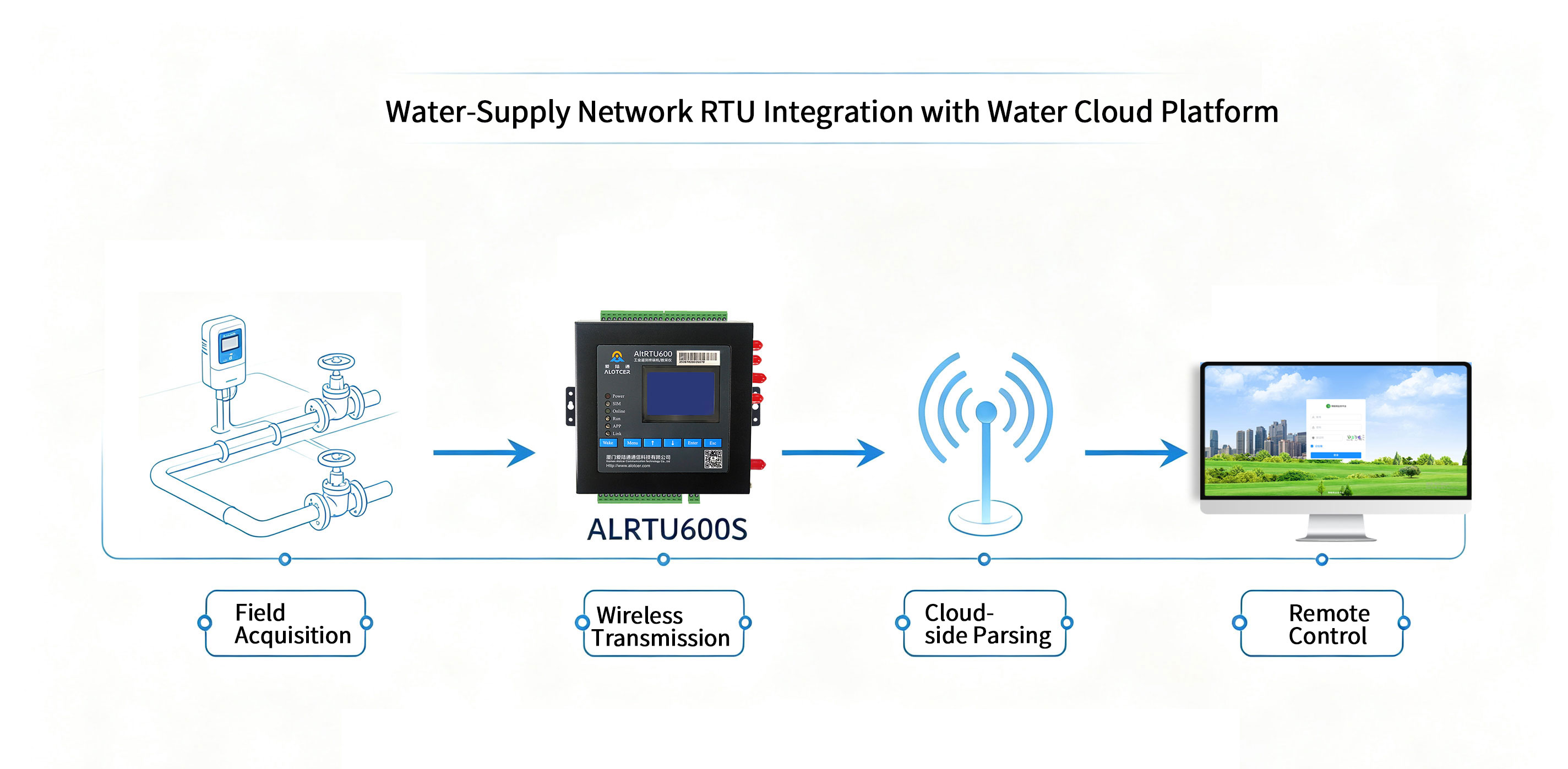
1. Overall Integration Architecture & Core Principles
The integration between water‑supply network RTU and water‑cloud platform enables end‑to‑end data flow: field data acquisition → wireless transmission → cloud‑side parsing → remote control.
Sensor data including pressure, flow rate, water level and valve status is fed into Alotcer AltRTU600S for real‑time local collection, pre‑processing and storage. Encrypted data is then transmitted via 4G/5G wireless links to the water‑cloud platform. The platform performs data parsing, database storage, visualisation and anomaly alerts. Control commands can also be issued downwards to realise valve adjustment and remote parameter configuration. This architecture eliminates complicated cabling and suits challenging deployment scenarios such as underground pipe chambers and remote pipeline sections.
2. Support for Mainstream Communication Protocols to Meet Diverse Platform Integration Requirements
Protocol compatibility is the key to successful RTU‑cloud integration. Alotcer AltRTU600S supports major water‑industry protocols and works with both legacy and new‑generation water‑monitoring cloud platforms for broad applicability.
MQTT is the default and recommended protocol, representing the optimal integration option for smart‑water cloud systems. Lightweight and low‑power with minimal data traffic consumption, MQTT enables bidirectional real‑time communication and performs well for massive distributed pipe‑network measuring points. By configuring cloud broker address, port, device credentials and dedicated subscribe/publish topics, automatic data reporting and downlink command interaction can be achieved. Standardised JSON message output facilitates fast parsing on cloud platforms.
For legacy pipe‑network retrofits and traditional SCADA migration projects, AltRTU600S supports Modbus RTU/TCP transparent transmission and HTTP/HTTPS single‑transmission modes. It is compatible with conventional polling‑based platforms without modifying existing system architecture, significantly cutting retrofit and construction costs.
3. Standardised Integration Workflow for Fast On‑site Deployment
AltRTU600S adopts a standardised, user‑friendly implementation workflow to guarantee stable connection and accurate data, shortening project commissioning cycles.
- Finalise the device point list, defining register addresses, measuring ranges, conversion coefficients and other core parameters. Build device models and profiles on the cloud platform according to the point list.
- Complete terminal configuration: input cloud‑platform access credentials, network APN and reporting intervals; enable automatic reconnection upon disconnection and local data caching.
- Carry out comprehensive joint debugging. Verify the accuracy of pressure, flow and other collected data. Test alarm triggers by simulating abnormal conditions such as over‑pressure and pipe bursts. Validate execution of downlink commands including remote valve control and parameter modification to ensure stable bidirectional communication.
4. Robust Hardware Performance to Resolve Common Field Integration Challenges
Field‑deployed pipe networks suffer frequent issues including signal fluctuation, harsh ambient conditions, interrupted data transmission and reading deviation. Alotcer AltRTU600S’s industrial‑grade hardware addresses these real‑world pain points.
It supports wide‑temperature operation and IP‑rated protection against water and dust, suitable for humid underground chambers and high‑exposure outdoor sites. High‑gain antennas greatly improve signal stability inside deep pipe wells. Built‑in large‑capacity local storage supports breakpoint resume transmission: offline data is automatically uploaded once network connectivity recovers to prevent data loss. TLS‑encrypted end‑to‑end transmission safeguards critical pipe‑network data against tampering and leakage. Lightweight edge‑computing capability filters abnormal data locally to reduce cloud‑side computing workloads.
Conclusion
Stable integration between water‑supply network RTU and water‑cloud platforms underpins refined smart water management. Boasting multi‑protocol compatibility, simple deployment, high reliability and secure operation, Alotcer AltRTU600S meets diverse cloud‑platform access requirements and removes barriers across the full data lifecycle: acquisition, transmission, application and control.
Through standardised, intelligent cloud‑connectivity solutions, Alotcer helps water‑utility operators gain clear visibility over pipeline conditions, reduce network leakage rates and cut operational‑maintenance expenditure. It accelerates the transformation of urban water‑supply network management from traditional manual workflows to digital, intelligent remote‑control operations.