Against the backdrop of smart water‑conservancy development and regularised agricultural water‑saving management, accurate metering of water abstraction from farmland motor‑operated wells has become an essential foundation for implementing groundwater regulation and agricultural water‑price reform across regions.
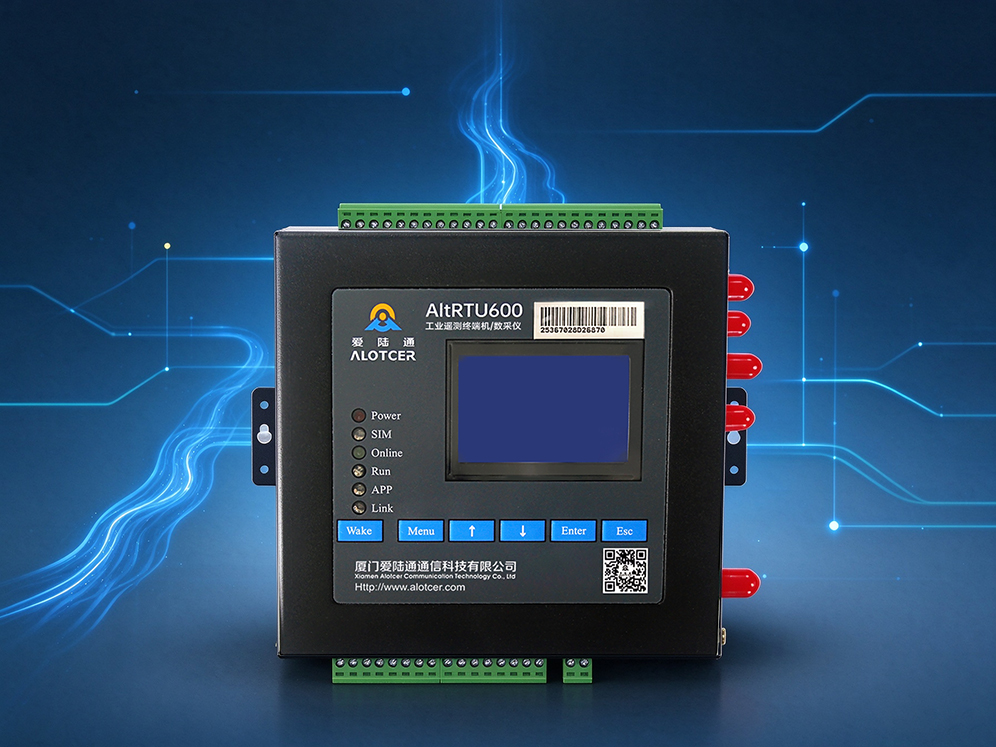
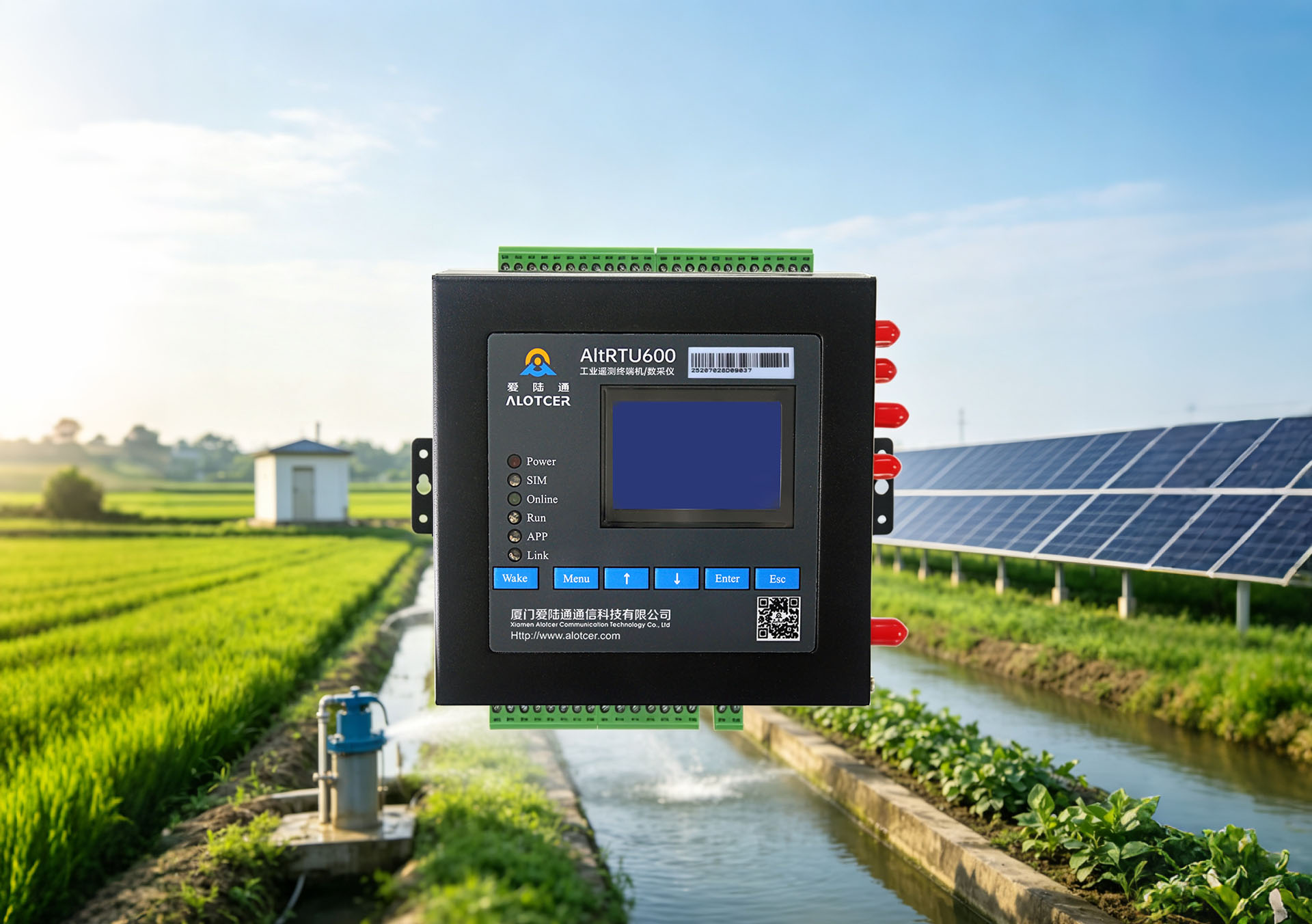
Rural motor‑operated wells are large‑in‑number, widely scattered and deployed under harsh field conditions. Traditional water‑meter‑based metering suffers prominent pain points including high costs, frequent failures and delayed data. To address these industry‑wide deployment challenges, the Alotcer AltRTU600S Power‑to‑Water Conversion RTU leverages proven IoT measurement‑and‑control technology to deliver a lightweight, low‑cost and highly‑reliable farmland water‑abstraction metering solution. It closes regulatory blind spots for rural water intake and serves as a core terminal for digital reconstruction of irrigation districts.
1. Industry Pain Points of Conventional Farmland Water‑Abstraction Metering
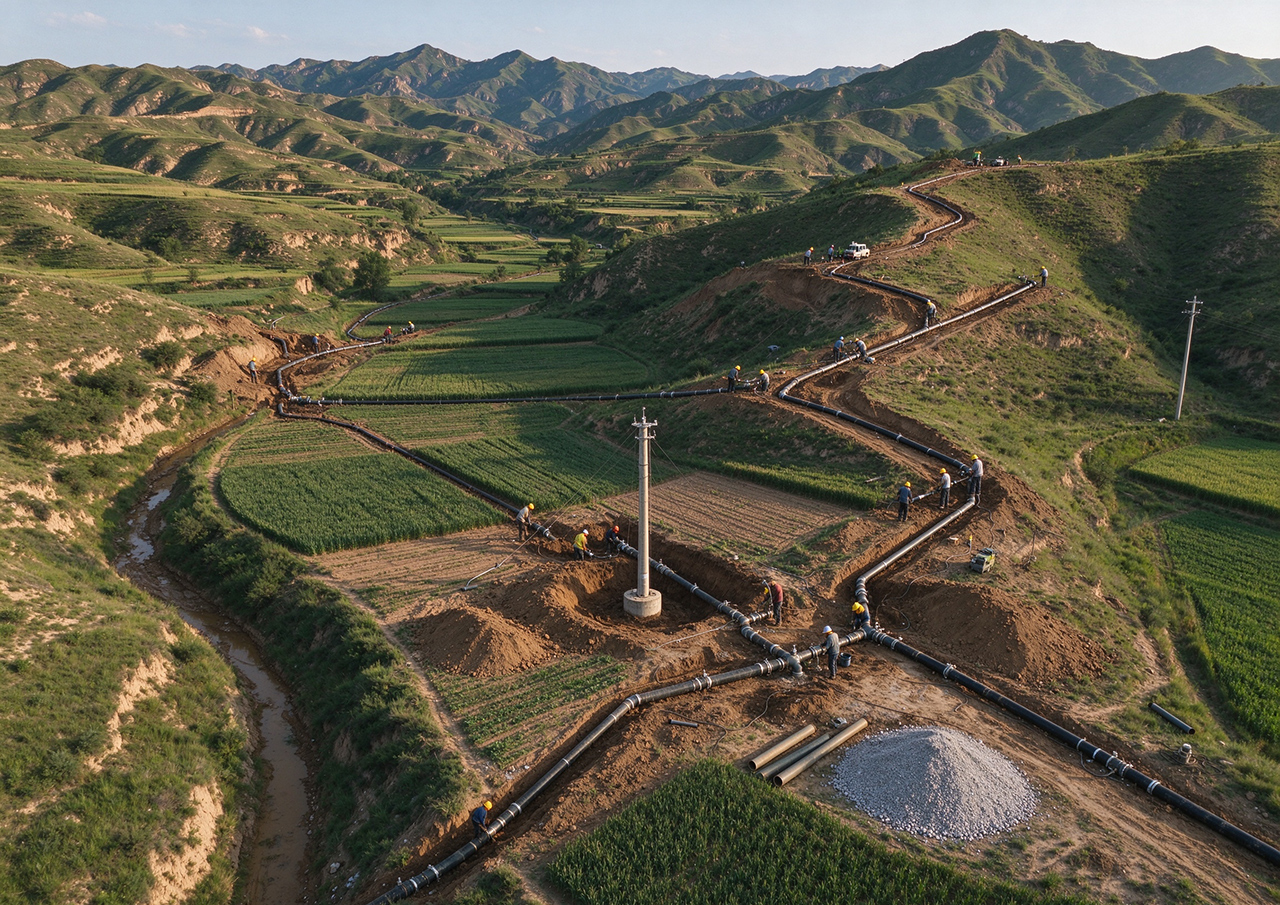
For a long time, water abstraction metering for rural farmland motor‑operated wells in China has mostly relied on conventional water meters, which come with multiple limitations and cannot well meet rural water‑conservancy management requirements.
First, retrofitting costs are substantial. Most ageing motor‑operated wells lack complete supporting pipe networks. Installing smart water meters requires extensive pipe‑network reconstruction and civil engineering work, featuring long construction cycles and heavy labour & material expenses, making large‑scale roll‑out extremely difficult.
Second, field‑operation‑and‑maintenance burdens are heavy. Harsh farm‑site conditions such as sand‑storms, rainfall and alternating high‑low temperatures readily lead to water‑meter blockage, corrosion and damage. High equipment failure rates result in sustained high costs for later‑stage inspection and replacement.
In addition, conventional metering offers minimal intelligence. Most devices depend on manual on‑site meter reading, which is inefficient and prone to missed entries, recording errors and deliberate data tampering. Real‑time data collection and remote monitoring of water abstraction cannot be realised. Water‑conservancy authorities cannot obtain accurate figures of actual regional farmland water intake, which hinders effective implementation of refined management tasks such as water‑abstraction quota control, water‑saving assessment and over‑exploited groundwater remediation.
2. Technical Principle of Power‑to‑Water Conversion: Metering Independent of Water Meters
The adoption of power‑to‑water conversion technology thoroughly transforms traditional water‑meter‑based metering and mitigates various farmland water‑abstraction metering challenges.
The Alotcer AltRTU600S Power‑to‑Water Conversion RTU is a dedicated measurement‑and‑control terminal custom‑built for motor‑operated‑well management. It performs accurate metering based on the linear correlation between electricity consumption and water output of well pumps. Equipped with on‑board high‑precision acquisition modules, the terminal collects real‑time core data including pump runtime and power consumption. Combined with field parameters such as well depth, pump power and seasonal operating conditions, it calibrates exclusive power‑to‑water conversion coefficients to accurately calculate actual farmland water‑abstraction volume.
Its biggest advantage lies in eliminating the need to install or modify conventional water meters and leaving original pipe‑network infrastructure untouched. It fundamentally avoids pain points such as pipe‑network reconstruction, vulnerable hardware and manual meter reading. It features broad compatibility for digital retrofitting of most ageing and scattered farmland motor‑operated wells.
3. Core Advantages of AltRTU600S: Low‑cost for Large‑scale Farmland Retrofit
Compared with traditional metering hardware, the standout strengths of Alotcer AltRTU600S Power‑to‑Water Conversion RTU are dramatic cost reduction and wide adaptability, perfectly suited for county‑level and irrigation‑district large‑batch retrofit projects.
Featuring an integrated industrial‑grade design with compact structure and strong compatibility, the terminal supports simple field wiring, easy installation and short deployment cycles without complicated civil works. It greatly cuts upfront project engineering investment and labour costs.
On hardware compatibility, the unit adopts an ultra‑low‑power solution with DC 9‑35 V wide‑voltage power supply. Its sleep current is as low as 25 µA at 12 V. It flexibly supports multiple field power sources including solar panels and mains power, delivering very low long‑term energy consumption.
Its high‑protection industrial enclosure withstands an ultra‑wide operating temperature range of ‑35 ℃ to +75 ℃, with water‑proof, dust‑proof, sand‑resistance and anti‑electromagnetic‑interference performance. Well‑adapted to harsh open‑field farm conditions, it delivers stable operation with low failure rates and substantially reduces comprehensive costs for post‑deployment maintenance and equipment replacement.
4. Intelligent & Precise Management Empowers Digital Upgrading of Smart Agricultural Water Conservancy
In terms of metering accuracy and intelligent management, Alotcer AltRTU600S Power‑to‑Water Conversion RTU overcomes key drawbacks of traditional equipment.
Its high‑precision power‑acquisition unit allows flexible fine‑tuning and calibration of power‑to‑water conversion coefficients according to varying well depths, pump models and seasonal humidity conditions. This resolves the common problem of large estimation deviations and inaccurate readings found in older power‑to‑water conversion solutions, ensuring authentic, precise and traceable water‑abstraction data.
It also excels in intelligent data transmission and management. The terminal comes standard with 4G/5G wireless transmission, supporting the HJ212 water‑conservancy standard protocol and SL/T 427‑2021 water‑resource‑monitoring transmission protocol. It seamlessly connects with local water‑regulatory platforms and automatically uploads round‑the‑clock information including power consumption, converted water volume, device online status and pump operating data to enable remote visual monitoring.
Additional capabilities include remote pump control, excessive water‑abstraction early‑warning and water‑usage statistical analysis. It builds an integrated management model: calculate water volume by power consumption, manage water use by quota, trigger alerts for over‑limit intake and enable intelligent water saving. It provides solid data support for agricultural water conservation, over‑exploited groundwater remediation and refined agricultural water‑price reform.
Summary
The core requirements for farmland water‑abstraction metering retrofits are low cost, high stability, easy deployment and manageable supervision.
Breaking away from the drawbacks brought by traditional water‑meter retrofits, Alotcer AltRTU600S Power‑to‑Water Conversion RTU utilises mature power‑to‑water measurement‑and‑control technology to establish a new farmland water‑abstraction metering mode featuring low investment, low maintenance, high precision and intelligence. It effectively addresses grass‑roots water‑conservancy water‑intake regulatory challenges and stands as a preferred terminal for building smart‑agriculture and digital irrigation districts at present.