I. Why Push Intelligence to the Field?
Traditional industrial security has long relied on a passive approach of “operators staring at screens + post-incident investigation.” Field information must be processed through a central control room before commands are issued, creating delays that can last seconds or even minutes. In high-risk scenarios such as chemical leaks, equipment failures, or unauthorized personnel entry, this latency can lead to severe consequences.
The new-generation approach fundamentally reverses this paradigm: run algorithms as close to the danger as possible. By deploying AI-powered intelligent gateways alongside production lines, the three stages of perception, judgment, and response are compressed to millisecond-level timeframes. At the same time, collaborative channels with the cloud are preserved, forming a dual-layer defense system where “the frontline can operate independently while the rear maintains global coordination.”
II. Three-Layer Architecture: From Data Acquisition to Intelligent Decision-Making
The entire system divides responsibilities across three layers: “Perception—Decision-Making—Management.”
Field Perception Layer: Temperature/vibration/pressure/gas sensors, intelligent vision terminals, PLCs, and various instruments continuously capture video footage and process parameters.
Edge Decision-Making Layer: The AI intelligent gateway carries industrial-grade chips and inference frameworks, completing protocol adaptation, noise filtering, real-time inference, and immediate control. It can operate independently even during network outages.
Cloud Management Layer: The safety monitoring dashboard and data center are responsible for alarm aggregation, continuous model optimization, historical traceability, and remote policy distribution, providing a global perspective.
These three layers are not simply hierarchical. They cooperate through a mechanism of “local rapid response and cloud verification calibration,” forming a complete risk disposal cycle.
III. What Makes the Edge Gateway Capable of “Standing on Its Own”?
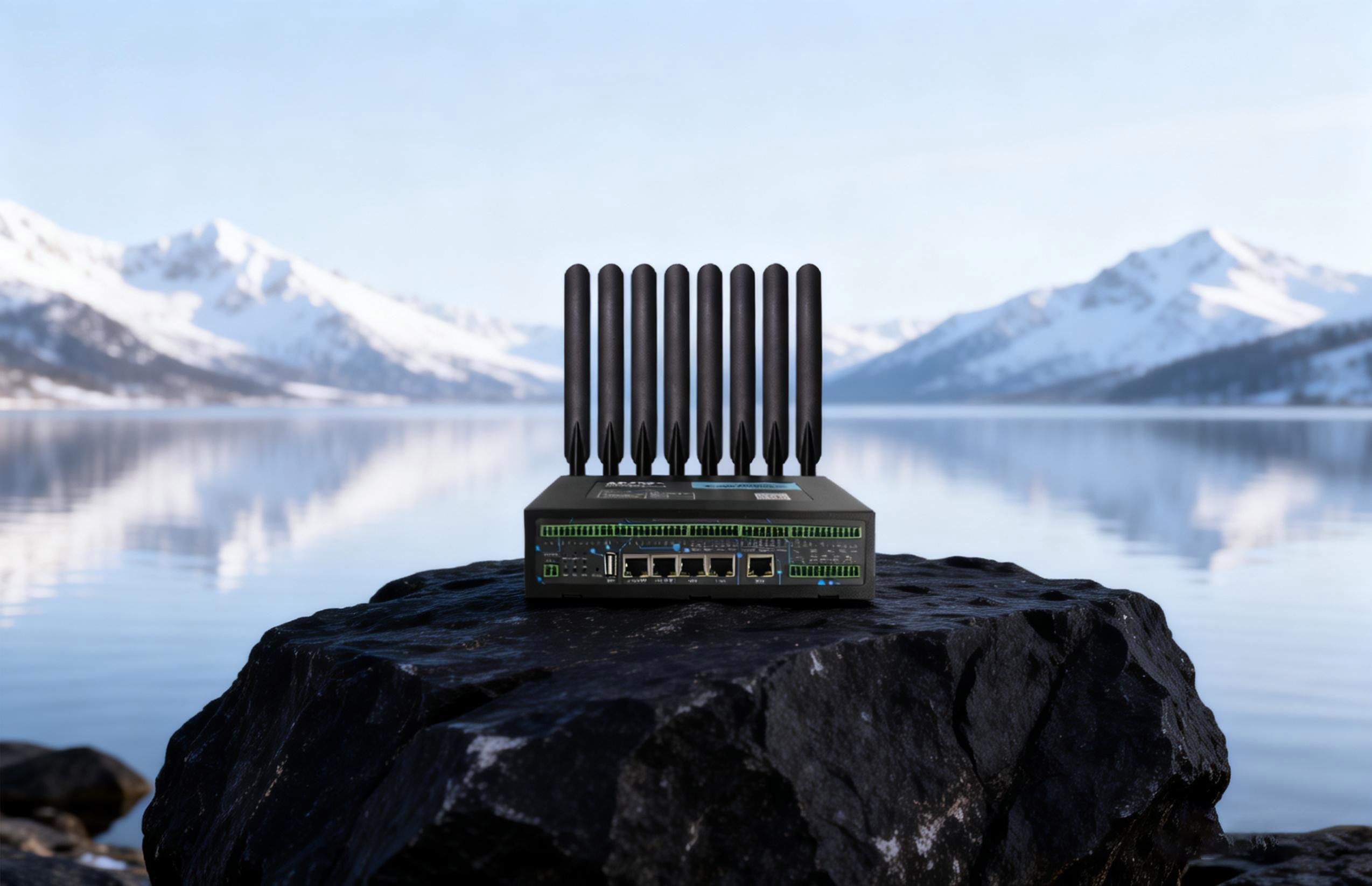
Industrial field equipment comes from diverse brands with varying communication standards. This gateway features a built-in protocol adaptation engine that can simultaneously interface with mainstream industrial buses including OPC UA, Modbus TCP/RTU, Profinet, and EtherNet/IP, while also supporting wireless links such as 5G/4G and LoRa. All heterogeneous data is uniformly cleansed and output in standard formats, so upper-layer applications need not concern themselves with underlying differences.
The industrial edge gateway embeds lightweight, trimmed AI models covering capabilities such as object detection, behavioral analysis, time-series trend prediction, and anomaly clustering. From the moment a camera captures an image to the output of an alarm, the entire process is controlled within millisecond-level timeframes. Even if external network connectivity is interrupted, all early warnings and protective actions continue to execute normally, completely eliminating security blind spots caused by communication failures.
Security itself cannot become a weak link. Therefore, the gateway has been reinforced across three dimensions:
Network Level: It employs built-in firewalls, IPsec encrypted tunnels, and MAC/IP whitelist mechanisms. It also performs deep packet inspection on Modbus TCP traffic. Testing has demonstrated the ability to effectively block over 98% of malicious intrusion attempts.
Data Level: Both transmission and storage employ national cryptographic SM series and AES algorithm encryption.
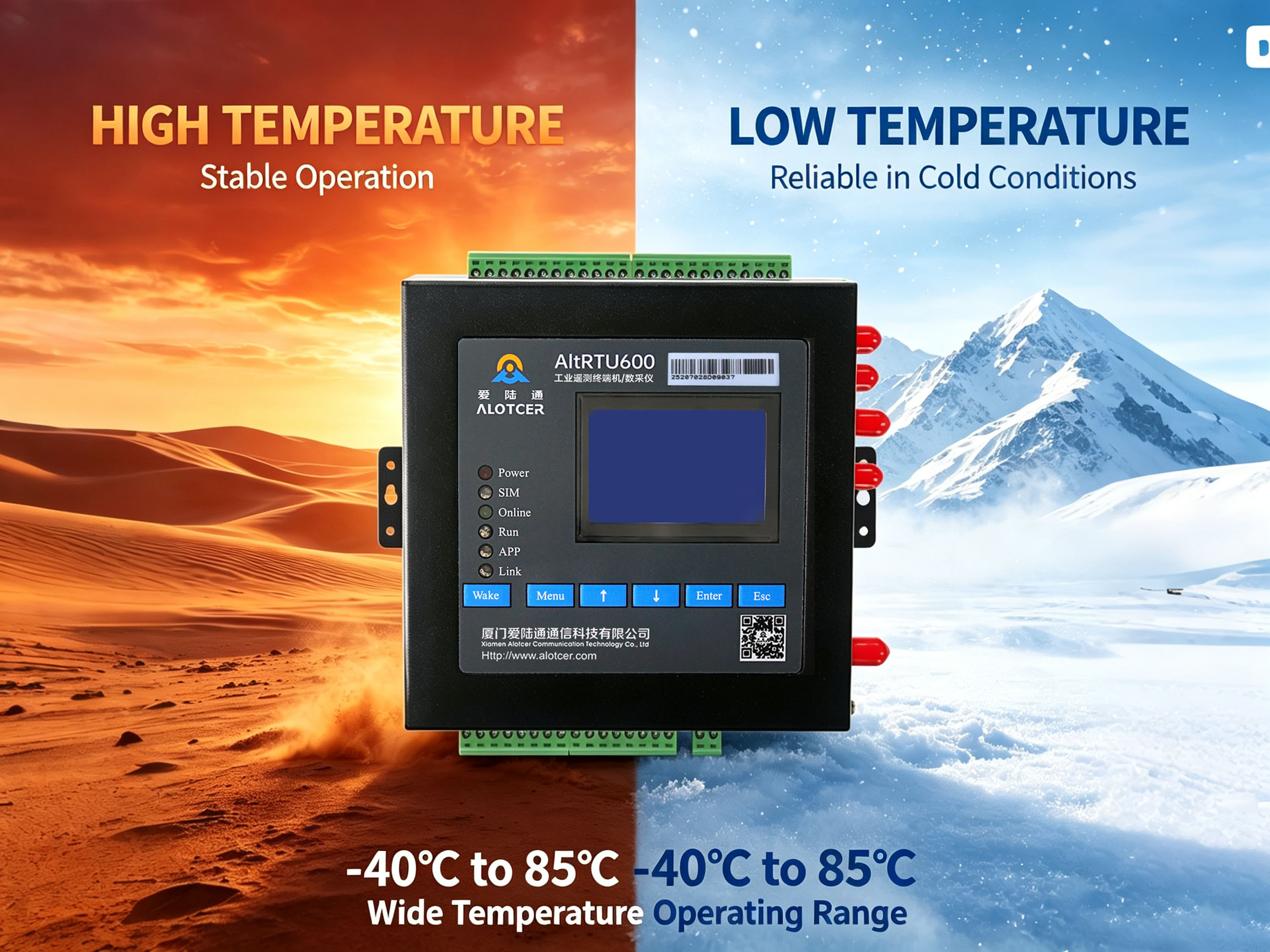
Physical Level: It supports multiple protection ratings from IP30 to IP68, with an operating temperature range of -35°C to 75°C, and supports explosion-proof certification. It can be directly deployed in extreme working conditions including high temperature, high humidity, dust, and flammable or explosive environments.
IV. Four Major Safety Scenarios in Practice
Scenario One
The vision algorithms equipped on the edge gateway enable round-the-clock 24/7 analysis of the work site.
Personal Protective Equipment Verification: Automatically detects whether safety helmets, work uniforms, and protective goggles are being worn, issuing immediate voice prompts upon detecting any missing items.
High-Risk Behavior Monitoring: Identifies common violations such as smoking, phone calls, dozing off, and unauthorized departure from posts.
Sensitive Area Intrusion Alerts: Electronic fences are established in restricted areas such as high-voltage distribution rooms and rotating machinery zones. Once someone crosses the boundary, both on-site alarms and the central control system issue simultaneous notifications.
Scenario Two
By continuously collecting time-series signals such as vibration, temperature, and current, the gateway executes trend analysis models locally.
Predictive Failure Warning: Taking bearings and gearboxes as examples, through spectral feature comparison, warnings can be issued hours or even days before damage occurs, transforming unplanned shutdowns into scheduled maintenance.
Abnormal Operating Condition Interception: Once abnormal operating states such as motor overload or dry running of pumps are detected, equipment is immediately protected from secondary damage while avoiding the cascading safety risks that could result.
Scenario Three
For high-risk industries such as chemicals and oil & gas, a single sensor can no longer effectively address complex risks. The gateway therefore adopts a “sensor + vision” dual-channel cross-verification approach.
Dual-Confirmation Leak Detection: When gas sensors detect abnormal concentrations, the AI vision system simultaneously assesses whether valves and pipelines show obvious leak characteristics. An alarm is triggered if either signal activates.
Early Fire Identification: The smoke and fire algorithm can detect smoke plumes or abnormal thermal hotspots before open flames appear, rapidly linking with the fire suppression system to advance response time by several minutes.
Scenario Four
For high-risk operations such as hazardous chemical transport and hot work, the gateway is responsible for process compliance verification.
Permit Matching Verification: Automatically compares electronic work permit information against the actual qualifications of on-site personnel and equipment status.
Operational Sequence Management: Taking a petrochemical company’s loading and unloading vehicle scenario as an example, the AI model monitors the connection status of grounding cables and whether valve operations follow the prescribed sequence in real time. If any step deviates from procedure, the system automatically locks the operation and sends an alarm, structurally preventing human error from the mechanism level.