DTU
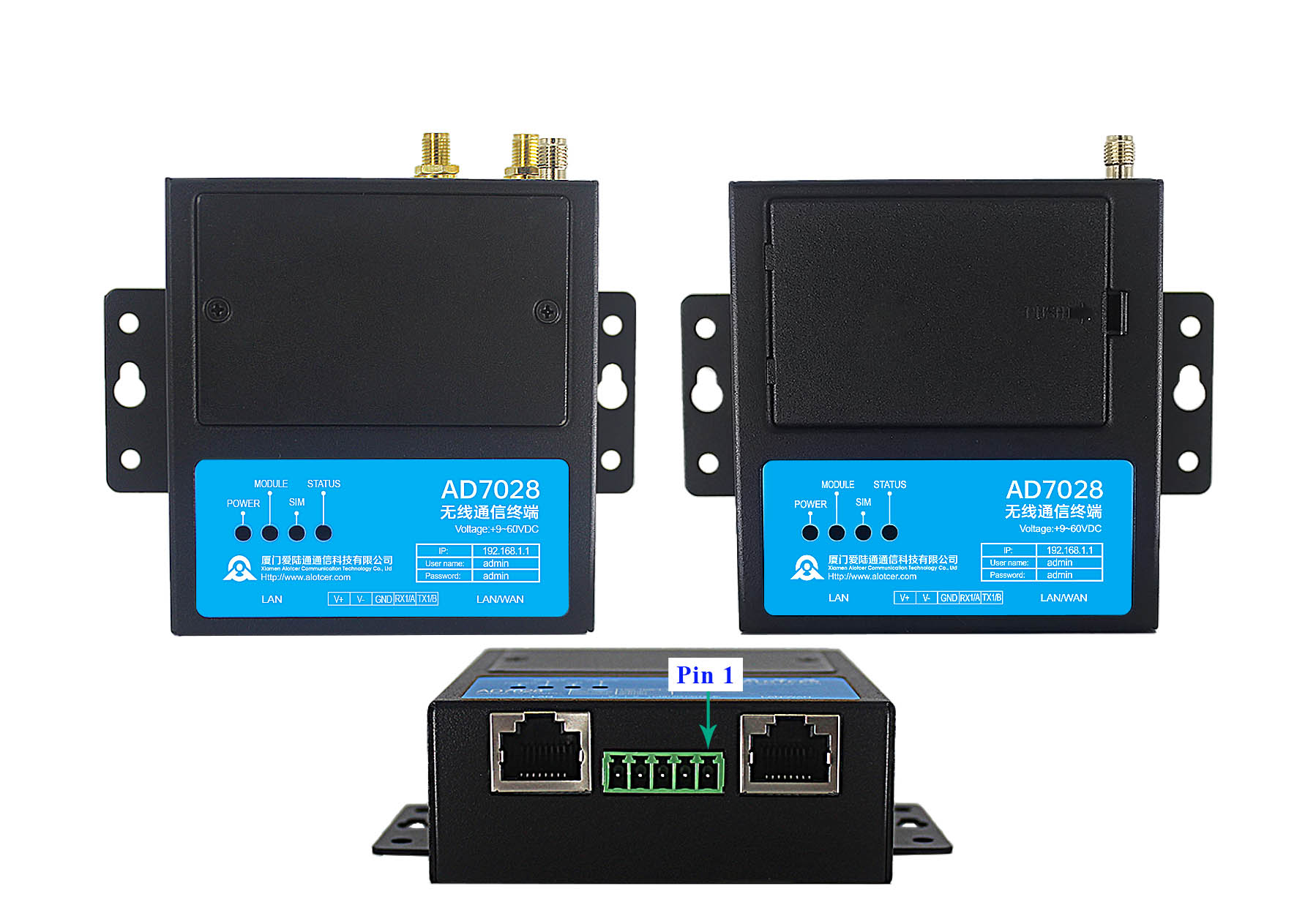
(I) Functions and Features of DTU
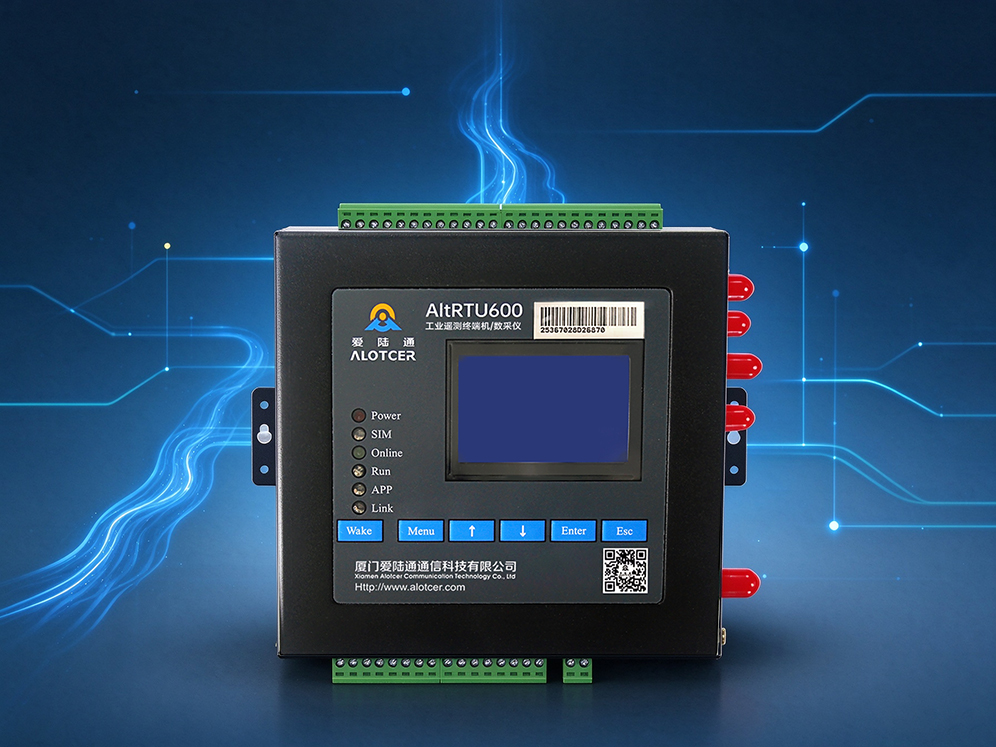
DTU, as an industrial-grade communication device, is primarily responsible for data collection, transmission, and remote monitoring. It can connect to various sensors, meters, and equipment, and accurately transmit the collected data to a data center or cloud platform via wireless or wired networks. DTU not only has the capability to collect data in real-time but also can perform preliminary processing and analysis of the collected data, thereby providing strong support for subsequent in-depth data applications.
(II) Widespread Application Scenarios of DTU in Smart Grids
DTU is widely used in multiple fields of smart grids, specifically as follows:
-
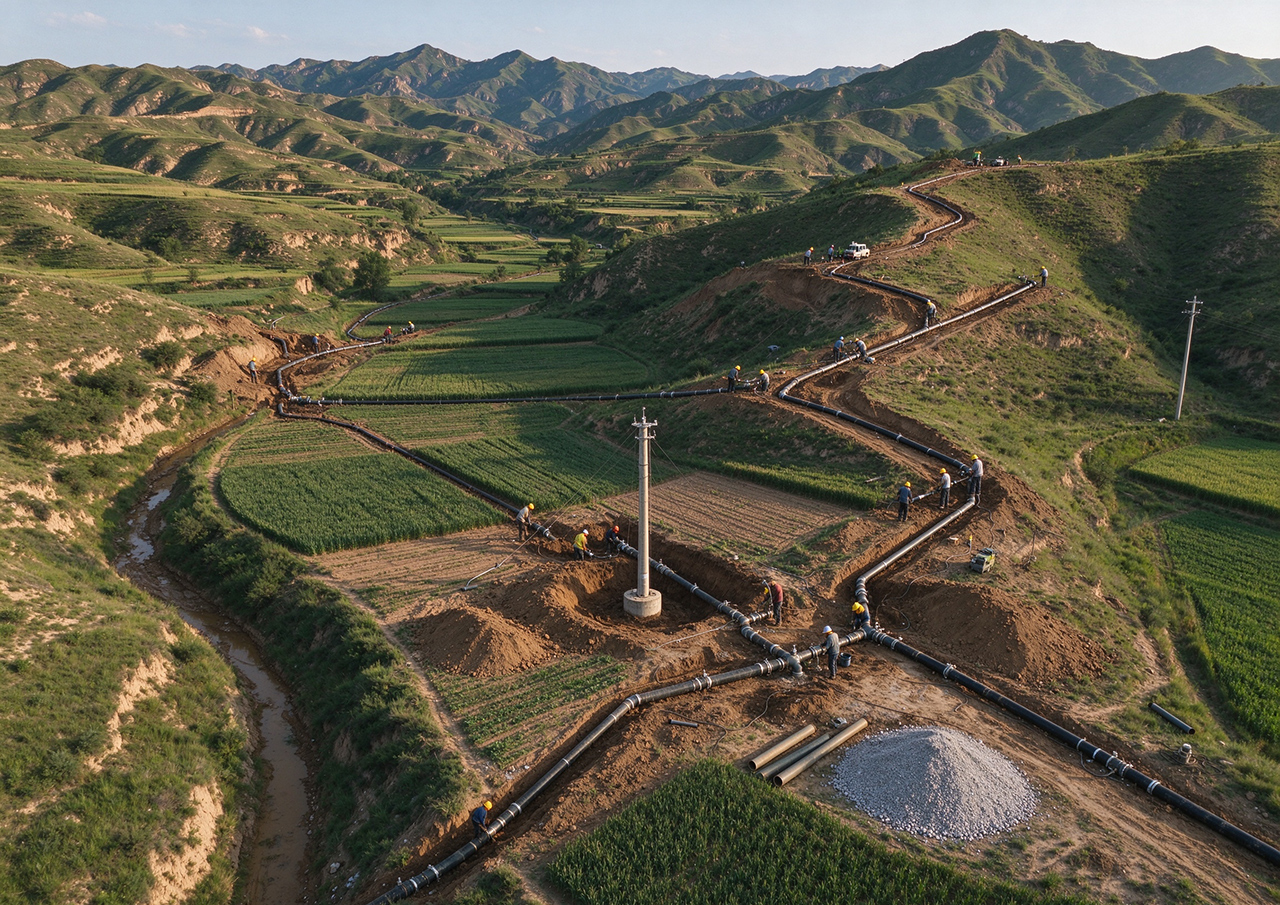
Environmental Monitoring: It can be used to monitor the irrigation conditions of farmland and air quality, collecting relevant data in real-time and transmitting it to the monitoring center to provide data support for environmental management.
-
Energy Management: Applied in smart meters and coal-to-electricity equipment, it enables efficient energy management and real-time monitoring, promoting the rational use of energy.
-
Smart Transportation Systems: It plays a role in urban road smart transportation systems by collecting traffic flow data in real-time to optimize traffic management and improve traffic operation efficiency.
-
Industrial Automation: Suitable for oil field equipment, factory production lines, etc., it enables remote monitoring and intelligent management of equipment, enhancing production efficiency and equipment operation stability.
(III) Different Types of DTU
-
DTU Based on LTE Network: It includes two types, Cat.1 and Cat.4, suitable for different bandwidth requirement scenarios.
-
Cat.1: Suitable for medium and low-speed data transmission scenarios, such as data transmission for smart meters and smart streetlights.
-
Cat.4: Suitable for scenarios requiring high-speed data transmission and larger bandwidth, such as data transmission in smart transportation systems and industrial automation fields.
-
-
DTU Module: It has the characteristic of being embeddable in other devices, enabling data collection and transmission functions, and facilitating the intelligent upgrade of equipment.
-
LoRa DTU: It adopts low-power, long-range LoRa wireless technology, particularly suitable for long-distance data transmission scenarios in IoT applications, especially in remote areas or environments with low power consumption requirements for devices.
FTU

(I) Functions and Features of FTU
FTU is a switch monitoring device installed next to feeder switches, mainly used for monitoring and controlling the status of feeder switches. FTU has the following significant features:
-
Size and Quantity Advantages: It is small in size and available in large quantities, making it very suitable for installation on outdoor feeders.
-
Strong Environmental Adaptability: It has the characteristics of being heat-resistant and cold-resistant, capable of adapting to harsh outdoor environmental conditions.
-
High Reliability: Due to the relatively small amount of data collected and the low requirement for communication rate, its operation reliability is ensured.
(II) Application of FTU in Distribution Network Automation
FTU is widely used in urban and rural distribution network automation projects, with the following main functions:
-
Telemetry Function: It collects AC electrical parameters in real-time, such as voltage, current, power, etc. Specifically, it includes arbitrary combinations of parameters such as Ia, Ib, Ic, In, Uab, Ucb, Ua, Ub, Uc, etc. Generally, Uab and Ucb are taken from the two sides of the switch to monitor the power supply conditions at both ends of the feeder. Through the two-meter method or three-meter method, the software can calculate parameters such as P, Q, Pa, Pb, Pc, f, cosφ, and upload them according to the requirements of the master station. In addition, it also uploads relevant records of protection Ia and Ic. Moreover, it can collect two routes of DC analog quantities, such as battery voltage and temperature.
-
Tele signaling Function: It monitors the status of switches, energy storage signals, etc. This includes SOE (Sequence of Events) of switch status signals, energy storage signals, operation power supply, pressure signals, as well as other status signals such as low battery voltage alarm, protection action, and abnormal signals.
-
Telecontrol Function: It enables the operation of switch opening and closing, and can perform more than two opening and closing operations even after power loss. It also has battery maintenance functions and other telecontrol functions such as remote reset of protection signals.
-
Data Transmission Function: It can communicate with the higher-level station, upload the collected and processed information, and receive control commands from the higher-level station. It also has the function of time synchronization with the higher-level station, forwarding information from other terminals upward, forwarding electric energy information upward, and actively uploading accident information (optional function). In addition, it has a local maintenance communication interface.
-
Communication Protocols and Interfaces: It supports multiple communication protocols such as DL/T 634.5101-2002 (IEC60870-5-101), DL/T 634.5104-2002 (IEC60870-5-104), DL/T 451-91 cyclic remote control protocol, DNP3.0, SC1801, MODBUS, and can be expanded as needed. Communication interfaces include RS-232/485, industrial Ethernet, CAN, etc. Communication channels can support various communication forms such as optical fiber, carrier, wireless spread spectrum, wireless data transmission radio, CDMA, GPRS, and ADSL, and users can choose according to actual needs.
-
Fault Identification, Isolation, Power Restoration, and Protection Functions: It has functions such as instantaneous protection, time-delay overcurrent (compound low voltage) protection, and reclosing, which can be selected according to the feeder automation scheme. It can monitor fault currents, record overcurrent time and maximum overcurrent value, and report to the distribution substation and main station. The distribution substation and main station, based on the overcurrent fault information and switch tripping information reported by each switch FTU, judge the fault area according to the distribution network topology model with structural dissipation, point out the fault area, generate a fault isolation command sequence and a non-fault area power restoration command sequence, and can automatically or interactively issue and execute them through human-machine interaction.
-
Local Operation Function: FTU is equipped with open and close buttons inside, enabling local operation. It also has a local/remote selection switch and a maintenance discharge button.
-
Ring Network Function: When FTU is set as a contact switch, it can automatically control the switch opening and closing according to the power receiving status of one side or two sides of the PT, based on the set values. When the switch has power on both sides, the contact switch closing is prohibited. If networking operation is required, the main station needs to make special settings and confirmations. When one side loses power, according to the FA scheme and the main station settings, if automatic closing is allowed, it will automatically control the closing to quickly restore power.
-
Setting Download and Upload Functions: It has functions such as instantaneous setting, enablement, overcurrent setting, time constant, enablement, reclosing time, enablement, as well as ring network function settings and cancellation.
-
Local Maintenance Function: Through the standard communication maintenance interface of FTU, dedicated maintenance software is used for debugging and maintenance, including parameter setting configuration, inspection, telemetry, tele signaling, telecontrol, time synchronization test summoning, data upload, communication and other operations.
-
Self-Diagnosis and Self-Recovery Functions: It has a self-diagnosis function, which immediately records and reports when it finds abnormalities in the memory, clock, I/O, etc. of the FTU. It also has a power-on self-recovery function.
-
Power Supply UPS and Battery Maintenance Functions: It can meet the power requirements of the operating mechanism, terminal equipment, and communication devices. FTU adopts dual power supply, and it can still operate continuously after one side of the power source is lost. Normally, the main power source supplies power to the FTU and floats the battery. After both sides of the power source are lost, the battery supplies power, and the FTU can continue to work for 24 hours (except for the radio). It has a low battery voltage alarm protection function and an automatic battery maintenance function. Within the specified time, the dispatcher issues a battery maintenance command, the battery begins to discharge, it automatically stops discharging when the battery voltage is low, automatically switches to the main power supply, and charges the battery. The battery charging uses constant voltage and limited current charging to ensure safety.
TTU
(I) Analysis of TTU’s Functions and Features
TTU is a device specifically used for distribution transformer monitoring, with the following characteristics:
-
Single and Focused Function: As a single-function unit, it focuses on the information collection and control of distribution transformers.
-
Strong Data Collection and Recording Capabilities: It can collect the operating parameters of the transformer in real-time, such as voltage, current, power, etc., and record historical data to provide rich data support for subsequent analysis.
-
High Reliability: It can adapt to various environmental conditions to ensure the accuracy and integrity of the collected data.
(II) Application Scenarios and Functions of TTU in Power Systems
TTU is widely used in scenarios such as power supply companies, county-level power companies, and power plants, with the following main functions:
-
Real-Time Monitoring Function: It calculates operating parameters such as voltage, current, and power every 1-2 minutes to achieve real-time monitoring of the transformer’s operating status.
-
Data Recording Function: It records and saves operating data for a certain period of time to provide basic data for subsequent analysis, enabling in-depth research and evaluation of the transformer’s operating conditions.
-
Remote Monitoring Function: It transmits data to the distribution network main station through the communication system to achieve remote monitoring and management. The distribution network main station can regularly read TTU measurement values and historical records through the communication system to promptly detect transformer overload and power outage operating problems. Based on the recorded data, it can also statistically analyze the voltage qualification rate, power supply reliability, and load characteristics, and provide basic data support for load forecasting, distribution network planning, and accident analysis.