1. 5G Smart Port Overview

A 5G Smart Port is an intelligent port system based on 5G technology, leveraging the high-speed data transmission capabilities of 5G networks to achieve efficient communication between various equipment and systems within the port. This efficient communication not only enhances the overall efficiency of port operations but also introduces new models of intelligent and digital management. The 5G Smart Port encompasses a variety of equipment such as ship equipment, cranes (gantry cranes), warehousing systems, and transportation vehicles, all connected and working in concert to form a comprehensive intelligent and digital port operation system.
2. Applications of 5G Technology in Ports
Autonomous Ship Navigation and Unloading
In 5G Smart Ports, the autonomous navigation and unloading of ships are two major highlights. Through 5G networks, ships can communicate with port control systems in real-time, accurately completing autonomous navigation tasks. Upon arrival at the port, ships can automatically dock with unloading systems, significantly reducing the port’s dwell time and increasing ship utilization. This automated operation mode not only reduces human intervention but also enhances the safety and accuracy of operations.
Remote Control of Gantry Cranes
Gantry cranes are indispensable equipment in ports, traditionally operated with a large number of on-site workers. In 5G Smart Ports, by installing cameras and programmable logic controllers (PLCs) on gantry cranes, operators can remotely control them from a control center using video monitoring. With the aid of 5G network slicing technology, gantry cranes can perform complex operations such as precise positioning and lifting of containers, achieving remote operation, reducing labor costs, and improving job safety.
Specifically, 5G network slicing technology divides the physical network into multiple virtual end-to-end networks, each slice obtaining logically independent network resources, and slices can be insulated from each other. Therefore, errors or faults in one slice do not affect others. In the remote control of gantry cranes, 5G slicing technology ensures the low-latency transmission of PLC heartbeat packets, thereby guaranteeing the real-time and accuracy of remote operations.
Vehicle-Infrastructure Cooperation and Precise Positioning of Container Trucks
In port logistics, the transportation efficiency of container trucks is directly related to the overall operational efficiency of the port. 5G Smart Ports achieve precise positioning and real-time information control of container trucks through communication between trucks and between trucks and port roads. Leveraging the high reliability and low latency of 5G networks, container trucks can obtain real-time surrounding road and traffic information, thereby optimizing driving routes and improving transportation efficiency. Additionally, vehicle-infrastructure cooperation technology can also enable autonomous driving and intelligent scheduling of container trucks, further reducing labor costs and enhancing safety.
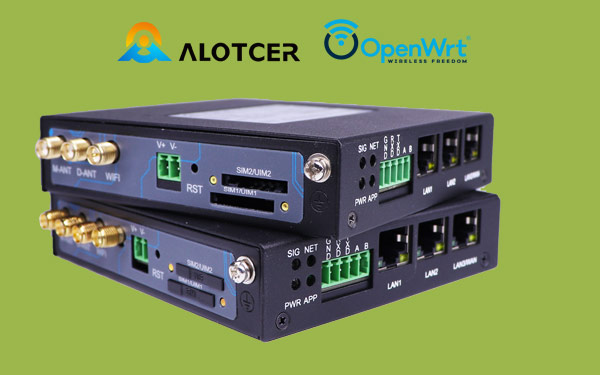
In 5G Smart Ports, equipment such as the Alotcer AR7088H Industrial 5G CPE not only has powerful 5G communication capabilities but also supports various interfaces and protocols, enabling seamless connection with various port equipment. By integrating low-latency cameras, industrial 5G CPE can achieve remote control of port gantry cranes and Shore Bridge. This remote control mode not only improves the flexibility and efficiency of operations but also reduces the risks for on-site workers.
3. Application Advantages of 5G Smart Port Solutions
Enhanced Operational Efficiency: The high-speed data transmission of 5G networks and the efficient collaborative work of intelligent equipment significantly enhance operational efficiency in 5G Smart Ports. Autonomous ship navigation and unloading, remote control of gantry cranes, and intelligent scheduling of container trucks all contribute to smoother and more efficient port operations.
Reduced Labor Costs: 5G Smart Ports significantly reduce the number of on-site workers through automation and intelligent technology. This not only lowers labor costs but also improves the safety and accuracy of operations.
Improved Operational Safety: In 5G Smart Ports, various equipment and systems are connected and work collaboratively through networks. This centralized control method makes the operation process more controllable and traceable, thereby enhancing operational safety.
Promoting Sustainable Development: 5G Smart Ports provide strong support for the sustainable development of ports by improving operational efficiency, reducing energy consumption, and decreasing emissions. This intelligent mode of operation aligns with current green development concepts and lays a solid foundation for the long-term stable development of ports.