In pipe network monitoring projects, protocol “incompatibility” is the biggest pain point for system integrators. Most front-end sensors follow Modbus RTU, the traditional industrial protocol, while cloud platforms commonly adopt MQTT, the IoT protocol. Meanwhile, local water resources and environmental protection authorities have their own mandatory industry-specific regulations — one set of equipment needs to “understand” three languages simultaneously, and the protocol compatibility of the pipe network RTU directly determines whether the project can be successfully delivered. Alotcer pipe network RTUs are designed precisely to address this challenge.
The “Three Kingdoms” of Protocols: Each with Its Strengths and Needs
Modbus RTU is the de facto standard in industrial field applications. From pressure transmitters and flow meters to water quality analyzers, the vast majority of pipe network sensors output Modbus RTU protocol data via RS485 interfaces. Its advantages are simplicity, stability, and widespread adoption, but its deficiency is clear — it lacks semantic description, providing only register addresses and data values, leaving the platform unable to understand directly whether “40001” represents water level or pressure.
MQTT is the “lingua franca” of the IoT era. It adopts a publish/subscribe model and carries data in structured formats like JSON, clearly expressing meaning such as “Device A collected a water level of X meters at time T.” Major cloud platforms (Huawei, Alibaba, China Telecom, etc.) generally support MQTT protocol access, making it the essential pathway from data to applications.
Industry-specific protocols are an unavoidable “hard requirement.” Water resources and hydrological departments in different regions have clear specifications for data transmission formats, such as the Hydrological Monitoring Data Communication Protocol (SL651), the Water Resources Monitoring Data Transmission Protocol (SZY206), and the environmental protection industry’s HJ/T212. Non-compliant devices cannot feed data into regulatory platforms, making project acceptance impossible.
How Does a Pipe Network RTU “Speak Three Languages with One Device”?
A qualified pipe network RTU must achieve three levels of protocol integration:
Level 1: “Listening” to Modbus sensors downstream. The pipe network RTU needs multiple RS232/RS485 interfaces to act as a Modbus master, polling the connected sensors according to configured baud rates and register addresses. The AltRTU600 series supports standard Modbus/ModbusTCP protocols and can simultaneously interface with 4 RS232/485 serial devices and Ethernet devices, meeting the diverse sensor access requirements of field deployments.
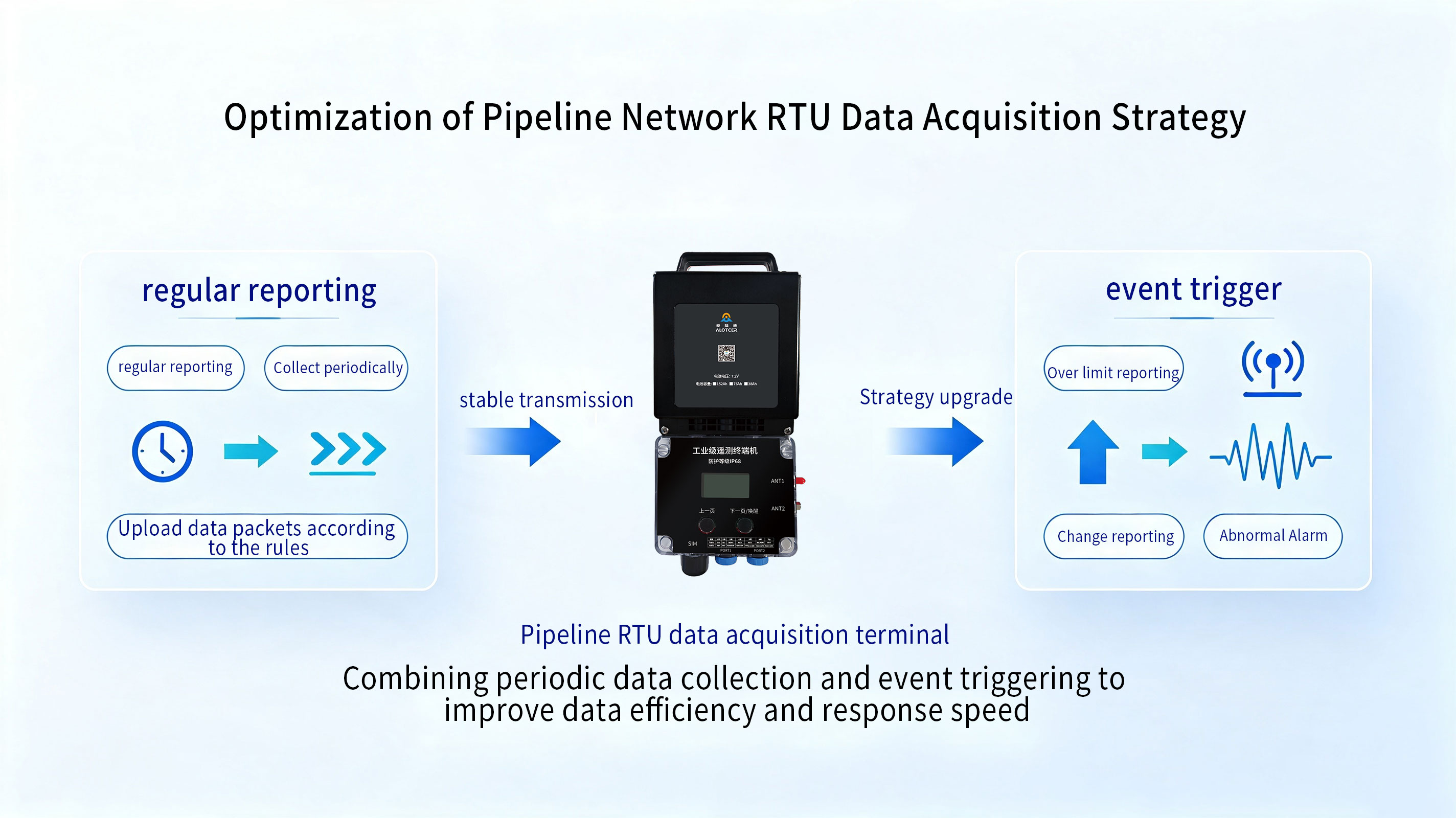
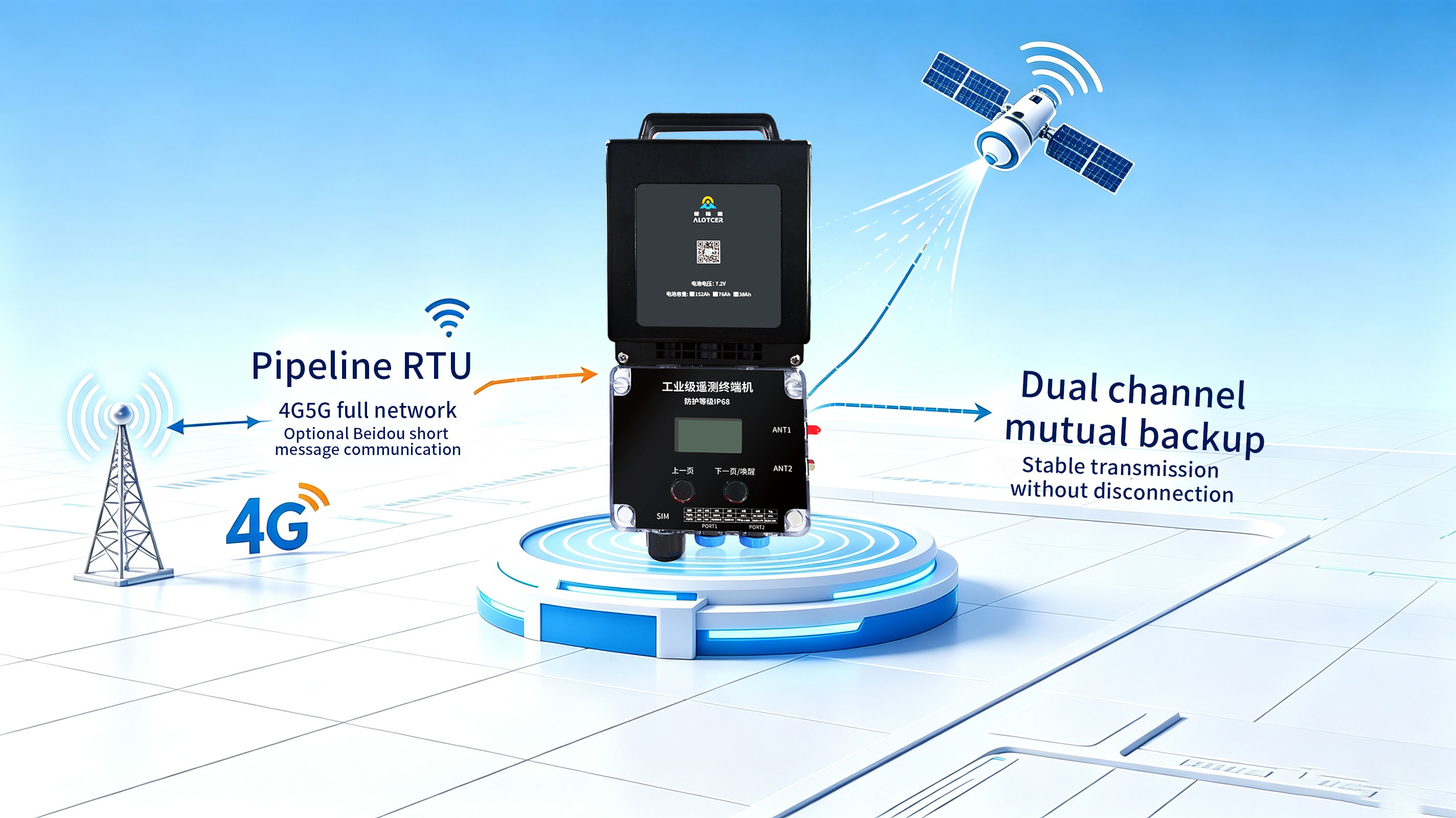
Level 2: “Speaking” MQTT upstream to cloud platforms. The collected field data needs to be converted to the MQTT protocol and reported to designated servers. Alotcer pipe network RTUs support MQTT/Ntirp protocols and are compatible with mainstream IoT platforms including Huawei, Alibaba, China Telecom, and China Mobile. They can transmit JSON-formatted data directly to platforms via 4G/5G networks.
Level 3: Meeting industry-specific regulatory requirements. This is where product capabilities truly shine. The Alotcer AltRTU600 series has passed testing and certification by the Ministry of Water Resources’ Hydrological Instruments and Geotechnical Engineering Instruments Quality Supervision and Inspection Center. It not only supports the Ministry of Water Resources’ SL651-2014 Hydrological Communication Protocol and SZY206-2016 Water Resources Monitoring Protocol but also covers most regional hydrological protocols for provinces including Sichuan, Hebei, Hunan, and Heilongjiang, as well as the environmental protection HJ/T212 protocol and meteorological communication protocols. For special project requirements, Alotcer also offers customized software and hardware protocol development services.
FAQ
Q1: Can a pipe network RTU support both Modbus RTU and Modbus TCP simultaneously?
Yes. Alotcer pipe network RTUs support both Modbus RTU (serial) and Modbus TCP (Ethernet) protocols, allowing flexible configuration based on the types of sensors deployed on-site.
Q2: Hydrological protocols vary by province. Can the pipe network RTU adapt to different regional requirements?
The Alotcer AltRTU600 series has passed testing and certification by the Ministry of Water Resources’ Hydrological Instruments and Geotechnical Engineering Instruments Quality Supervision and Inspection Center. It supports not only the national SL651 and SZY206 protocols but also most regional hydrological protocols for provinces including Sichuan, Hebei, Hunan, and Heilongjiang.
Q3: Which IoT platforms does the pipe network RTU support?
Alotcer pipe network RTUs support MQTT/Ntirp protocols and are compatible with mainstream IoT platforms including Huawei Cloud, Alibaba Cloud, China Telecom, and China Mobile, enabling rapid integration with different cloud service providers.
Q4: What if the project requires a customized special protocol?
Alotcer offers customized software and hardware protocol development services and supports OEM collaboration, allowing for dedicated communication protocol customization based on project requirements.
Q5: Besides Modbus and MQTT, what other protocols does the pipe network RTU support?
In addition to the protocols mentioned above, Alotcer pipe network RTUs also support the environmental protection HJ/T212 protocol, meteorological communication protocols, and optionally support customizable communication functions including NB-IoT, LoRa, ZigBee, 433MHz, VHF ultra-short wave, and BeiDou-2/BeiDou-3.
Summary
The protocol compatibility of a pipe network RTU determines the smoothness of the entire project lifecycle — from device access to platform delivery. A truly qualified RTU should act as an “interpreter,” enabling seamless dialogue among Modbus sensors, MQTT cloud platforms, and industry-specific regulatory platforms — exactly the design philosophy behind the Alotcer AltRTU600 series.