Introduction
Choosing the right industrial VPN router is crucial when it comes to ensuring seamless and secure remote access to your Programmable Logic Controllers (PLCs). In an era where industrial automation is the backbone of efficiency, the correct VPN router can make all the difference. But with so many options on the market, how do you make the right choice? Let’s explore what you need to know.
Understanding the Basics
What is an Industrial VPN Router?
An industrial VPN router is a specialized device designed to securely connect remote users to a network, specifically in industrial environments. Unlike standard routers, these are built to withstand harsh conditions and support the robust security needs of industrial operations.
The Role of PLCs in Modern Industry
PLCs, or Programmable Logic Controllers, are essential for automating processes in industries like manufacturing, energy, and utilities. They control machinery and processes, making them critical components in maintaining operational efficiency.
Key Considerations for Choosing the Right VPN Router
Security Features
Security is paramount in any industrial network. A robust industrial VPN router should offer:
Encryption Standards
High-level encryption, such as AES-256, ensures that your data is protected as it travels across the network.
Firewall Capabilities
A built-in firewall adds an extra layer of protection, blocking unauthorized access and potential cyber threats.
Compatibility with PLCs
Your chosen VPN router must be compatible with the PLCs in your network.
Protocol Support
Ensure that the router supports the necessary communication protocols, such as Modbus or Ethernet/IP, that your PLCs use.
Hardware Compatibility
Check that the router is compatible with your existing hardware to avoid any integration issues.
Network Performance
Performance is a critical factor, especially in industrial settings where downtime can be costly.
Bandwidth Requirements
Consider the bandwidth needed to support all devices in your network without compromising performance.
Latency Considerations
Low latency is crucial for real-time data transmission, which is often required in industrial applications.
Scalability
As your network grows, your VPN router should be able to scale with it.
Support for Multiple Devices
The router should support a growing number of devices without sacrificing performance.
Future-Proofing Your Network
Choose a router that can handle future advancements in technology, such as the adoption of 5G.
Reliability and Uptime
In an industrial environment, downtime can lead to significant losses.
Redundancy Options
Look for routers that offer redundancy features, such as dual SIM support, to ensure continuous operation.
Quality of Service (QoS)
QoS features allow you to prioritize critical traffic, ensuring that essential operations receive the necessary bandwidth.
Advanced Features to Look For
Remote Management Capabilities
Remote management is essential for industrial VPN routers, especially when dealing with geographically dispersed operations.
Cloud-Based Management
A cloud-based management platform allows you to monitor and manage the router from anywhere, ensuring real-time adjustments and updates.
Remote Firmware Updates
Being able to update firmware remotely ensures that your network stays secure and up-to-date without requiring physical access to the router.
VPN Types Supported
Different types of VPNs offer varying levels of security and functionality.
IPSec vs. SSL VPN
IPSec VPNs are typically used for site-to-site connections, while SSL VPNs are preferred for client-to-site connections due to their ease of use and compatibility.
Site-to-Site vs. Client-to-Site VPNs
Choose a router that supports the type of VPN connection your network requires, whether it’s linking multiple sites or allowing individual users to connect remotely.
Redundancy and Failover
In industrial settings, a single point of failure can be disastrous.
Dual SIM Support
Dual SIM support provides a backup connection if the primary one fails, ensuring continuous network availability.
Automatic Failover Mechanisms
Automatic failover mechanisms switch to a backup connection instantly if the primary link goes down, minimizing disruption.
Cost Considerations
Balancing Cost with Required Features
While it’s tempting to choose the cheapest option, it’s important to balance cost with the features you need. Investing in a high-quality VPN router can save you money in the long run by reducing downtime and maintenance costs.
Long-Term Investment vs. Short-Term Savings
Consider whether a lower upfront cost is worth potential long-term expenses, such as frequent repairs or replacements.

Popular Industrial VPN Routers for PLCs
When selecting a VPN router for your industrial applications, particularly for PLC remote access, it’s essential to consider routers that have been specifically designed for industrial environments. These routers need to handle the unique demands of industrial automation, including harsh conditions, high security, and reliable performance. Below, we’ll explore some of the most popular industrial VPN routers available on the market today, highlighting their key features and suitability for PLC remote access.
1. Cisco IR1101 Industrial Integrated Services Router
The Cisco IR1101 is a modular, industrial-grade router designed for IoT and industrial applications. It’s particularly well-suited for environments where space is limited and performance cannot be compromised.
- Key Features:
- Modular Design: The IR1101 offers a modular architecture that allows for future expansion, supporting additional modules as your network grows.
- High Security: It includes built-in security features such as a firewall, VPN, and advanced threat defense, making it ideal for protecting critical PLC communications.
- Edge Computing Capabilities: The router supports edge computing, allowing data processing to occur close to the source, reducing latency.
- Redundancy and Failover: Dual SIM support ensures that if one connection fails, the router automatically switches to a backup, maintaining continuous operation.
- Suitability for PLC Remote Access:
- The IR1101 is well-suited for industrial environments where reliable remote access to PLCs is required. Its robust security features and modular design make it a versatile choice for a range of industrial applications.
2. Siemens Scalance S615 Industrial Security Appliance
Siemens is a well-known name in industrial automation, and their Scalance S615 router is specifically designed for secure remote access to industrial networks.
- Key Features:
- Comprehensive Security: The Scalance S615 provides extensive security features, including VPN tunneling, firewall protection, and intrusion detection, which are critical for safeguarding PLC communications.
- Industrial Robustness: Built to withstand the harsh conditions of industrial environments, the router is highly durable and reliable.
- Ease of Integration: Siemens’ router integrates seamlessly with their PLCs and other industrial equipment, ensuring smooth communication and management.
- Remote Management: The router supports remote configuration and management, which is vital for industrial sites that may be located in remote or difficult-to-access areas.
- Suitability for PLC Remote Access:
- The Scalance S615 is perfect for industries that require secure and reliable remote access to PLCs. Its strong integration with Siemens’ ecosystem makes it an excellent choice for existing Siemens users.
3. Moxa EDR-G902 Industrial VPN Router
The Moxa EDR-G902 is an industrial VPN router known for its high performance and reliability in demanding industrial settings.
- Key Features:
- Advanced Security Features: This router includes a stateful firewall, VPN, and DoS protection, ensuring that PLCs are well-protected from external threats.
- Redundant Power Inputs: The EDR-G902 has dual redundant power inputs, which ensure continuous operation even if one power source fails.
- Network Segmentation: It allows for easy network segmentation, enabling the separation of critical PLC networks from other parts of the industrial network.
- Durability: Designed for extreme environments, this router can operate in a wide temperature range and is resistant to electromagnetic interference.
- Suitability for PLC Remote Access:
- The EDR-G902 is ideal for industries where secure, reliable remote access to PLCs is a priority. Its redundant features and robust design make it particularly suitable for critical infrastructure applications.
4. Westermo MRD-455 4G LTE Router
The Westermo MRD-455 is a 4G LTE industrial router that offers secure and reliable remote access to PLCs, particularly in remote locations where wired connections may not be feasible.
- Key Features:
- 4G LTE Connectivity: The MRD-455 provides high-speed mobile broadband access, making it suitable for remote or temporary sites where traditional connectivity options are unavailable.
- Industrial-Grade Security: The router includes VPN support, IPsec encryption, and firewall features, ensuring secure communications over cellular networks.
- Dual SIM Support: With dual SIM slots, the router can automatically switch between carriers to maintain the best possible connection.
- Remote Management: The MRD-455 supports remote monitoring and management, allowing network administrators to configure and troubleshoot from a distance.
- Suitability for PLC Remote Access:
- This router is particularly useful for industries that require reliable remote access to PLCs in areas with limited connectivity options. Its robust 4G LTE connectivity and security features make it an excellent choice for mobile or remote industrial applications.
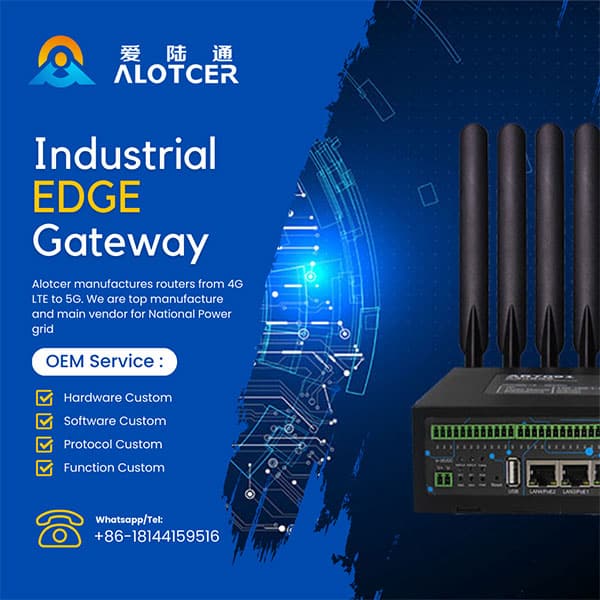
5. Alotcer AR7091GK Industrial IoT Gateway
The Alotcer AR7091GK is more than just a router; it is a comprehensive IoT gateway designed for industrial applications, including remote PLC access.
- Key Features:
- Flexible Connectivity: The AR7091GK supports multiple connectivity options, including Ethernet, Wi-Fi, and cellular, making it highly versatile.
- Edge Intelligence: This device supports edge computing, allowing data processing and analytics to occur at the edge of the network, reducing latency and improving real-time decision-making.
- High Security: It includes VPN, firewall, and intrusion detection features to protect critical industrial networks.
- IoT Integration: The router is designed to integrate seamlessly with various IoT platforms, facilitating the connection of PLCs and other industrial devices to the cloud.
- Suitability for PLC Remote Access:
- The AR7091GK is ideal for industries looking to integrate PLCs with broader IoT initiatives. Its flexibility, security, and edge computing capabilities make it a forward-thinking choice for modern industrial networks.
Choosing the right industrial VPN router for PLCs depends on the specific needs of your network and environment. Whether you need high security, robust performance, remote management, or integration with existing systems, the options listed above offer a range of features to meet those needs. By selecting a router that aligns with your requirements, you can ensure secure, reliable, and efficient remote access to your PLCs, ultimately enhancing the productivity and safety of your industrial operations.
Setting Up Your Industrial VPN Router
Setting up your industrial VPN router is a critical step in ensuring secure and reliable remote access to your network, particularly when managing PLCs. The process begins with physically connecting the router to your network infrastructure, which typically involves linking it to your existing industrial Ethernet setup. Once the hardware is connected, you’ll move on to the configuration phase.
Start by accessing the router’s interface, usually through a web browser, using the default IP address provided by the manufacturer. Here, you’ll configure the VPN settings according to your specific requirements. This includes selecting the appropriate VPN protocol (such as IPSec or SSL), setting up encryption standards, and creating secure user credentials for remote access.
It’s essential to configure firewall settings to protect against unauthorized access, and ensure that all security protocols are active. After the initial setup, it’s crucial to test the connection to confirm that the VPN is functioning correctly and that the PLCs are accessible remotely without issues. If any challenges arise during setup—such as compatibility issues or configuration errors—consult the router’s documentation or seek support from the manufacturer.
Finally, ensure that the router’s firmware is up-to-date to take advantage of the latest security features and enhancements, and consider enabling remote management for ongoing monitoring and maintenance.

Real-World Applications
When it comes to real-world applications, the use of industrial VPN routers for PLC remote access is transforming industries. Take the manufacturing sector, for instance. A company with multiple production sites faced challenges in monitoring and controlling machinery across different locations. By implementing industrial VPN routers, they established a secure, centralized control system. This not only enhanced their ability to monitor processes in real-time but also significantly reduced downtime by enabling quicker response times to issues. The result? A 25% reduction in downtime and a 15% increase in overall operational efficiency.
In the energy sector, industrial VPN routers have proven invaluable. A leading utility company used these routers to connect and monitor remote substations spread across vast geographical areas. The secure and reliable connections provided by the VPN routers allowed for continuous monitoring and faster diagnostics of any issues. This led to a substantial reduction in operational costs, as fewer on-site visits were needed, and the ability to respond to issues remotely improved overall service reliability.
These examples highlight how industrial VPN routers are not just about connectivity—they are critical tools in enhancing efficiency, reducing costs, and ensuring the seamless operation of industrial processes across various sectors.
Future Trends in Industrial VPN Routers and PLCs
Emerging Technologies
The rise of IoT (Internet of Things) and AI (Artificial Intelligence) is driving innovation in industrial VPN routers, offering smarter, more adaptive solutions.
Impact of 5G on Industrial Networks
With the rollout of 5G, industrial networks will experience faster speeds and lower latency, making VPN routers even more critical for maintaining secure and reliable connections.
Conclusion
Choosing the right industrial VPN router for PLCs is not just about picking a device off the shelf; it’s about understanding your network’s unique needs and ensuring that the router you choose can meet them. By focusing on security, compatibility, performance, and scalability, you can ensure that your network is both efficient and secure. As technology continues to evolve, staying informed about the latest advancements will help you make the best decisions for your industrial network.


FAQs
What are the essential security features in an industrial VPN router?
Key security features include robust encryption standards, a built-in firewall, and support for secure VPN protocols like IPSec.
How can I ensure my VPN router is compatible with my PLC?
Check for protocol support and hardware compatibility, ensuring the router can communicate effectively with your PLCs.
What are the common challenges in setting up an industrial VPN router?
Common challenges include configuration errors and compatibility issues, which can often be resolved by following the manufacturer’s guidelines closely.
How does a VPN router improve the reliability of PLC remote access?
A VPN router provides secure, stable connections, reducing the risk of downtime and ensuring continuous access to PLCs.
What future trends should I consider when choosing a VPN router for PLCs?
Future trends include the integration of 5G, IoT, and AI technologies, which will enhance the capabilities and performance of industrial VPN routers.